Kapa3 in the second half of April: Information, collaborations and strengthening patient care

Kapa3 in April

Throughout April, Kapa3 continued to develop actions and initiatives aimed at improving access to care for oncology patients and their families, with a strong focus on information, prevention, and the development of innovative collaborations.

This period’s activities focused on raising awareness about key cancer types, improving patients’ daily lives through policy and systemic developments, and expanding partnerships that enhance the quality of care and services provided.

In an ever-evolving healthcare environment, the connection between reliable information, human support, and technology remains a key pillar for a more accessible and effective care system.

Below are the main initiatives and developments that marked the second half of the month.

Awareness

April is an awareness month for head and neck cancer as well as testicular cancer, highlighting the importance of prevention and early diagnosis. Although these types of cancer are often underrepresented in public discourse, awareness plays a crucial role in reducing late diagnoses and improving patients’ quality of life.

Patients’ rights

Important developments took place in the field of patients’ rights, including the establishment of the National Registry for Hospital-at-Home Care (NOSPI), aiming to better organise and ensure the safety of home-based care.

At the same time, the new framework for Public Administration introduces changes that directly affect citizens’ daily lives, enhancing transparency, reducing bureaucracy, and improving access to public services.

Collaborations

During April, Kapa3 further strengthened its network of collaborations through significant partnerships.

The collaboration with the PRAXI Network/FORTH, within the European smartHEALTH hub, enhances participation in innovation and health policy initiatives, opening new opportunities at European level.

In addition, the partnership with Karkinaki focuses on supporting children, adolescents, and families living with cancer, promoting a holistic approach to care.

Furthermore, the collaboration with SimasiaAI for the development of “Myrto”, an AI-powered digital assistant, highlights the importance of technology in empowering patients and improving access to reliable information and services.

Research & knowledge

A new international report on person-centred cancer care highlights the need for a holistic model that places the patient at the centre. This approach recognises not only clinical needs but also psychosocial dimensions, reinforcing the importance of patient involvement in decision-making.

Patients & society

On the occasion of European Patients’ Rights Day (18 April), Kapa3 highlighted the importance of equal access to quality care. Despite progress, challenges such as inequalities and delays remain, making the continued strengthening of support structures essential.

Supporting our work

Kapa3’s collection of handmade scarves continues to serve as a creative way of supporting the organisation’s mission, combining aesthetics with meaningful contribution to people living with cancer.

We continue to monitor developments and work towards improving patients’ daily lives — more news coming soon.

Text/adaptation: Ifigenia Anastasiou for Kapa3

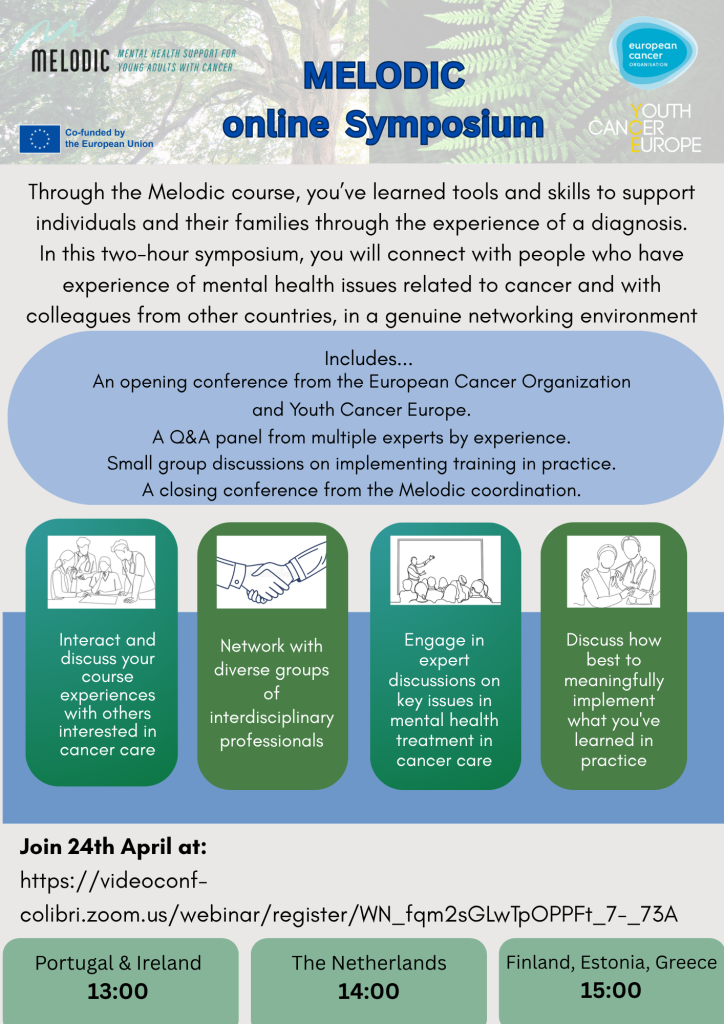
MELODIC Online Symposium: completion of the pilot training phase and strengthening psychosocial cancer care

The European project MELODIC (Mental Health Support for Young Adults with Cancer), in which the Cancer Guidance Center – Kapa3 participates, is being implemented through distinct development phases. The pilot training programme for healthcare professionals is one of its core components, and within this framework, the MELODIC Online Symposium 2026, taking place on 24 April 2026, marks the completion of this educational phase.

The MELODIC project framework

MELODIC is a European project co-funded by the European Union, aiming to strengthen the mental health of young adults living with cancer, as well as to support their families. Through the collaboration of universities, research institutions and healthcare organizations across Europe, the project develops training and support tools for healthcare professionals.

More information about the project and its progress is available on the official Kapa3 website, in the dedicated project section.

The pilot training programme

The pilot training programme focused on enhancing the knowledge and skills of healthcare professionals in providing psychosocial support to young adults with cancer and their families.

As part of the programme, online sessions and contact lessons were delivered, aiming to strengthen interdisciplinary collaboration and support the practical application of tools in everyday clinical practice.

MELODIC Online Symposium 2026

The MELODIC Online Symposium 2026, a two-hour event, brings together participants from all partner countries and includes:

  • opening presentations from the European Cancer Organisation and Youth Cancer Europe
  • an “experts by experience” panel, where individuals share their lived experience
  • a networking panel with healthcare professionals from participating countries
  • discussion on how training can be applied in clinical practice
  • a closing session by the project coordination team

From training to clinical practice

A key objective of the MELODIC training programme is to strengthen the psychosocial dimension of cancer care, with particular focus on young adults.

The exchange of experiences among healthcare professionals contributes to more holistic approaches to care and supports the integration of psychosocial support into daily clinical practice.

The role of Kapa3

Kapa3 actively participates in the European MELODIC consortium, contributing to the implementation of the training activities and the dissemination of results in Greece. Through this involvement, the connection between scientific knowledge and the support of cancer patients is further strengthened, promoting the development of practical approaches to psychosocial care.

The MELODIC Online Symposium 2026 marks the transition from the pilot training phase to the next stage of utilizing its outcomes, reinforcing the link between education and real-world application in cancer care.

The Press Release here: PRESS-RELEASE-MELODIC SYMPOSIUM

Text/adaptation: Ifiyenia Anastasiou for Kapa3

Kapa3 in the First Half of March: Actions, Collaborations, and Updates for Oncology Patients

During the first half of March, Kapa3 continued to highlight important topics concerning the oncology patient support, rights, and daily lives  through initiatives, collaborations, and informational activities.

Efforts focused both on strengthening access to information and services, and on promoting practical and digital tools that make patients’ daily lives easier.

In an environment where patients’ needs remain complex and constantly evolving, reliable information, enhanced collaboration among stakeholders, and the promotion of holistic care are especially important.

Below is a summary of the main developments from the month.

Collaborations

Key partnerships were strengthened with the Sarcoma Fighters Patients Association, the Hellenic Federation of Persons with Multiple Sclerosis (HFoPwMS), and Doctor Homie, aiming to enhance information, support, and quality care for patients.

Actions & Presentations

Kapa3 participated in the scientific meeting “Cancer in 2026: Challenges and Breakthroughs,” emphasizing the pivotal role of supportive care for oncology patients, while also presenting recent developments addressing their evolving needs. Kapa3 also attented the event Facing the Challenge of Artificial Intelligenceas we remain focused on supporting dialogue around the opportunities and challenges of A.I.

Patient Rights

Supporting oncology patients remains a central goal of our initiatives. Focus was given to updates on the 2026 constant attendance allowance and improved digital access for patients to their test results.

Digital Health & Research

A new European Commission report highlights the critical role of digital health technologies in transforming healthcare systems, outlining both opportunities and challenges for the future of care.

Awareness

March is Colorectal Cancer Awareness Month, reminding everyone of the importance of prevention and early detection.

Oncology patient support remains our top priority, and we continue to monitor developments — more news will follow.

Kapa3 at the Scientific Meeting “Cancer in 2026: Challenges and Disruptions” – Focusing on Supportive Care and Its Limits

At the scientific meeting “Cancer in 2026: Challenges and Disruptions”, held on March 13–14, 2026 at the Divani Caravel, Kapa3 actively contributed to discussions on supportive care for oncology patients, a critical area for improving quality of life and holistic patient support.

The meeting was organized by the Hellenic Oncology Patient Support Institute, under the chairmanship of Christos Panopoulos, and was held under the auspices of the Hellenic Cancer Society and the Hellenic Society of Medical Oncologists. It has become a recognized annual event for the oncology community, highlighting each year the latest challenges and rapid developments in the field.

Progress in oncology is continuous and impressive, with scientific advances steadily enhancing the possibilities for personalized treatment, while simultaneously improving patients’ quality of life and turning some forms of cancer into manageable chronic conditions.

During the two-day meeting, key developments were presented in critical areas such as precision medicine, immunotherapy, and novel therapeutic strategies, with particular emphasis on the role of artificial intelligence and molecular analysis in modern clinical practice.

Kapa3 participated in the roundtable on supportive care for oncology patients, held on Friday, March 13, represented by Ms. Evangeli Bista. She noted that attending the conference gave her the opportunity to engage with people leading initiatives in patient support and advocacy. The roundtable addressed critical topics such as the role of healthcare professionals, pain management in Greece, and the adequacy of existing care structures.

In the discussion on psychosocial support, Ms. Bista, representing Kapa3 and drawing from her daily experience with oncology patients, emphasized that addressing the challenges arising from the patient journey is particularly demanding, as the high volume of cases and the fragmentation of the healthcare and social support system create exponentially more issues to manage.

When asked whether voluntary work alone is sufficient to meet the growing needs of patients, her response was clear:

…voluntary action is a valuable and essential pillar of social support. The improvement of patients’ quality of life relies heavily on voluntary efforts that take place across the country under challenging conditions. However, it is not sufficient on its own to meet the complex and increasing needs of patients.

As highlighted during the discussion, voluntary contributions are crucial for filling gaps in the system and strengthening social protection. At the same time, a more comprehensive and institutionally supported approach is necessary. This includes:

• adequate and stable funding
• continuous training and empowerment of all stakeholders
• clear and functional legal frameworks
• a shift in mindset among healthcare professionals, patients, and administrators
• and the development of integrated policies in the field of supportive care

Kapa3’s intervention underscored the importance of psychosocial support as an integral part of oncology supportive care, promoting a more holistic, humane, and sustainable approach to patient management. As Ms. Bista noted, participating in the two-day meeting serves as a reminder that the fight to support patients requires all of us on the same side.

March – Multiple Myeloma Awareness Month

March – Multiple Myeloma Awareness Month

March is internationally recognized as Multiple Myeloma Awareness Month, a type of blood cancer that affects plasma cells – immune system cells responsible for producing antibodies and defending the body against infections.

This period provides an important opportunity to raise public awareness, highlight the challenges faced by patients, and enhance understanding of the disease, early diagnosis, and the importance of access to modern treatments.

What is Multiple Myeloma

Multiple myeloma develops in the bone marrow, when plasma cells grow uncontrollably and produce abnormal proteins. The presence of these cells can affect the production of healthy blood cells, cause bone damage, and impair the function of vital organs such as the kidneys. Although relatively rare, it is the second most common blood cancer worldwide.

The disease’s symptoms may be initially nonspecific and develop gradually. Fatigue, bone pain – especially in the spine or ribs – frequent infections, anemia, or kidney problems are some of the signs that may prompt further investigation. Early awareness and timely medical evaluation are therefore crucial for diagnosis and disease management.

Multiple Myeloma by the Numbers

Globally, the disease affects a significant number of people. According to international epidemiological data:

  • 188,000 new cases were reported worldwide in 2022

  • Approximately 121,000 people died from the disease the same year

  • It is estimated that more than 540,000 people are currently living with multiple myeloma worldwide

The disease occurs more often in older adults. Most diagnoses occur in people over 60–65 years old, and around 80% of cases are reported in individuals over 65. Experts predict that the disease’s incidence may rise in the coming decades, largely due to the aging population in many countries.

The Situation in Greece

In Greece, the exact epidemiological picture of multiple myeloma is not fully clear, as there is no comprehensive national cancer registry recording all cases systematically.

However, according to available international estimates for 2022:

  • About 763 new multiple myeloma cases were reported in the country

  • Approximately 579 deaths were attributed to the disease

  • It is estimated that around 2,154 people in Greece are living with the disease over a five-year period

These figures highlight the importance of improving health data collection and continuously supporting patients living with the disease.

Advances in Treatments

In recent years, scientific progress has significantly changed the course of the disease.

Modern therapies include:

  • Immunotherapies

  • Monoclonal antibodies

  • Proteasome inhibitors

  • Immunomodulatory drugs

  • CAR‑T cell therapies (for advanced stages of the disease)

New therapeutic combinations and ongoing clinical studies are providing more treatment options, reinforcing hope for even more effective therapies in the future.

The Importance of Awareness and Support

Despite these advancements, public awareness and support for people living with the disease remain crucial. Early diagnosis, access to specialized medical care, and equitable access to modern therapies are key factors in improving disease outcomes and patients’ quality of life.

Multiple Myeloma Awareness Month serves as a reminder that knowledge, research, and collective effort can make a difference. Through education, support for scientific research, and assistance to patients and their families, we can help create an environment where no one faces cancer alone.

Sources:

https://gco.iarc.fr
(Global Cancer Observatory – International Agency for Research on Cancer)

https://pubmed.ncbi.nlm.nih.gov/39658225/
(Global burden and projections of multiple myeloma)

https://www.oecd.org/health/cancer-profiles/greece.html
(EU Country Cancer Profile – Greece)

https://ehoonline.biomedcentral.com/articles/10.1186/s40164-025-00684-x
(Global epidemiology of multiple myeloma)

https://pmc.ncbi.nlm.nih.gov/articles/PMC3627436/
(Multiple myeloma epidemiology study)

Text/adaptation: Ifiyenia Anastasiou for Kapa3

Cancer: From Prevention to Life Coordination – Successful Knowledge Seminar in Megara with Kapa3

With great success and participation from citizens of all ages, the Knowledge Seminar in Megara – From Prevention to Life Coordination took place on Sunday, February 8, in the Council Chamber of the Megara City Hall, in celebration of World Cancer Day.

The event was organized by the Municipality of Megara in collaboration with the Kapa3 Cancer Guidance Center, which since 2020 provides guidance and support to oncology patients and their families, ensuring access to vital information and services.

The seminar opened with a speech by the Mayor of Megara, Panagiotis Margetis, who shared his family’s personal experience with cancer, emphasizing the importance of accurate information and support throughout the patient journey. Stamatis Georgakis, Deputy Mayor for Public Health and Social Protection, coordinated the seminar and highlighted the value of Kapa3 and its Guidance Station in informing, supporting, and advocating for patients’ rights.

Distinguished experts participated in the seminar, presenting key aspects of holistic cancer care:

  • Georgios Nintos, MD MSc, Oncologist: Prevention and early diagnosis, causes, and preventive measures.

  • Katerina Papakonstantinou, MD MSc PhD, Obstetrician-Gynecologist: Gynecologic cancer, importance of HPV vaccination and Pap test.

  • Andrea Paola Rochas, Assistant Professor of Biology, University of Peloponnese Nursing Department: Nutrition and cancer prevention, emphasizing the Mediterranean diet, exercise, and avoidance of processed foods.

  • Maria Lavdaniti, Professor and Head of Nursing Department, International University: Role of oncology nurses in holistic care.

  • Pinelopi Vlotinou, Assistant Professor of Occupational Therapy, University of West Attica: Daily living support and quality-of-life improvement through occupational therapy.

  • Ioanna Sideri, Psychologist MSc, PhD(c), University of Peloponnese: Psychological support for patients and caregivers, resilience, and crisis management.

  • Grigoria Zacharogianni, MD MSc PhD, Radiation Oncologist: Modern treatment options and importance of moderate exercise during therapy.

The presentation of Kapa3 was delivered by Evangelia Bista, Co-founder and Head of Strategic Partnerships, highlighting the importance of digital literacy and a holistic approach to patient care. Kapa3 has expanded its oncology support network by inaugurating the Cancer Guidance Station in Megara, with the significant support of Megara Resins. In its first year, the station has assisted over 100 beneficiaries, offering guidance on social rights, patient file management, and psychological support, free of charge.

For 2026, Kapa3 is strengthening its digital services with Myrto, Greece’s first AI-powered Health Digital Assistant, providing personalized guidance and voice control. Planned initiatives also include: Wellness in Motion, with 12 outdoor walks for mental wellbeing of young adult cancer patients, the Cancer Wellness Open House Day, and a conference on equitable access to care.

The Knowledge Seminar in Megara – From Prevention to Life Coordination highlighted the importance of prevention, holistic care, interdisciplinary collaboration, digital literacy, psychological support, and continuous patient rights education.

Kapa3 warmly thanks the Municipality of Megara for hosting and supporting the event, as well as all speakers, for their invaluable expertise and commitment to sharing knowledge and scientific know-how.

Explore the photo gallery here:

The Press Release document here

World Cancer Day: United by Our Uniqueness

Every year on 4 February, World Cancer Day invites us to reflect on one of the greatest challenges of modern public health.

The goal is not only to confront cancer as a disease, but to face it with knowledge, empathy and shared responsibility. Because cancer touches millions of lives in countless ways, yet it does not define who we are. We are more than a diagnosis, more than a number.

World Cancer Day was established in 2000, following the World Summit Against Cancer for the New Millennium in Paris. It is a core element of the Paris Charter Against Cancer — a global commitment to advancing research, prevention, patient care, awareness and international mobilisation. Since then, the day has served as a reminder that addressing cancer requires long-term vision, cooperation and consistency.

This year’s message, “United by Unique”, highlights a fundamental truth: cancer is not only a medical event.

It is a deeply personal experience. Behind every diagnosis lies a unique human story — stories of fear and loss, but also of resilience, care, love and healing. Every story counts.

Cancer Today: Facts and Challenges

Cancer remains one of the most significant public health challenges in Europe and in Greece. Data from international and European organisations underline not only the scale of the disease, but also the persistent inequalities in prevention, early detection and access to care.

In Europe, approximately 2.7 million new cancer diagnoses are recorded each year, with around 1.3 million deaths, while the economic burden exceeds €93 billion annually. In Greece, cancer is the second leading cause of death, affecting thousands of families and carrying profound social and psychological consequences.

Progress, Prevention and Hope

At the same time, scientific progress offers well-founded reasons for optimism.

Prevention and early detection remain decisive factors. Screening programmes, vaccination, healthy lifestyle choices and access to reliable information can significantly reduce the risk of certain cancers and improve treatment outcomes. In this context, knowledge is not merely information — it is power and a fundamental right.

Advances in cancer management are equally important. Personalised medicine, targeted therapies, immunotherapy and improved management of treatment side effects contribute not only to increased survival rates, but also to a better quality of life for people living with and beyond cancer. Information and education are key tools for both prevention and empowerment.

Mental health plays a crucial role as well. Diagnosis and treatment are often accompanied by anxiety, fear, sadness and emotional exhaustion — affecting not only patients, but also their caregivers. Psychosocial support, counselling services and empowerment groups are essential components of holistic cancer care, helping to preserve dignity and quality of life.

Information, research and mental health care are core pillars of modern cancer management. Indicatively, you may explore the following Kapa3 articles:

Empowerment and Action

World Cancer Day is not just a day of awareness. It is a call to action:

  • to speak openly about prevention and our health,

  • to support people living with cancer and their caregivers,

  • to seek reliable information and evidence-based sources,

  • to advocate for equal access to care and psychological support,

  • to remember that no one should face cancer alone.

Because our strength lies in solidarity — and in respecting the uniqueness of every individual.

United by our uniqueness.

References:

World Health Organization (WHO) – Cancer
https://www.who.int/health-topics/cancer

International Agency for Research on Cancer (IARC)
https://www.iarc.who.int

Union for International Cancer Control (UICC) – World Cancer Day
https://www.worldcancerday.org

European Commission – Europe’s Beating Cancer Plan
https://health.ec.europa.eu/eu-policy/health-strategies/europes-beating-cancer-plan_en

European Cancer Information System (ECIS)
https://ecis.jrc.ec.europa.eu

Hellenic Statistical Authority (ELSTAT) – Health Data
https://www.statistics.gr/en/statistics/-/publication/SHE15/

Hellenic National Public Health Organization (EODY) – Cancer & Public Health
https://eody.gov.gr/

Greek Ministry of Health – Prevention & Screening
https://www.moh.gov.gr/articles/prevention-screening

Text/adaptation: Ifiyenia Anastasiou for Kapa3

Cancer: From Prevention to Life Coordination” – Event Announcement, Municipality of Megara & Kapa3

On the occasion of World Cancer Day (4 February), the Municipality of Megara and the Cancer Patient Navigation Center – Kapa3 are organizing the knowledge-focused event “Cancer: From Prevention to Life Coordination” on Sunday, 8 February 2026, at 18:00, at the Municipal Council Hall of Megara City Hall.

The event aims to highlight that addressing cancer is not limited to medical treatment alone, but requires holistic care, proper guidance, and coordinated services, placing the individual, their family, and their social environment at the center.

The objective of the initiative is to emphasize the role of a Health Navigator in cancer management and to underline the importance of interdisciplinarity in oncology care, bringing together the expertise of physicians, nurses, psychologists, occupational therapists, as well as civil society organizations such as Kapa3, which support patients and caregivers.

The event features the following speakers:

  • Georgios Nintos, Medical Oncologist, MD MSc – Cancer prevention and early diagnosis

  • Katerina Papakonstantinou, Obstetrician–Gynecologist Surgeon, MD MSc PhD – Prevention and gynecological cancer

  • Rojas Andrea Paola, Associate Professor of Biology, Department of Nursing, University of the Peloponnese – Nutrition and prevention

  • Maria Lavdaniti, Professor and Head of the Department of Nursing, International University – The role of oncology nursing in holistic cancer care

  • Penelope Vlotinou, Professor of Occupational Therapy, University of West Attica – Occupational therapy and patients’ daily life

  • Ioanna Sideri, Psychologist MSc, PhD(c), Department of Nursing, University of the Peloponnese – Psychological support for patients and caregivers

  • Grigoria Zacharogianni, Radiation Oncologist, MD MSc PhD, University of West Attica – Therapeutic options from diagnosis to recovery

The event is part of Kapa3’s ongoing presence in Megara and its constructive cooperation with the Municipality, as reflected in the operation of the Cancer Patient Navigation Counseling Station.

It is another opportunity to highlight community-based efforts supporting cancer patients and their families, strengthening awareness, prevention, and meaningful guidance.

Participation is open to health professionals, patients, relatives, and all interested citizens.
It is our great honor to welcome everyone who wishes to learn more about cancer care and holistic management and to take part in a dialogue of knowledge and solidarity, because only together can we build a more inclusive and supportive society for all.

Cancer is increasingly becoming a highly manageable disease

In the Sunday edition of To Vima newspaper and Vita magazine (25 January 2026), the views of Ms Evangeli Bista, co-founder of Kapa3, were featured, shedding light on the landscape of modern oncology and the challenges emerging within the current Greek healthcare reality.

Ms Bista addressed the Greek context and highlighted the importance of digital technology as a cornerstone of modern health policy, particularly in the field of cancer care, where treatment pathways are complex, long-term, and deeply person-centred. As she noted, Greece has already made measurable progress: electronic and paperless prescribing, oncology registries, the National Electronic Health Record, and applications such as MyHealthApp are creating the conditions for more coordinated and transparent care. When healthcare professionals, as well as patients themselves, are equipped with appropriate digital skills, patient autonomy is strengthened, treatment outcomes improve, and inequalities—especially those affecting vulnerable population groups—are reduced.

The article is co-authored by distinguished scientists and collaborators: Maria Gazouli, Professor of Biology, Genetics and Nanomedicine at the Medical School of the National and Kapodistrian University of Athens and national representative on the Committee for Advanced Therapies of the European Medicines Agency; Manolis Saloustros, Associate Professor of Oncology at the University of Thessaly and President of the Hellenic Society of Medical Oncology (HESMO); and Christos Frantzidis, Assistant Professor of Informatics and Machine Learning at the University of Lincoln in the United Kingdom.

The contributing experts underline that modern oncology increasingly approaches cancer as a largely manageable chronic disease, through targeted and personalised therapies. The use of innovative technologies—such as next-generation sequencing, mRNA vaccines, PARP inhibitors and cellular therapies—has significantly expanded therapeutic options. At the same time, prognosis is becoming more dynamic and individualised through the use of multi-omics profiling, machine learning algorithms and liquid biopsy techniques. Particular emphasis is placed on the early integration of palliative care and psychosocial support, which play a crucial role in improving patients’ quality of life. Finally, the importance of structured and coordinated healthcare services is highlighted, with the medical oncologist acting as a key coordinator of person-centred care.

Beyond documenting technological advances, the article opens a broader discussion on the digital transition in oncology care, addressing issues of access, meaningful use of data and the need for coordination across different scientific disciplines. Digital health is presented not as an end in itself, but as a tool that requires collaboration, institutional maturity and a shared vision in order to deliver real value to patients.

The overarching message is clear: every step, whether small or large, matters. Progress in oncology is not the result of isolated actions, but of collective effort. Through collaboration among scientists, healthcare professionals, organisations and patients, the conditions for meaningful and sustainable change can be created—always with the human being and their real needs at the centre.

Download our Press release here:  KAPA3_VIMA

Text / Adaptation: Ifiyenia Anastasiou for Kapa3

January – Cervical Cancer Awareness Month

January is internationally dedicated to raising awareness about cervical cancer. Known as Cervical Cancer Awareness Month, it aims to highlight the importance of prevention, early detection, and vaccination against the human papillomavirus (HPV), which is responsible for nearly all cases of the disease.

Cervical cancer remains a major public health issue worldwide. According to the World Health Organization, approximately 660,000 new cases are diagnosed globally each year, and more than 350,000 women lose their lives to the disease. It is among the most common cancers affecting women, particularly in regions where access to preventive screening and vaccination is limited. At the same time, it is one of the few cancers that can largely be prevented through organized prevention and early detection programmes.

In Greece, available data indicate that around 700 new cases of cervical cancer are diagnosed annually, while more than 280 deaths are attributed to the disease each year. The estimated incidence is approximately 8 cases per 100,000 women. Although this places Greece close to the European average, it also highlights the need for further improvement in prevention and early diagnosis.

Cervical cancer is closely linked to chronic infection with human papillomavirus (HPV), a very common virus transmitted mainly through sexual contact.

HPV vaccination, combined with regular gynaecological screening through Pap tests and HPV tests, can significantly reduce the development of precancerous lesions and cervical cancer. In this context, the World Health Organization has set the goal of eliminating cervical cancer as a public health problem by 2030, through high vaccination coverage, universal screening, and timely treatment.

January serves as an important reminder that information and prevention save lives. Open discussion around women’s health, free from fear and stigma, empowers women to take care of themselves and to claim prevention as a fundamental right.

Special emphasis should be placed on the systematic education of younger generations, as prevention begins long before any symptoms appear. Access to reliable information, preventive screening services, and vaccination programmes is a key factor in reducing health inequalities and protecting future generations.

At KAPA3, we believe that information and prevention are core pillars of care and empowerment. Through the dissemination of reliable information and the support of initiatives that promote public health, we stand alongside every woman who needs knowledge, prevention, and timely care.

Because cervical cancer can be prevented, we encourage everyone to take action. Give a meaningful gift to the women you care about: daughters, sisters, mothers, friends, partners, spouses. Talk openly about women’s health, share information, support initiatives, challenge taboos, and promote early diagnostic screening.

Information and open dialogue are the strongest tools we have.

Sources:

World Health Organization (WHO)
Cervical cancer – Fact sheet

WHO – Global strategy to accelerate the elimination of cervical cancer

International Agency for Research on Cancer (IARC / WHO)
Cervical Cancer Awareness Month

ICO / IARC HPV Information Centre – Greece Factsheet

Ministry of Health – National Immunization Programme

Hellenic National Public Health Organization (EODY)
HPV and cervical cancer

Text/adaptation: Ifiyenia Anastasiou for Kapa3