Kapa3 in the second half of April: Information, collaborations and strengthening patient care

Kapa3 in April

Throughout April, Kapa3 continued to develop actions and initiatives aimed at improving access to care for oncology patients and their families, with a strong focus on information, prevention, and the development of innovative collaborations.

This period’s activities focused on raising awareness about key cancer types, improving patients’ daily lives through policy and systemic developments, and expanding partnerships that enhance the quality of care and services provided.

In an ever-evolving healthcare environment, the connection between reliable information, human support, and technology remains a key pillar for a more accessible and effective care system.

Below are the main initiatives and developments that marked the second half of the month.

Awareness

April is an awareness month for head and neck cancer as well as testicular cancer, highlighting the importance of prevention and early diagnosis. Although these types of cancer are often underrepresented in public discourse, awareness plays a crucial role in reducing late diagnoses and improving patients’ quality of life.

Patients’ rights

Important developments took place in the field of patients’ rights, including the establishment of the National Registry for Hospital-at-Home Care (NOSPI), aiming to better organise and ensure the safety of home-based care.

At the same time, the new framework for Public Administration introduces changes that directly affect citizens’ daily lives, enhancing transparency, reducing bureaucracy, and improving access to public services.

Collaborations

During April, Kapa3 further strengthened its network of collaborations through significant partnerships.

The collaboration with the PRAXI Network/FORTH, within the European smartHEALTH hub, enhances participation in innovation and health policy initiatives, opening new opportunities at European level.

In addition, the partnership with Karkinaki focuses on supporting children, adolescents, and families living with cancer, promoting a holistic approach to care.

Furthermore, the collaboration with SimasiaAI for the development of “Myrto”, an AI-powered digital assistant, highlights the importance of technology in empowering patients and improving access to reliable information and services.

Research & knowledge

A new international report on person-centred cancer care highlights the need for a holistic model that places the patient at the centre. This approach recognises not only clinical needs but also psychosocial dimensions, reinforcing the importance of patient involvement in decision-making.

Patients & society

On the occasion of European Patients’ Rights Day (18 April), Kapa3 highlighted the importance of equal access to quality care. Despite progress, challenges such as inequalities and delays remain, making the continued strengthening of support structures essential.

Supporting our work

Kapa3’s collection of handmade scarves continues to serve as a creative way of supporting the organisation’s mission, combining aesthetics with meaningful contribution to people living with cancer.

We continue to monitor developments and work towards improving patients’ daily lives — more news coming soon.

Text/adaptation: Ifigenia Anastasiou for Kapa3

MELODIC Online Symposium: completion of the pilot training phase and strengthening psychosocial cancer care

The European project MELODIC (Mental Health Support for Young Adults with Cancer), in which the Cancer Guidance Center – Kapa3 participates, is being implemented through distinct development phases. The pilot training programme for healthcare professionals is one of its core components, and within this framework, the MELODIC Online Symposium 2026, taking place on 24 April 2026, marks the completion of this educational phase.

The MELODIC project framework

MELODIC is a European project co-funded by the European Union, aiming to strengthen the mental health of young adults living with cancer, as well as to support their families. Through the collaboration of universities, research institutions and healthcare organizations across Europe, the project develops training and support tools for healthcare professionals.

More information about the project and its progress is available on the official Kapa3 website, in the dedicated project section.

The pilot training programme

The pilot training programme focused on enhancing the knowledge and skills of healthcare professionals in providing psychosocial support to young adults with cancer and their families.

As part of the programme, online sessions and contact lessons were delivered, aiming to strengthen interdisciplinary collaboration and support the practical application of tools in everyday clinical practice.

MELODIC Online Symposium 2026

The MELODIC Online Symposium 2026, a two-hour event, brings together participants from all partner countries and includes:

  • opening presentations from the European Cancer Organisation and Youth Cancer Europe
  • an “experts by experience” panel, where individuals share their lived experience
  • a networking panel with healthcare professionals from participating countries
  • discussion on how training can be applied in clinical practice
  • a closing session by the project coordination team

From training to clinical practice

A key objective of the MELODIC training programme is to strengthen the psychosocial dimension of cancer care, with particular focus on young adults.

The exchange of experiences among healthcare professionals contributes to more holistic approaches to care and supports the integration of psychosocial support into daily clinical practice.

The role of Kapa3

Kapa3 actively participates in the European MELODIC consortium, contributing to the implementation of the training activities and the dissemination of results in Greece. Through this involvement, the connection between scientific knowledge and the support of cancer patients is further strengthened, promoting the development of practical approaches to psychosocial care.

The MELODIC Online Symposium 2026 marks the transition from the pilot training phase to the next stage of utilizing its outcomes, reinforcing the link between education and real-world application in cancer care.

The Press Release here: PRESS-RELEASE-MELODIC SYMPOSIUM

Text/adaptation: Ifiyenia Anastasiou for Kapa3

Research studies giving voice to lived experience

At Kapa3, we actively encourage participation in health research studies, as we work every day alongside people affected by cancer, whether as patients or caregivers. Through this work, it becomes increasingly clear how important it is to truly listen to lived experience.

For this reason, the research initiatives we support or contribute to are not just questionnaires. They are a way to better understand the needs, experiences and priorities of the community we serve.

Through participation in these studies, individuals who are at the centre of the cancer experience are given the opportunity to share their reality. Every response, every story, every contribution adds another piece to a broader picture: a more meaningful and human-centred approach to care and support.

The contribution of each participant is highly valuable. The data collected helps us identify needs that are often not visible, better understand challenges, and design actions that reflect the real everyday lives of people.

Through participation in health research studies, lived experience can be transformed into knowledge that makes a real difference. Each study we support is part of a broader effort to understand the experiences of patients and caregivers.

Below you will find the current research studies open for participation, organised by target audience.

Each health research study includes a short description of its purpose and how participation contributes to the overall research effort.

For healthcare professionals

Patient safety culture in hospitals

A pilot study focused on the translation and adaptation of the international SOPS® Hospital Survey 2.0 developed by the AHRQ, adapted for the Greek hospital setting.

The aim of the study is to evaluate the clarity, comprehension and suitability of the tool through the participation of healthcare professionals working in hospital environments.

The study also includes a test–retest phase to assess the stability of responses over time.

Participation: https://forms.gle/Jev7mQ95vt1swtXF7

For research networks and collaborations

sleepCare – sleep quality assessment

The sleepCare research initiative, in collaboration with Christos Frantzidis (University of Lincoln) and his research team, explores sleep quality through real-life experiences and self-reported data from participants.

The aim is to better understand the factors that influence sleep in everyday life through anonymous data collection and short questionnaires.

English questionnaire: https://lnkd.in/e7wYjspX
Greek questionnaire: https://lnkd.in/ejbjGQPC
Platform: https://lnkd.in/e7YHUXdi

For breast cancer survivors

Survivorship experience and quality of life

A thesis-based research study examining fear of cancer recurrence, quality of life, and the role of social support among breast cancer survivors in Greece.

The aim is to better understand post-treatment experiences and the factors that influence psychosocial well-being.

Participation: https://docs.google.com/forms/d/e/1FAIpQLSeUgku0yi7LBGg42v_FeKtzVsj5F5uw8hYr-y-hcVKL-fhoeQ/viewform

For patients with respiratory conditions and caregivers

Lung transplantation experiences in Greece

A nationwide study collecting experiences, needs and perspectives of patients with respiratory conditions and their caregivers regarding lung transplantation.

The aim is to capture lived experience across all stages of the disease in order to improve care pathways and healthcare services.

The study is open to patients with respiratory conditions (transplanted or not) as well as their caregivers.

Participation: https://forms.gle/66h4CQJK3pdr1gKK7
Information: https://www.cysticfibrosis.gr/draseis/lung-transplant-working-group/

Text/Adaptation: Ifiyenia Anastasiou for Kapa3

April 18: European Patients’ Rights Day

European Patients’ Rights Day is celebrated every year on April 18 and serves as an important occasion to raise awareness about the fundamental rights of all patients in Europe. The day was established by the Active Citizenship Network, aiming to promote equal access to quality healthcare services and safeguard patients’ dignity.

At the European level, patients’ rights do not stem from a single binding legal framework, but from a combination of principles, European directives, and national legislation. A milestone was the European Charter of Patients’ Rights (2002), which established 14 core rights and has become a reference point for many countries.

Key rights include:

  • The right to access healthcare services
  • The right to prevention
  • The right to timely and accurate diagnosis
  • The right to information and informed consent
  • The right to choose treatment
  • The right to privacy and confidentiality
  • The right to safe and high-quality care
  • The right to respect for the patient’s dignity

Despite legislative progress, the full implementation of these rights remains a challenge. According to international reports, in certain vulnerable groups, unmet healthcare needs can reach particularly high levels due to cost, long waiting times, or geographic barriers. Data from the European Commission also highlight delays in diagnoses and treatments, as well as limited patient awareness of available options.

In Greece, patients’ rights are legally protected through, among others, Law 2071/1992 and subsequent regulations. Furthermore, Patient Rights Protection Offices (Γ.Π.Δ.Λ.Υ.Υ.) implement specific regulations for managing complaints, grievances, and positive feedback, as outlined in a Ministry of Health circular (2024). In recent years, significant steps have been taken to strengthen patients’ position in the healthcare system, including:

  • Strengthening the role of Patient Rights Protection Offices in public hospitals
  • Updating the Charter of Rights, with emphasis on modern needs such as digital health and rare diseases
  • Enhancing cooperation between the State, local authorities, academic community, and patient associations
  • Advancing digital transformation, including electronic prescriptions and applications such as MyHealth app

Despite this progress, major challenges remain, such as ensuring equal access to innovative treatments, reducing inequalities, protecting personal data, and guaranteeing high-quality care for all patients.

If a patient feels that their rights have been violated, they can turn to:

  • The hospital administration or the relevant patient rights office
  • The Greek Ombudsman
  • Patient associations or support organizations
  • Relevant health supervisory authorities

In this context, patient organizations and broader civil society organizations, such as Kapa3, play a crucial role—not only in supporting and guiding patients but also in highlighting issues, promoting policy changes, and shaping a fairer and more accessible healthcare system.

Awareness of one’s rights is the first and most essential step toward protecting them. An informed patient can actively participate in decisions concerning their health, advocate for better care, and contribute to improving the healthcare system itself.

This day reminds us that healthcare is not a privilege but a fundamental human right—and that a fair and patient-centered healthcare system is built every day, with respect, information, and active participation from all.

Sources:

  1. European Charter of Patients’ Rights (2002): https://www.activecitizenship.net/charter-of-rights.html
  2. European Commission data: https://health.ec.europa.eu/publications/patients-rights_en
  3. Ministry of Health – Regulations for managing complaints and grievances through Patient Rights Protection Offices (Γ.Π.Δ.Λ.Υ.Υ.) -greek text

Text/adaptation: Ifiyenia Anastasiou for Kapa3

Kapa3 partners with PRAXI Network (FORTH) to boost international networking and access to European funding opportunities

The Cancer Guidance Center – Kapa3 announces its partnership with the PRAXI Network of the Foundation for Research and Technology – Hellas (FORTH), within the framework of the European Digital Innovation Hub smartHEALTH: European Digital Innovation Hub for Smart Health – Precision Medicine and Innovative e-Health Services.

This collaboration is part of the broader Digital Europe Programme 2021–2027 and aims to strengthen Kapa3’s participation in research, innovation, and health policy initiatives, focusing on improving services and enhancing the quality of life of oncology patients.

Within this partnership, Kapa3 will receive substantial support in identifying and leveraging funding opportunities through systematic information and expert guidance on available programmes at European, national, and regional level, including Horizon Europe, EU4Health, Erasmus+, and EIT Health. At the same time, its capacity to actively participate in competitive proposals and collaborative projects will be reinforced, expanding its potential to develop innovative initiatives in the health sector.

Particular emphasis is also placed on the development of strategic partnerships with universities, research centres, and healthcare organisations across Europe. Through targeted support in partner identification and the exploration of synergies, Kapa3 strengthens its position within the European research and innovation ecosystem, creating opportunities for participation in international consortia.

In parallel, the collaboration contributes to enhancing the organisation’s international presence and networking capacity through participation in thematic conferences, brokerage events, and matchmaking initiatives in the fields of public health, digital health, social innovation, and patient-centred care.

This Kapa3 PRAXI Network partnership is expected to act as a catalyst for strengthening Kapa3’s outward-looking orientation and sustainable development, reinforcing its role as an active and dynamic stakeholder in the field of health and patient support at both national and European level.

The support services are provided within the smartHEALTH framework and are co-funded by European and national resources.

The Founding Sponsor of the “Myrto”Health Navigator is the TIMA Foundation.

Press release source: PRESS-RELEASE-PRAXI-Network-–-FORTH

Text/adaptation: Ifiyenia Anastasiou for Kapa3

Kapa3 and Karkinaki join forces to support children, adolescents, and families living with cancer

The Cancer Guidance Center – Kapa3 announces its new collaboration with the non-profit organization “Karkinaki”, aiming to strengthen information, psychosocial support, and awareness around childhood and adolescent cancer, as well as to support families experiencing the disease.

Karkinaki is a specialized organization working in the field of childhood and adolescent cancer, focusing on reliable information, empowering parents and caregivers, and fostering a supportive environment around children and teenagers affected by cancer. Through community-based actions and awareness initiatives, it seeks to reduce the sense of isolation that often accompanies diagnosis, while also enhancing understanding, social awareness, and access to available support resources for families.

Within the framework of this collaboration, the two organizations will develop joint initiatives focused on information and awareness-raising, with an emphasis on actions addressing both families and healthcare and support professionals. The partnership will also include the co-organization of informational events, the exchange of good practices, and the exploration of participation in national and European programs that promote a holistic approach to patient care, with an emphasis on continuity of support across all stages of the disease experience.

The Cancer Guidance Center – Kapa3 is dedicated to informing, guiding, and empowering people affected by cancer, providing practical support and access to reliable information and services. At the same time, it develops initiatives that strengthen patients’ active participation in managing their health and promotes a more accessible and human-centered model of care.

In this context, Kapa3 is also involved in European collaborations focusing on the psychosocial dimension of cancer across different stages of life, such as the MELODIC project, which addresses the mental health of young adults with lived experience of cancer. This work further enhances the organization’s ability to recognize needs that emerge throughout the cancer journey, from childhood to adulthood.

This collaboration with Karkinaki reflects the shared vision of both organizations to strengthen a support network that goes beyond medical treatment, extending into families’ daily lives, information access, and psychosocial empowerment, with the aim of providing a more stable and meaningful presence for those who need it most.

Our Press Release here: KARKINAKI PRESS RELEASE

Text: Ifiyenia Anastasiou for Kapa3

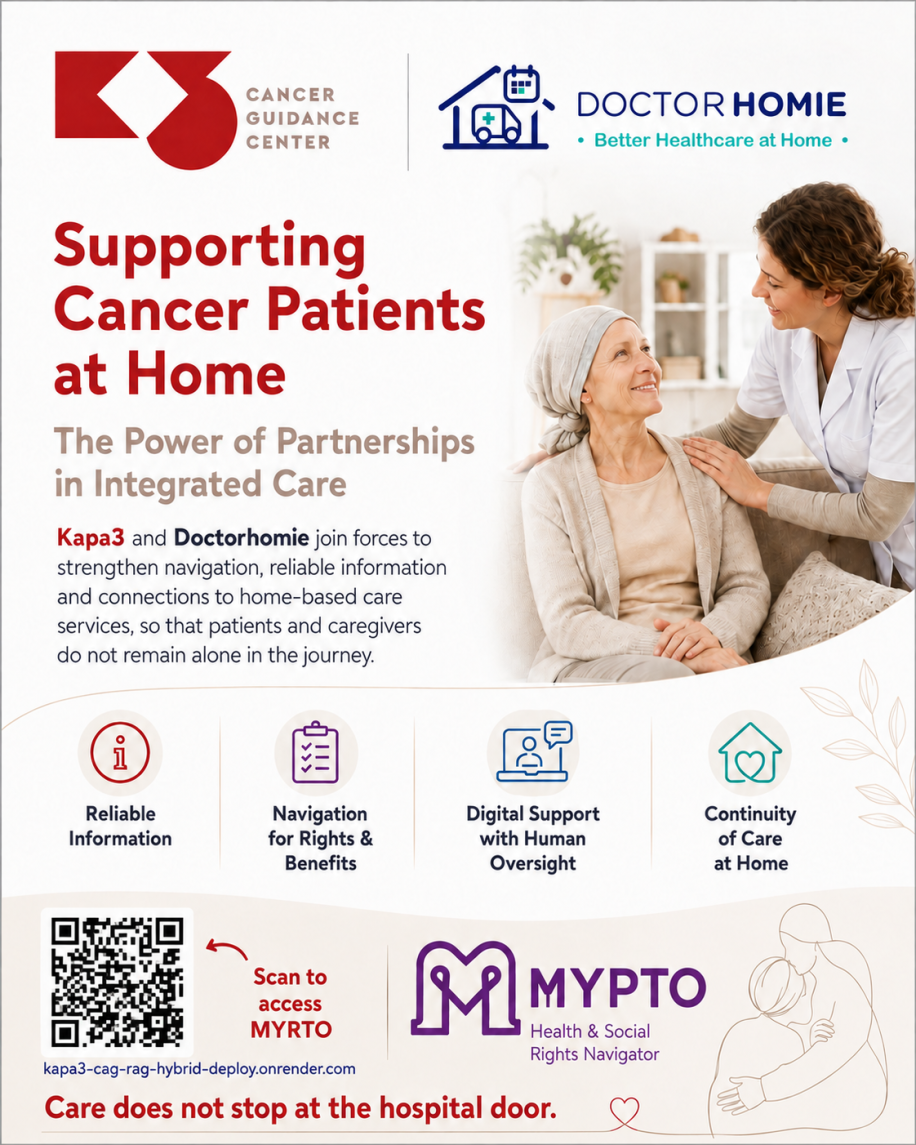
Kapa3 announces collaboration with SimasiaAI for the development of the Health Navigator “Myrto” (Myrto AI Assistant)

The Kapa3 – Cancer Guidance Center announces its collaboration with SimasiaAI, for the co-development of the Health Navigator Myrto” (Myrto AI Assistant), an artificial intelligence (AI chatbot) designed to enhance digital cancer support for patients with cancer and their families through immediate, reliable, and personalized information.

This initiative is part of Kapa3’s strategic focus on leveraging innovative digital tools to improve access to information, strengthen guidance, and reduce the digital gap often faced by vulnerable groups in the healthcare sector.

The Health Navigator “Myrto” is not just an information tool, but a new form of social artificial intelligence in cancer care support in Greece. It is designed to transform digital information into a more human, accessible, and meaningful experience, allowing users to interact, receive guidance, and access support tailored to their needs.

Through its dual role as a “Patient Empowerment e-Navigator”, the system will function both as a Patient Advocate—providing guidance on patient rights, benefits, and access to healthcare and social services—and as a Health Navigator, offering reliable information to support better understanding and self-management of health-related issues.

At the same time, the Health Navigator “Myrto” aims to enhance health literacy, support the psychosocial dimension of the disease, and highlight available community resources, contributing to the reduction of inequalities in access to information.

Kapa3, with its long-standing experience in guiding and supporting cancer patients, continues to invest in initiatives that promote equal access to information and digital empowerment, utilizing technology with a strong social and human-centered approach.

The collaboration between Kapa3 and SimasiaAI leads to the development and integration of the Health Navigator “Myrto” into Kapa3’s platform, highlighting the importance of cooperation between social organizations and technology providers in creating innovative digital support tools for cancer patients. Through this initiative, the goal is to meaningfully empower patients, support healthcare professionals, and advance more human-centered digital services.

The development of the Health Navigator “Myrto” marks an important step toward a new model of digital care, where artificial intelligence complements human support, enhancing the quality of life of patients and their families.

The Founding Sponsor of the “Myrto”Health Navigator is the TIMA Foundation.

Our Press Release text here: PRESS RELEASE SIMASIA AI

Text: Ifiyenia Anastasiou for Kapa3

Patients’ Rights in Public Administration: Less Bureaucracy and More Transparency

With Law 5293/2026 (Government Gazette A’57), a new framework is introduced for the operation of Public Administration in Greece, directly linked to patients’ rights in public administration, aiming to create a more citizen-friendly, efficient and transparent system.

These changes affect everyday interactions with public services, improving the way citizens are served, informed and supported.

The main provisions of the law can be grouped into three key pillars:

1. Simplification of procedures and reduction of bureaucracy

A central element of the reform is the simplification of administrative processes.

Article 3 – Replacement of supporting documents

According to Article 3, citizens may, in several cases, replace official supporting documents with a solemn declaration, when these documents cannot be directly retrieved by public services.

In practice, this means:

  • fewer documents need to be submitted
  • public authorities are responsible for retrieving the required information
  • procedures can start immediately without delays

At the same time, verification mechanisms are in place, including checks and sanctions in cases of false declarations.

Article 5 – Faster processing of requests

Article 5 strengthens the obligation of public services to process requests within specific deadlines, reducing delays in administrative procedures.

2. Transparency and digital access to information

The second pillar focuses on improving transparency and access to information.

Article 5 – Case tracking

Citizens are given the ability to digitally monitor the progress of their requests.

They can access information such as:

  • the current stage of the process
  • the estimated completion time
  • the responsible department
  • contact details for further communication

Article 6 – Mandatory publication of circulars

All administrative circulars:

  • must be published online
  • are valid only after publication

This ensures that citizens have access to up-to-date and valid information.

Article 7 – Online publication of public service hours

Public authorities are required to publish and regularly update:

  • their operating hours
  • public service hours

This helps reduce unnecessary visits and waiting times.

3. A new way of operating public administration

The law also introduces a new approach to administrative procedures, aiming to increase efficiency.

Article 4 – Certified professionals

Public administration may collaborate with certified professionals who:

  • are registered in official registries
  • meet specific qualification and certification criteria
  • can prepare reports, certificates or draft decisions used in administrative processes

These professionals are subject to:

  • random checks
  • penalties and fines in case of errors
  • removal from the registry if necessary

At the same time, accountability mechanisms (particularly under Article 3) ensure the reliability of the system.

What this means for patients

While these measures apply to all citizens, they are particularly important in relation to patients’ rights in public administration.

Reducing bureaucracy, enabling digital access to information and speeding up procedures can significantly ease the burden for patients, especially in processes related to:

  • healthcare services
  • benefits and allowances
  • administrative approvals

Towards a more accessible public administration

Law 5293/2026 represents an important step towards a more efficient, transparent and accessible public administration.

For patients and their families, every improvement that reduces complexity and uncertainty is not just an administrative change, but a meaningful support in their daily lives.

You can find the Government Gazette A’57 here (Greek Text): ΦΕΚ Α 57 Ν 5293_2026

Text/adaptation: Ifiyenia Anastasiou for Kapa3

Person-centred cancer care: a new global report for more sustainable health systems

Cancer continues to place a growing burden on individuals, health systems, and society, making it essential to strengthen person-centred cancer care and rethink how care is delivered. New cancer diagnoses are expected to rise by nearly 77% by 2050, further straining already pressured healthcare systems.

Many countries report limited access to treatments, workforce shortages, and long waiting times as key challenges. In this context, policymakers must rethink how cancer care is delivered, ensuring that limited resources are used effectively while maintaining access to high-quality services.

The report titled “Implementing Person-Centred Cancer Care to Improve Outcomes, Experiences and Efficiency”, published by All.Can International, is based on evidence and studies from 2018–2025. It brings together insights from experts across 11 countries and aims to support policymakers and health systems in redesigning cancer care towards a more person-centred and efficient model.

The report highlights that person-centred cancer care is a practical, high-impact approach that improves patient experience while strengthening the resilience of health systems. It places individuals at the centre of care, taking into account their needs, values, and goals, rather than relying on a one-size-fits-all clinical pathway.

The framework is structured around seven key areas of intervention, with a common goal: better care for patients and more sustainable health systems.

1. Early diagnosis and timely initiation of treatment

Late diagnosis remains a major global challenge. Limited health literacy, low participation in screening programmes, and weaknesses in primary care often lead to delays in treatment.

The report recommends more tailored public information, taking into account health literacy levels and cultural context. It also emphasises the co-design of screening programmes with communities to improve participation and enable earlier diagnosis.

2. Coordinated and multidisciplinary care

Lack of coordination between services leads to delays and unequal care provision. Strengthening multidisciplinary teams and introducing patient navigation can help individuals move more smoothly through the healthcare system and receive more consistent care.

3. Digital tools and system integration

Fragmented data management and limited interoperability between health systems remain major barriers. Developing integrated data infrastructures, national cancer registries, and using technologies such as artificial intelligence can improve efficiency and coordination.

4. Telemedicine and remote care

At the same time, digital health services can reduce geographical barriers and bring care closer to patients. However, investment in infrastructure and training is necessary to ensure equitable access.

The use of wearable health technologies and mobile applications can support continuous monitoring and care beyond hospital settings.

5. Communication and shared decision-making

Effective communication between healthcare professionals and patients remains a critical challenge. Shared decision-making models, the use of patient experience data, and culturally appropriate communication can strengthen trust and improve care quality.

At the same time, involving caregivers in communication processes is essential, as their needs are often overlooked.

6. Supportive care and survivorship

Access to psychosocial and supportive care remains limited in many settings, negatively affecting quality of life. Integrating support services throughout the care pathway is essential, especially as more people live with and beyond cancer.

The report also highlights the importance of advance care planning, which can reduce unnecessary hospitalisations and support patient autonomy.

7. Financial support and access to care

The financial burden of cancer remains a major barrier to accessing care. The report recommends improved reimbursement systems, financial navigation services, and support for indirect costs to reduce financial toxicity for patients and their families.

Person-centred cancer care in Greece

Although the report has a global scope, its findings are highly relevant for countries like Greece. Challenges such as delays in diagnosis, inequalities in access, workforce pressure, and limited system integration reflect real issues within the Greek healthcare system.

In this context, the transition towards more coordinated, digitally supported, and person-centred cancer care becomes particularly important.

Call to action

Therefore, policymakers must urgently embed person-centred care into national cancer strategies. Collaboration with people with lived experience of cancer is essential to designing more equitable, efficient, and sustainable health systems.

Adopting this approach can contribute to earlier diagnosis, improved quality of care, better use of resources, and ultimately more resilient health systems in the face of rising cancer burden.

You can read the full report here: Person-centred-cancer-care-improving-outcomes-experiences-and-efficiency-2

Text/Adaptation: Ifiyenia Anastasiou for Kapa3

April: Awareness Month for Head & Neck Cancer and Testicular Cancer

April has been internationally recognized as an awareness month for two important types of cancer: head and neck cancer and testicular cancer. Education and prevention are critical, as early diagnosis can save lives and significantly improve patients’ quality of life. Although these cancers are often overlooked in public discussions, raising awareness helps reduce delayed diagnoses and strengthens preventive measures. Society is encouraged to participate actively in awareness campaigns, speak openly about risks, and promote prevention across all age groups.

Head and Neck Cancer

Head and neck cancer includes tumors that occur in the oral cavity, pharynx, larynx, nasal cavities, and paranasal sinuses. According to the European Society for Medical Oncology (ESMO), approximately 150,000 new cases are diagnosed annually in Europe, with 70% affecting men. In Greece, it is estimated that over 3,500 new cases occur each year, primarily in people aged 50+, while incidence among younger patients is increasing due to HPV infection.

Risk factors include smoking, excessive alcohol consumption, sun exposure for certain skin cancers of the face, and HPV. Symptoms that should not be ignored include persistent sore throat, voice changes, non-healing sores, neck lumps, and difficulty swallowing. Early recognition of these symptoms and regular check-ups with a specialist significantly improve survival chances, exceeding 80% when diagnosed early. Additionally, regular dental exams and HPV vaccination are recommended preventive measures.

Testicular Cancer

Testicular cancer is rare but primarily affects young men aged 20 to 40. Awareness is critical, as early detection is associated with survival rates of up to 95% in early stages. In Greece, approximately 300–400 new cases are reported annually. Risk factors include history of undescended testicles (cryptorchidism), family history of testicular cancer, and certain genetic conditions.

Self-examination is the most effective method for early detection: men are encouraged to regularly check their testicles for lumps, changes in size, or texture. Education about self-examination reduces fear and promotes early consultation with a physician. Early medical intervention and imaging tests contribute to complete treatment, often without requiring radical surgery, allowing patients to return quickly to normal activities.

The prevention and education are our strongest weapons against cancer. Through awareness initiatives, like those organized by Kapa3, people learn to recognize early symptoms, seek timely medical advice, and rely on professionals and organizations offering counseling and support. Knowledge saves lives, and active participation can make a difference, strengthening a culture of prevention and personal responsibility for health.

Sources / Learn More:

• April is Testicular Cancer Awareness Month — Testicular Cancer Foundation
https://www.testicularcancer.org/april-testicular-cancer-awareness-month/

• Testicular Cancer Statistics — Johns Hopkins Medicine
https://www.hopkinsmedicine.org/health/conditions-and-diseases/testicular-cancer/testicular-cancer-statistics

• Head and Neck Cancer Awareness Month — AwarenessDays.com
https://www.awarenessdays.com/awareness-days-calendar/head-and-neck-cancer-awareness-month/

• Head and Neck Cancers Epidemiology — World Cancer Report (NCBI)
https://www.ncbi.nlm.nih.gov/books/NBK606499/

Text/Adaptation: Ifiyenia Anastasiou for Kapa3