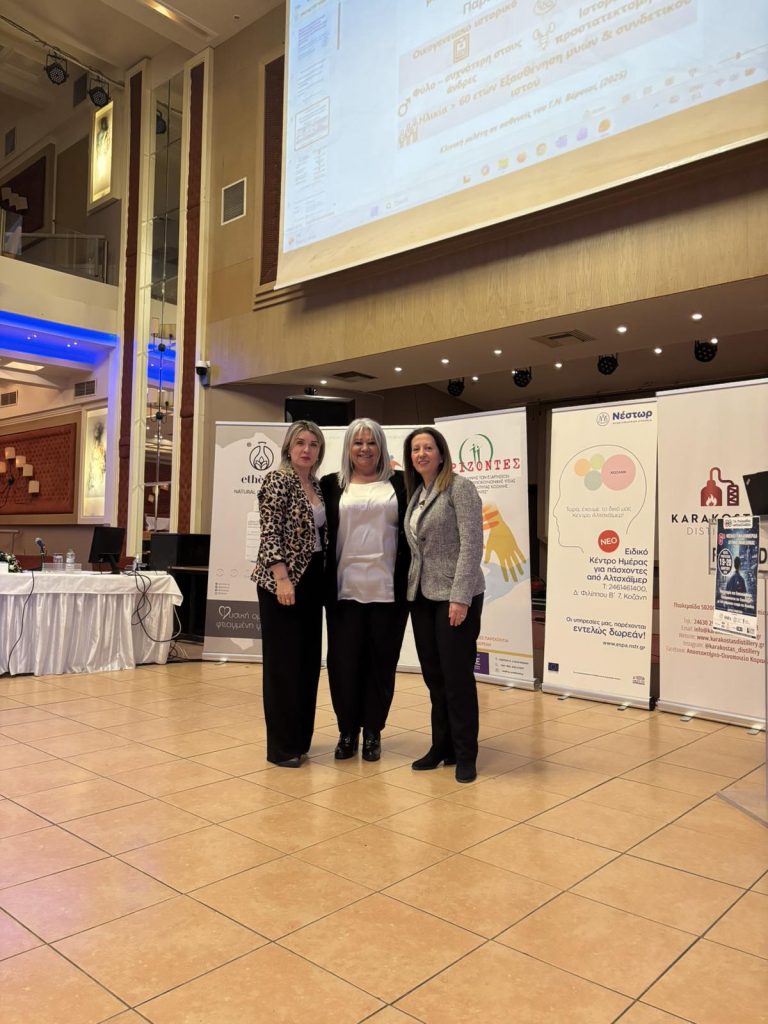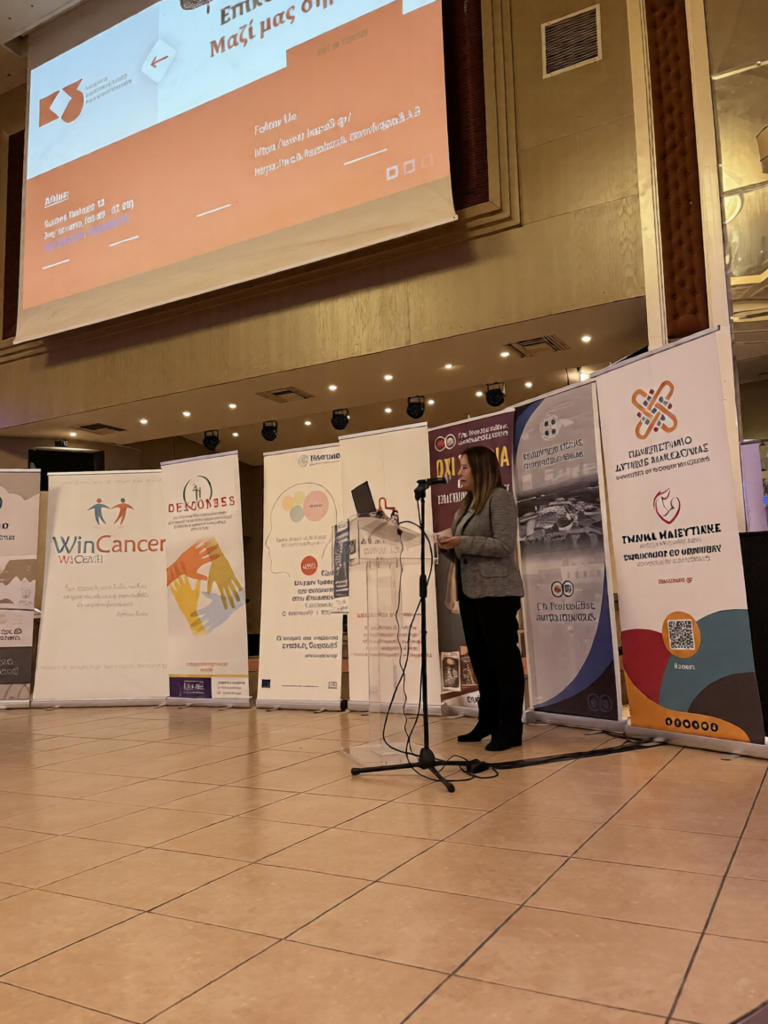

Participation in the Cluster 1 Health & Mission Cancer Brokerage Event highlighted the importance of digital innovation, meaningful patient engagement and cross-border collaboration in European health research.
28 September 2026 | Brussels, Belgium
Kapa3 – Cancer Guidance Centre participated in the European “Building Strong Networks in Cluster 1 Health & Mission Cancer” Brokerage Event, held in Brussels on 28 September 2026, focusing on the development of partnerships for the upcoming Horizon Europe 2027 calls, particularly Cluster 1 – Health and the EU Cancer Mission.
Kapa3 was represented by Aristea Archontidou, an associate of the organisation specialising in healthcare information technology, health policy and patient advocacy, as part of the participation of the Hellenic Digital Health Cluster (HDHC).
The event brought together researchers, universities, healthcare organisations, technology companies, innovation stakeholders, patient representatives and policymakers, providing opportunities to establish European research connections and explore future collaborations.
For Kapa3, participation reflects an ongoing commitment to connecting the real needs of people affected by cancer with European developments in research, digital health and more accessible models of care.
From European Research to Meaningful Partnerships
The event provided a valuable platform for exchanging knowledge, presenting research ideas and identifying potential partners for future European projects.
The programme included presentations on Horizon Europe 2027 priorities, thematic pitching sessions and targeted bilateral networking meetings.
Three main areas were addressed:
- Healthcare Innovation: New approaches to research, prevention, diagnosis and healthcare delivery.
- Clinical Trials: Research collaboration, clinical studies and the development of innovative therapeutic approaches.
- Digital Health & Artificial Intelligence: Digital technologies, data-driven solutions and applications of AI in healthcare.
The discussions highlighted the increasing importance of interdisciplinary collaboration and the participation of organisations that understand patients’ needs in real-world settings.
Research, digital innovation and social innovation should not be treated as separate processes. Their impact depends on their ability to address unmet needs, operate effectively in real-life environments and demonstrate meaningful value.
Digital Health and AI: Technology Must Serve People
One of the most important observations emerging from the event was that digital health and Artificial Intelligence are no longer isolated technical topics.
They are increasingly integrated into multiple areas of healthcare research, from scientific data analysis and clinical research support to prevention, information access and the management of complex care needs.
However, technological progress does not automatically translate into social progress.
A digital solution cannot be considered truly successful if the people it is intended to serve cannot understand, trust or use it.
At Kapa3, addressing digital exclusion, strengthening health and digital literacy, improving accessibility and ensuring the responsible use of AI are fundamental priorities.
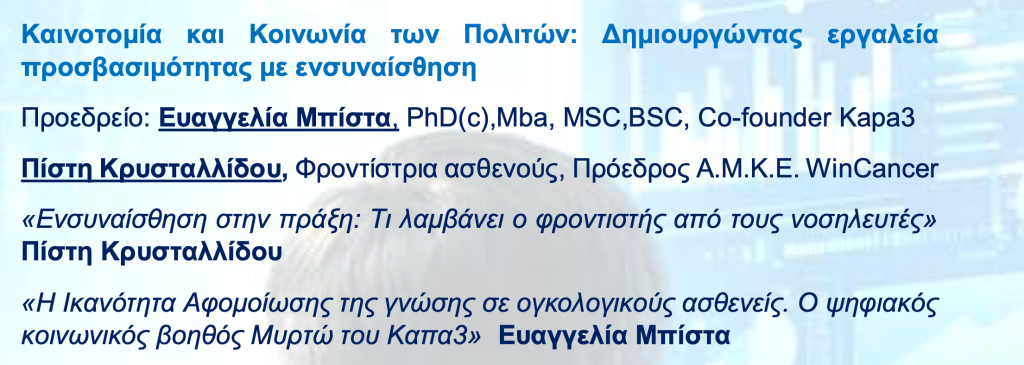
This approach is reflected in the development of MYRTO – Kapa3’s AI-Supported Digital Social Navigator, designed to facilitate access to evidence-informed, understandable information about social rights, benefits and available support services.
MYRTO is being developed in technological collaboration with SimasiaAI, with the valuable support of the TIMA Charitable Foundation.
The initiative demonstrates how technological innovation can be connected with social navigation and the practical needs of people living with cancer.
Meaningful Patient Engagement as a Foundation for Innovation
Another central message emerging from the discussions and networking activities was the growing importance of meaningful patient involvement in research and digital health development.
Patient organisations can contribute far more than final-stage evaluation or symbolic representation.
They can help identify unmet needs, co-develop research questions, improve the accessibility of digital tools and evaluate solutions in real-world settings.
Patient involvement in real-world pilots, co-creation processes and user-experience evaluation can contribute to more relevant, acceptable and sustainable healthcare innovations.
This approach is closely aligned with Kapa3’s mission.
Experience gained through everyday patient navigation, the identification of administrative and social barriers and the systematic documentation of support needs can provide valuable insights for the development and evaluation of new interventions.
European Networking and Opportunities for Collaboration
Kapa3’s participation in Brussels, through the Hellenic Digital Health Cluster ecosystem, provided opportunities to engage with professionals and organisations active in research, digital health and social innovation.
The event facilitated valuable exchanges with several stakeholders, including George Dimitriou, Cluster Manager of HDHC, alongside George Nikolaidis and Martha Zachariadou from Ergobyte Informatics S.A.
Additional discussions and connections involved Sotiria Tsalamani from KMOP – Social Action and Innovation Centre, Nikolaos Papadopoulos from heeelp!, Angie Fasoula from MIMA Technologies and Ilias Nikolinakos from ELPEN Pharmaceutical Co. Inc.
These initial contacts offer opportunities to explore shared interests and potential future collaborations in digital accessibility, human-centred technology, patient engagement and applied health research.
Special appreciation goes to the PRAXI Network for supporting Greek participation, as well as to the National Contact Points and co-organisers whose efforts created a valuable environment for European networking and collaboration.
Kapa3 as a Partner in Human-Centred Research and Innovation
Kapa3’s presence at this European event strengthens its strategic direction towards partnerships that combine scientific knowledge with lived experience and community-based insights.
Through social and patient navigation, cooperation with healthcare professionals, participation in European research projects and the development of digital tools, the organisation seeks to contribute to the design, implementation and evaluation of interventions that respond to the actual needs of patients and caregivers.
In future European collaborations, Kapa3 can bring expertise in patient and social navigation, patient engagement, health literacy, service co-creation and the evaluation of end-user experiences.
This approach contributes to the organisation’s broader ambition to develop an evidence-informed, human-centred and evaluable model of navigation in oncology care.
From European Connections to Meaningful Social Impact
The Brussels experience reinforced the importance of engaging early in European research networks and building partnerships that connect science, technology and people’s everyday realities.
As consortia and proposals begin to take shape for Horizon Europe 2027, the involvement of civil society organisations and patient representatives remains essential for more inclusive research and innovation.
For Kapa3, European collaboration creates value when it leads to better information, equitable access, stronger support systems and tangible improvements in the lives of people affected by cancer.
Because innovation in healthcare should not be measured solely by what technology can achieve, but also by how many people it can meaningfully include.
Care does not end with treatment. It embraces the whole of life.
Further Information
Cluster Health & Mission Cancer Brokerage Event
https://www.b2match.com/e/cluster-health-mission-cancer-brokerage
Hellenic Digital Health Cluster
https://hdhc.gr/
Kapa3 – Cancer Guidance Centre
https://www.kapa3.gr/
Explore MYRTO – Digital Social Navigator
https://kapa3-cag-rag-hybrid-deploy.onrender.com/