GD2: A Critical Biomarker and Therapeutic Target – What the Latest Evidence Shows

New scientific data highlight GD2 — a glycolipid biomarker expressed in specific cancer cells — as one of the most promising therapeutic targets in modern oncology. A recent review published in an international scientific journal brings together the latest findings on the use of GD2 in immunotherapies, CAR-T cell treatments, monoclonal antibodies, and other innovative approaches.

What is GD2 and why does it matter?

GD2 is a molecule known as disialoganglioside-2, found in high concentrations on the surface of certain cancer cells. This makes it particularly valuable as a target for personalized immunotherapies, as treatments can “recognize” and destroy GD2-positive cells while sparing healthy tissues.

Cancers with high GD2 expression include:
• Neuroblastoma
• Osteosarcoma
• Melanoma
• Breast cancer (triple-negative in some cases)
• Certain lung cancers
• Rare pediatric tumors

In neuroblastoma — one of the most common pediatric cancers — GD2-directed antibody therapy has already improved survival in high-risk patients.

The new scientific review maps the current progress in GD2-targeted therapies, highlighting the technologies showing the strongest clinical potential. GD2-directed monoclonal antibodies, already effective in children with neuroblastoma, are evolving into more precise and safer versions, aiming to expand their use in adult tumors as well. The review also presents updated data from clinical trials of GD2-directed CAR-T cells: despite challenges such as toxicity, tumor escape, and limited persistence, newer CAR-T generations demonstrate improved safety, deeper penetration into solid tumors, and especially promising outcomes in pediatric patients.

The review further examines combination immunotherapies that pair GD2 targeting with radiotherapy, chemotherapy, or immune checkpoint inhibitors, offering enhanced effectiveness against resistant tumors. Finally, emerging platforms are described — including bispecific antibodies, “smart” nanoparticle-based strategies, and drug-delivery technologies that target only GD2-positive cells — expanding the therapeutic landscape and opening new avenues for future applications.

What does this mean for patients?

GD2-targeted therapy is no longer theoretical — it is already a reality in certain pediatric cancers and is rapidly expanding into other tumor types.

Key benefits for patients include:
• greater precision with reduced toxicity
• the potential for highly individualized treatment based on tumor profile
• new hope for tumors that remain difficult to treat with existing methods
• improved survival prospects, especially for children

For pediatric and young adult patients — a group with historically limited and often highly burdensome treatment options — GD2-directed therapies represent a significant step forward.

Despite the important progress made, several challenges remain. These include side effects such as neuropathic pain, tumor resistance or escape from targeting, the high cost and limited availability of advanced treatments, and the need for large, multi-center clinical trials to produce more robust and generalizable data. Still, research activity is intensifying, with dozens of clinical studies currently ongoing worldwide.

Within this evolving landscape, Kapa3 remains committed to providing accurate, accessible, and compassionate information to patients and families, particularly those facing severe, rare, or pediatric cancers. Advances in GD2-targeted therapies are opening new pathways for children and young people with limited options today , showcasing the power and potential of immunotherapy. At the same time, they highlight the urgent need for equitable access to innovative treatments for patients in Greece.

Kapa3 will continue to follow scientific developments closely and keep the community informed in a clear, reliable, and human-centered way.

Sources: Here

Text/Adaptation: Ifiyenia Anastasiou for Kapa3

Artificial Intelligence (AI) is transforming the fight against cancer.The European Cancer Organisation’s “Harnessing AI for Cancer Care in Europe” report

Artificial Intelligence (AI) is transforming the fight against cancer, enabling machines to learn, reason, and assist humans in detecting, diagnosing and treating the disease more accurately and efficiently. It works by analysing vast amounts of data, learning patterns, and making predictions or recommendations to support human decision-making.

Cancer care is rapidly transforming with the use of AI, which serves as a powerful tool in prevention, detection, treatment and research of the disease. The European Cancer Organisation’s “Harnessing AI for Cancer Care in Europe” report states that AI has the potential to transform every stage of the cancer pathway. Simultaneously, the report emphasises the need for AI to be used responsibly, by protecting patients, upholding ethical standards, and aligning with European values, to ensure its benefits are delivered fairly and effectively across healthcare systems.

The Promise of AI in Cancer Care

The report highlights several ways AI can improve cancer outcomes across the care pathway. In primary prevention, AI can analyse genetic, environmental, and lifestyle data to identify high-risk patients and guide preventive strategies before symptoms appear. For early detection, AI can dramatically speed up screening, reducing test interpretation from days to hours, improving accuracy, and lowering missed diagnoses. In diagnostics, deep-learning models trained on large datasets can detect even the smallest lesions, prioritise urgent cases, and support more precise diagnoses. AI also enables personalised treatment by integrating tumour genomics, imaging data, and real-world outcomes to help clinicians select the most effective therapies for individual patients. Finally, in drug development, AI can identify promising compounds and targets, shortening traditional development cycles and discovering new uses for existing medicines.

Challenges That Cannot Be Ignored

However, the report also highlights significant risks associated with AI in cancer care. Key concerns include regulatory gaps as AI tools advance faster than current rules, making it challenging to ensure they remain safe, accurate, and accountable. Many promising AI systems require further validation in real-world clinical settings, as untested tools could lead to misdiagnoses or unsafe decisions. Bias and inequity are also risks, since AI trained on unrepresentative data may produce less accurate recommendations for specific patient groups. Implementation barriers, such as limited infrastructure, funding, and trained staff, can hinder the integration of AI into everyday healthcare. Finally, trust issues may arise, as both patients and clinicians need to understand and have confidence in AI systems for them to be effectively adopted.

Policy Recommendations: A Roadmap for Safe and Effective Use

To tackle these challenges, the report puts forward four key recommendations. First, it calls for national standards and validation frameworks, including speciality-specific rules and post-market monitoring of AI tools. Second, it emphasises the importance of training and literacy, proposing pan-European AI education to ensure that at least 50% of oncology professionals are confident in using AI by 2030. Third, the report urges robust regulatory guidance and oversight, including EU-wide support for data protection under GDPR, implementation of the AI Act, and strong patient engagement to ensure clinical accountability. Finally, it highlights the need for investment in data infrastructure, leveraging the European Health Data Space to harmonise systems, modernise cancer registries, and build representative datasets that support safe and effective AI deployment.

Why This Matters for Kapa3

Building on these advancements, K3 is preparing to launch its digital assistant, “Myrto”, in 2026. Designed to harness the power of AI, “Myrto” will support patients and healthcare professionals across the cancer care pathway. By integrating cutting-edge AI capabilities with user-friendly guidance, “Myrto” exemplifies K3’s commitment to improving outcomes, streamlining workflows, and empowering both patients and clinicians in Europe’s rapidly evolving healthcare landscape.

To see the full article, please click here.

https://www.europeancancer.org/resources/publications/harnessing-ai-for-cancer-care-in-europe.html

The Impact of the Kapa3 Internship Programme: 30 Young Professionals in Our First 5 Years of Operation

The Impact of the Kapa3 Internship Programme: 30 Young Professionals in Our First 5 Years of Operation

In the five years since our establishment, thirty young people have had the opportunity to learn and grow through the Kapa3 Internship Programme.

International scientific literature highlights that internships are far more than a first work experience. They serve as a fundamental mechanism of experiential learning, enabling students to connect theoretical knowledge with real-world professional contexts.

Through their involvement in a civil society organisation like Kapa3, interns developed reflective and critical thinking skills—core elements of modern professional education. By engaging with real needs and challenges, students strengthened their professional identity and gained a deeper understanding of their role as future practitioners in health and social services. In many cases, the internship at Kapa3 played a significant role in supporting their transition from university to the labour market, enhancing their confidence, social skills, and clarity of professional direction.

Furthermore, the structured field experiences offered opportunities to build professional networks, a key factor in long-term career development.

At Kapa3, the value of internships is evident across all aspects of our work. We strive to create an environment where students can deepen their academic knowledge, apply their skills to real cases, and map out the next steps of their careers with realism and self-awareness.

The result is a community of young professionals who are both socially conscious and scientifically equipped to contribute meaningfully to health and social care. We are proud to be at the forefront of education and warmly thank our partner universities for their trust and collaboration.


This Year’s Good-Luck Charm (2026): A Symbol of Self-Care

The Good Luck Charm of the Year (2026) for Kapa3: The Crown

A Symbol of Self-Care

This year’s good luck charm is dedicated to self-care — a small, daily reminder of the deep importance of tending to ourselves with gentleness, respect, and consistency.
In a time when everyday life becomes increasingly demanding, this charm reminds us that self-care is not a luxury, but a necessity.

It symbolizes all those small acts that keep us standing: the pause, the breath, the moment of rest; the warm embrace we offer ourselves. The choice to listen to our bodies, to acknowledge our limits, and to prioritize our health, joy, and inner balance.

And it is precisely this “pause” that led us to our good-luck charm for 2026: the Crown — a symbol that carries far more than what meets the eye.

In music, the crown (fermata) is the pause held by the performer —
the moment of emphasis before the melody continues.
So it is with every struggle: it requires breaths, pauses, small breaks — not to stop, but to continue.

A crown is also a circle. And a circle means you are not alone; around you are people, care, support — a circle that holds you.

If there were a title of honor for those who fight cancer, it would be a crown. Not as a symbol of power, but as a recognition of dignity.

Cancer can sometimes feel like a thorny wreath — heavy, painful, relentless.
And yet, depending on how we choose to face it, it can transform into a wreath of victory: the victory of persistence, endurance, return — and above all, the victory of effort.

Because behind every crown lies a story: of a parent, a friend, a child, a partner, someone who is fighting or supporting someone who fights.

That is why the crown is not just a piece of jewelry — it is a message of strength:

It is not what happens to us that defines us —
but how we choose to face it.

It reminds us that when we care for ourselves, we can truly care for others. That strength, well-being, and kindness begin within us.

May this year’s charm be a small talisman accompanying us each day, inspiring us to make space for what nourishes us, to embrace our vulnerability, and to celebrate our worth.

For a year filled with more care, more peace, and more love — beginning with ourselves.

Let’s fill our days with small acts that make a difference.
Let’s uplift one another.
Let’s turn self-care into a habit.

And for all of us at Kapa3, the invitation is simple: To weave self-care into our everyday lives.

Join the #kapa3gouri Self-Care Challenge

Inspired by this year’s charm — dedicated to self-care — we invite you to join the #kapa3gouri Self-Care Challenge, a collective action that brings us together through moments of care, calm, and mindfulness.

How the challenge works:
  1. Take one small self-care action during your day.
    It can be something simple: a walk, a breathing break, a warm cup of tea, a few minutes away from screens, journaling your thoughts, a hug you needed.

  2. Capture a photo or write a few words that reflect that moment.

  3. Share it on Instagram or Facebook using the hashtag #kapa3gouri.

  4. Tag two friends to keep the chain of self-care going.

Our goal is not the “perfect” image — but the daily reminder that we deserve time, space, and care. Each post becomes a small mosaic of tenderness toward ourselves.
A collective message that wellbeing begins within.

For 2026, choose the Crown — as a symbol of hope, strength, and dignity.
Wear it. Offer it. Share its power.

Thank you for being part of this journey.


The Kapa3 Team


International Day for the Elimination of Violence against Women – 25 November

November 25 is recognized as the International Day for the Elimination of Violence against Women, a day that reminds us that gender-based violence remains a serious and persistent social problem. The purpose of this day is to raise awareness, promote prevention, support survivors, and foster a society where equality and respect are fundamental values.

According to the latest UN data, approximately one in three women worldwide has experienced physical or sexual violence in her lifetime. In Greece, official statistics indicate that a significant proportion of women have experienced domestic violence, and reports remain high. Economic crises and the pandemic have further increased social pressures, contributing to a rise in incidents.

Violence against women is not limited to physical or sexual abuse. It also includes psychological, economic, and social forms of violence, which are often invisible but leave deep and long-lasting effects on women’s health, self-esteem, and daily lives. Prevention, early recognition, and systematic support for survivors are critical.

Gender-based violence does not discriminate. It affects women of all ages and social groups, including trans women, who often face additional barriers in accessing safety, care, and support.

Research shows a bidirectional link between violence against women and cancer. Violence can increase cancer risk through chronic stress, unhealthy behaviors, or delays in preventive screenings. At the same time, a cancer diagnosis can make a woman more vulnerable to abuse, as she may rely on the perpetrator for daily needs, transportation, medication, or financial support. In some cases, the disease itself can be used as a tool for psychological pressure or control.

No woman should live in fear. It is essential for every woman to know that she is not at fault and does not need to face violence alone. Help is available — from support lines, shelters, and specialized centers, to people in her close environment who can offer guidance. If we perceive that a woman around us is at risk, we have a responsibility to speak up, stand by her, and encourage her to seek help. Silence perpetuates the cycle of violence; our voice can break it.

If you or a woman nearby needs immediate help, SOS Line 15900 operates 24/7 with trained professionals and can guide you to urgent services or safe shelters. For immediate intervention, call 100 (or send an SMS with your name, address, and brief description). Additionally, Counseling Centers and Shelters across Greece offer free psychosocial and legal support.

At Kapa3, we deeply believe that every woman deserves to feel safe, respected, and empowered. We support prevention, awareness, and empowerment initiatives, encouraging every woman to take the first step toward protection. Change begins when no one is left alone. Every conversation, every act of solidarity, contributes to building a society free from violence.

The International Day for the Elimination of Violence against Women reminds us that change requires awareness, education, and collective action. Violence is not a private matter — it is a social issue that needs everyone’s involvement, so that no woman fears seeking help.

Sources:

United Nations

European Institute for Gender Equality – Violence Against Women

World Health Organization

Violence against women increases cancer diagnoses: Results from a meta-analytic review

Text/Adaptation: Ifiyenia Anastasiou for Kapa3

Scientific Seminar: Psychosocial Support after Cancer Treatment and Post-Traumatic Growth

The Psychology Laboratory of INEB/CEST (Institute of Applied Biosciences / CERTH), with the support of the Municipality of Thessaloniki, is organizing on Saturday, 1 November 2025 (10:00–15:00), at the “Manolis Anagnostakis” Hall of the Thessaloniki City Hall, the scientific seminar “Psychosocial Support after Cancer Treatment and Post-Traumatic Growth.”

The event, initiated by the Psychology Laboratory as part of the IC-GROWTH research project, focuses on the psychological and social dimensions of life after cancer treatment, highlighting good practices for care, empowerment, and post-traumatic growth.

The program includes expert presentations and an open discussion with the audience, featuring researchers, healthcare professionals, and representatives from patient associations.

Participation is free, but pre-registration is required through the following form:
Registration Form

This seminar offers a valuable opportunity for learning and sharing experiences on psychosocial support and care after cancer treatment.

Kapa3 supports initiatives that strengthen mental health and quality of life for individuals who have experienced cancer.

Date: Saturday, 1 November 2025
Time: 10:00–15:00
Location: “Manolis Anagnostakis” Hall, Thessaloniki City Hall

The Power of Social Support in Cancer Care

Why connection is as vital as treatment

Mental health professionals consistently emphasise the value of a strong social support network. Social support is among the strongest predictors of emotional well-being and overall quality of life. It refers to the extent to which our social and emotional needs are met through the people and communities around us, such as family, friends, colleagues, and groups that share our values and experiences.

Group interventions, for example, have been shown to reduce psychological stress by providing individuals with chronic illnesses the opportunity to connect and share experiences (Jackson et al., 2019).  Studies have found that cancer patients who felt more supported by family, friends, or their community experienced less distress, coped more effectively, and had a greater sense of control during treatment. Tangible support, in particular, was more significant for older patients, who may face greater physical challenges due to age or disability (Ahmad et al., 2013).

Furthermore, social support fosters optimism and resilience, which are key factors that help patients adapt to illness. By strengthening hope and inner confidence, social connections help protect against anxiety and depression, acting as a buffer against the emotional impact of stress (Ruiz-Rodríguez et al., 2022).

But what comes first — support or coping? The systematic review by Bottaro and colleagues (2023) suggests the relationship is bidirectional: people who receive strong support cope better, and those who cope better are more likely to seek and maintain strong relationships. It’s a cycle of connection that reinforces recovery.

The source of support also plays a crucial role. Patients often view family, friends, and partners as the most important sources of support for coping with diagnosis and treatment. However, when the type of support offered doesn’t align with the patient’s needs, it can feel less meaningful or even unhelpful.

While loved ones form the core of emotional care, healthcare professionals are often the first and most consistent source of reassurance. According to the literature, patients who feel heard, respected, and well-informed by their medical team cope more effectively and experience less anxiety. Ruiz-Rodríguez and colleagues highlight that optimism and resilience grow when medical staff communicate openly and offer encouragement. Compassionate communication from healthcare providers strengthens patients’ ability to manage their illness, creating a positive feedback loop between support and wellbeing (Bottaro et al., 2023).

At Kapa3, we witness this truth daily. Through our community programs, research, and advocacy, we work to create environments where no one faces cancer alone. Social support is not only emotional, it’s practical, cultural, and profoundly human. Healing doesn’t happen only in hospitals; it happens in homes, workplaces, and communities.

 References

Ahmad, M., Khan, M. A., & Shirazi, M. (2013). Perception of Social Support by Cancer Patients. International Journal of Psychology and Behavioral Sciences3(5), 115–122. https://doi.org/10.5923/j.ijpbs.20130305.01

Bottaro, R., Craparo, G., & Faraci, P. (2023). What is the direction of the association between social support and coping in cancer patients? A systematic review. Journal of Health Psychology28(6), 135910532211311. https://doi.org/10.1177/13591053221131180

Jackson, M., Jones, D., Dyson, J., & Macleod, U. (2019). Facilitated group work for people with long-term conditions: A systematic review of benefits from studies of group-work interventions. British Journal of General Practice69(682), 363–372. https://doi.org/10.3399/bjgp19x702233

Ruiz-Rodríguez, I., Hombrados-Mendieta, I., Melguizo-Garín, A., & Martos-Méndez, M. J. (2022). The importance of social support, optimism and resilience on the quality of life of cancer patients. Frontiers in Psychology13. https://doi.org/10.3389/fpsyg.2022.833176


Article by: Despina Chrysostomidou, Psychologist for Kapa3 Research Insights


Kapa3 at the Patients Summit 2025: A strong voice for cancer patients and their families

The Patients Summit 2025—the annual nationwide meeting organized by the Hellenic Patients Association—was successfully completed with great success. The event has become the leading forum for dialogue and collaboration among patient organizations across Greece. This year’s conference brought together representatives of patient associations, healthcare professionals, and policymakers to strengthen the voice of patients and shape a more humane, participatory, and effective healthcare system.

Participants exchanged experiences, presented best practices, and discussed key issues such as sustainability of patient associations, access to innovative treatments, the use of digital health tools, and patient empowerment in decision-making.

Through thematic panels and interactive workshops, the event highlighted the need for cooperation, transparency, and the use of data to drive targeted solutions with real social impact.

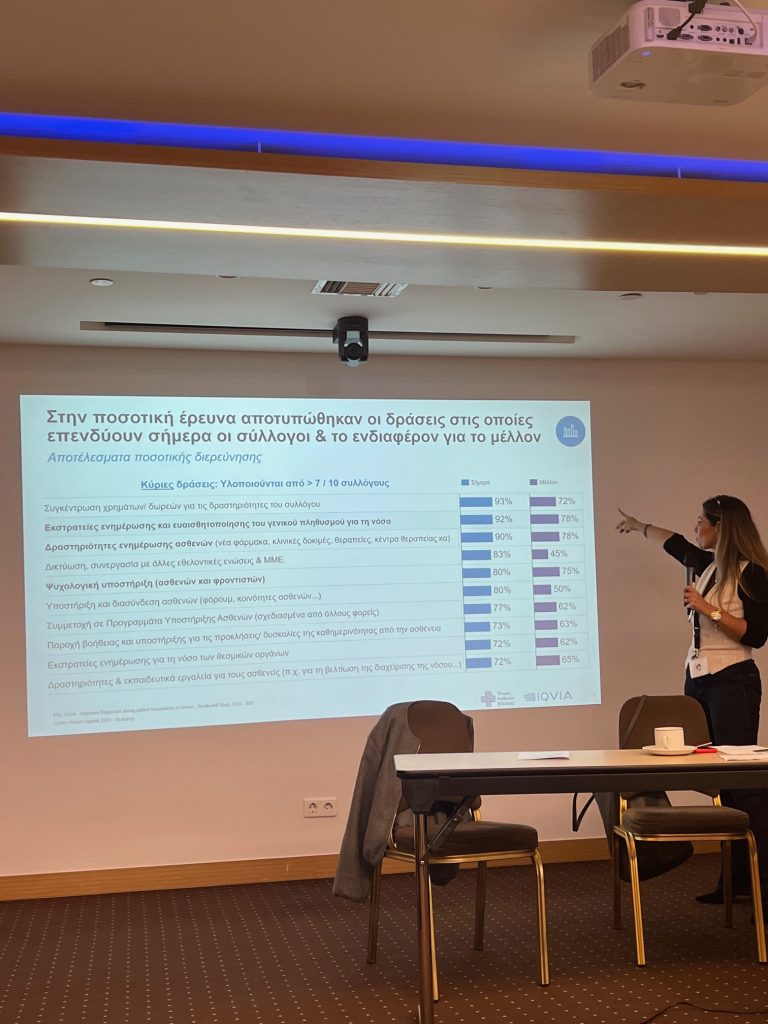
Kapa3 actively participated in the Summit, representing cancer patients and their families. A highlight of its presence was its contribution to the Strategic Workshop: “How do we measure our value?”, where Kapa3 presented its approach and operational philosophy on data collection and utilization as a tool for developing innovative initiatives.

For Kapa3, data collection is a key process in understanding the real needs of its beneficiaries. As emphasized during the session, data analysis—conducted in collaboration with the organization’s biostatistician, Mr. Konstantinos Tzanas—helps Kapa3 design targeted and evidence-based strategies. Continuous evaluation by patients themselves enables the adaptation of services and the development of innovative solutions that have a tangible, positive impact on their lives.

Kapa3’s presence at the Patients Summit 2025 underscored the importance of collaboration, scientific evidence, and collective action. The organization remains committed to amplifying the voice of cancer patients through knowledge, innovation, and transparency—values that can truly transform the patient experience and contribute to a fairer, more humane healthcare system for all.


October 25 – World Breast Cancer Awareness Day

October 25 has been established as World Breast Cancer Awareness Day, a day dedicated to raising awareness, promoting prevention, and supporting people living with this disease. Breast cancer is the most commonly diagnosed cancer among women worldwide, affecting approximately 2.3 million women each year, with 670,000 deaths, while in Greece around 6,000 new cases are diagnosed annually (Source: Globocan 2025). These are not just numbers—they are mothers, sisters, daughters, and friends who deserve hope and dignity.

Survival chances depend on access to early detection and effective treatment: in high-income countries, the five-year survival rate exceeds 90%, while in countries such as India it is 66% and in South Africa only 40%. These inequalities highlight the urgent need for coordinated international action, as incidence and mortality are projected to rise by 40% by 2050 if current trends continue.

Breat scancer does not affect only women—around 1% of diagnoses occur in men, a fact often overlooked. Awareness and education must be inclusive so that no one is left unprotected.

The WHO Global Breast Cancer Initiative, established in 2021, works with countries to reduce breast cancer mortality by strengthening health systems and facilitating access to diagnosis and treatment.

At the same time, psychosocial support for patients and their families is crucial, as a diagnosis affects all aspects of life, from work to daily routines and mental well-being.

International Breast Cancer Awareness Day also calls on communities, health organizations, and authorities to collaborate to improve access to screening and treatment services. Raising awareness about risk factors—such as genetics, age, and lifestyle—and promoting healthy habits helps prevent the disease and reduce health inequalities.

Every individual can contribute: schedule a mammogram, remind friends to do the same, support nonprofit organizations, or participate in awareness activities. Even small gestures, like wearing a pink ribbon or sharing reliable information on social media, make a difference.

At Kapa3, we believe that every woman and person living with cancer deserves support, knowledge, and access to high-quality treatments. Through initiatives in awareness, social support, and empowerment, our goal is to build a society where no life is endangered by lack of information, resources, or care, and wher

e hope and solidarity become powerful allies in the fight against the disease.

Read more on breast cancer:

https://www.kapa3.gr/en/raising-the-standards-europe-s-qa-scheme-for-breast-cancer-services/

Understanding Breast Cancer Risk Factors: What You Can and Can’t Change

October – Breast Cancer Awareness Month

Sources: https://gco.iarc.fr/en

https://www.who.int/initiatives/global-breast-cancer-initiative

https://www.who.int/news-room/fact-sheets/detail/breast-cancer

Text/adaptation: Ifiyenia Anastasiou for Kapa3

EGFR: An “Old Target” Gaining New Life in Cancer Research

When science moves forward step by step

Progress in oncology does not always come with dramatic announcements. Often, it is found in studies that show small but meaningful steps. One such case is a recent review in JAMA Oncology exploring new targeted therapies for head and neck cancer — a type of cancer often linked to smoking, alcohol consumption, or HPV infection. At Kapa3, we closely follow these developments to keep patients and their families responsibly informed,

Researchers focused on a protein called EGFR (Epidermal Growth Factor Receptor). Approximately 90% of patients with this type of cancer show overexpression of the protein, making it an attractive target for therapy. In the past, drugs such as cetuximab attempted to “block” EGFR activity, but results were limited. Patients experienced modest improvements without a significant increase in survival.

The new generation of research goes a step further. Combination therapies are being explored, such as targeting EGFR alongside immunotherapy (e.g., pembrolizumab), which strengthens the body’s defense against cancer cells. In early studies, this combination showed response rates around 45% and a median survival of approximately 18 months in patients for whom previous treatments had failed — results that, while not dramatic, are considered encouraging for this disease.

Scientists now understand that the success of targeted therapy depends on multiple factors. In many patients, cancer cells eventually develop resistance, “learning” to bypass the drug’s effect. In addition, cancers linked to HPV appear to behave differently from those that are not, opening new avenues for more personalized approaches.

Research is also focusing on identifying biomarkers — molecular indicators that can show which patients are most likely to benefit from a particular therapy. If these tools prove reliable, they could lead to more targeted, effective, and safer treatments in the future.

At the same time, newer forms of drugs are being tested, such as bispecific antibodies and antibody–drug conjugates, which aim to target cancer cells with greater precision. All of these efforts are still in early clinical trial stages, aiming to improve efficacy and reduce side effects.

The key message of this research is not that a “new drug that beats cancer” has been found, but that science continues to search, test, and learn. Every small step, every percentage of improvement, every new idea paves the way for future progress.

For people living with cancer — and their families — hope lies not only in major breakthroughs and new treatments but also in the certainty that thousands of researchers around the world are tirelessly working to make each next step a little closer to life. Because in science, as in life, progress is often measured not in leaps but in steady, human steps. At Kapa3, we are committed to sharing this news in a clear and useful way for everyone.

Read the review here

Sources:

Hwang W. et al. “Emerging EGFR-Targeted Therapy in Head and Neck Cancer: A Review.” JAMA Oncology (2025).
World Health Organization – Cancer Research Updates

Text/adaptation: Ifiyenia for Kapa3