

Language in cancer care: why words are never neutral

Language used in cancer care is never neutral. The words chosen to describe a diagnosis can significantly shape how a person experiences illness, especially during a highly vulnerable period of life. Depending on how they are used, words may either reinforce fear and stigma or support dignity, psychological safety, and empowerment.

This perspective is highlighted in a recent interview with Evangeli Bista, co-founder of the Cancer Guidance Center (Kapa3), published on iatronet.gr, where she discusses the findings of a study exploring how patients themselves perceive the language used around cancer.
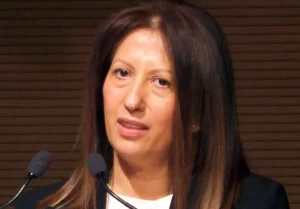
The study, conducted by Kapa3, examined how people living with cancer experience terms such as “cancer patient,” “oncology patient,” or simply “patient,” and how these labels influence their emotional response and sense of identity.

Findings suggest that many patients feel that labels directly linking them to their disease can increase emotional burden and reinforce the idea that cancer defines their entire identity. In contrast, more neutral or person-first expressions (“person with cancer”) appear to offer greater psychological comfort, allowing individuals to maintain a sense of self beyond the diagnosis.

The qualitative analysis also highlights the crucial role of healthcare professionals. Clear, honest, and compassionate communication—without exaggeration or dramatic framing—is consistently described by patients as a key element of trust and emotional support. Communication, in this sense, is not simply a soft skill but an essential part of clinical care.

The study further reinforces the importance of a person-first approach, where the individual comes before the illness. At the same time, participants expressed resistance both to stigma and to excessive heroisation, calling instead for balanced, respectful, and realistic communication.

Ultimately, language in oncology is not just descriptive—it actively shapes the patient experience and becomes part of the care process itself.

Read the full interview with Evangeli Bista on iatronet.gr:
https://www.iatronet.gr/article/139695/karkinopathhs-ogkologikos-asthenhs-h-apla-asthenhs-o-antiktypos-ton-lexeon-ston-karkino

Read the related scientific publication by the Cancer Guidance Center (Kapa3):
https://www.kapa3.gr/nea-epistimoniki-dimosieysi-gia-to-kapa3/

Text/Adaptation: Ifiyenia Anastasiou for Kapa3
Kapa3 in the second half of April: Information, collaborations and strengthening patient care

Kapa3 in April

Throughout April, Kapa3 continued to develop actions and initiatives aimed at improving access to care for oncology patients and their families, with a strong focus on information, prevention, and the development of innovative collaborations.

This period’s activities focused on raising awareness about key cancer types, improving patients’ daily lives through policy and systemic developments, and expanding partnerships that enhance the quality of care and services provided.

In an ever-evolving healthcare environment, the connection between reliable information, human support, and technology remains a key pillar for a more accessible and effective care system.

Below are the main initiatives and developments that marked the second half of the month.

Awareness

April is an awareness month for head and neck cancer as well as testicular cancer, highlighting the importance of prevention and early diagnosis. Although these types of cancer are often underrepresented in public discourse, awareness plays a crucial role in reducing late diagnoses and improving patients’ quality of life.

Patients’ rights

Important developments took place in the field of patients’ rights, including the establishment of the National Registry for Hospital-at-Home Care (NOSPI), aiming to better organise and ensure the safety of home-based care.

At the same time, the new framework for Public Administration introduces changes that directly affect citizens’ daily lives, enhancing transparency, reducing bureaucracy, and improving access to public services.

Collaborations

During April, Kapa3 further strengthened its network of collaborations through significant partnerships.

The collaboration with the PRAXI Network/FORTH, within the European smartHEALTH hub, enhances participation in innovation and health policy initiatives, opening new opportunities at European level.

In addition, the partnership with Karkinaki focuses on supporting children, adolescents, and families living with cancer, promoting a holistic approach to care.

Furthermore, the collaboration with SimasiaAI for the development of “Myrto”, an AI-powered digital assistant, highlights the importance of technology in empowering patients and improving access to reliable information and services.

Research & knowledge

A new international report on person-centred cancer care highlights the need for a holistic model that places the patient at the centre. This approach recognises not only clinical needs but also psychosocial dimensions, reinforcing the importance of patient involvement in decision-making.

Patients & society

On the occasion of European Patients’ Rights Day (18 April), Kapa3 highlighted the importance of equal access to quality care. Despite progress, challenges such as inequalities and delays remain, making the continued strengthening of support structures essential.

Supporting our work

Kapa3’s collection of handmade scarves continues to serve as a creative way of supporting the organisation’s mission, combining aesthetics with meaningful contribution to people living with cancer.

We continue to monitor developments and work towards improving patients’ daily lives — more news coming soon.

Text/adaptation: Ifigenia Anastasiou for Kapa3

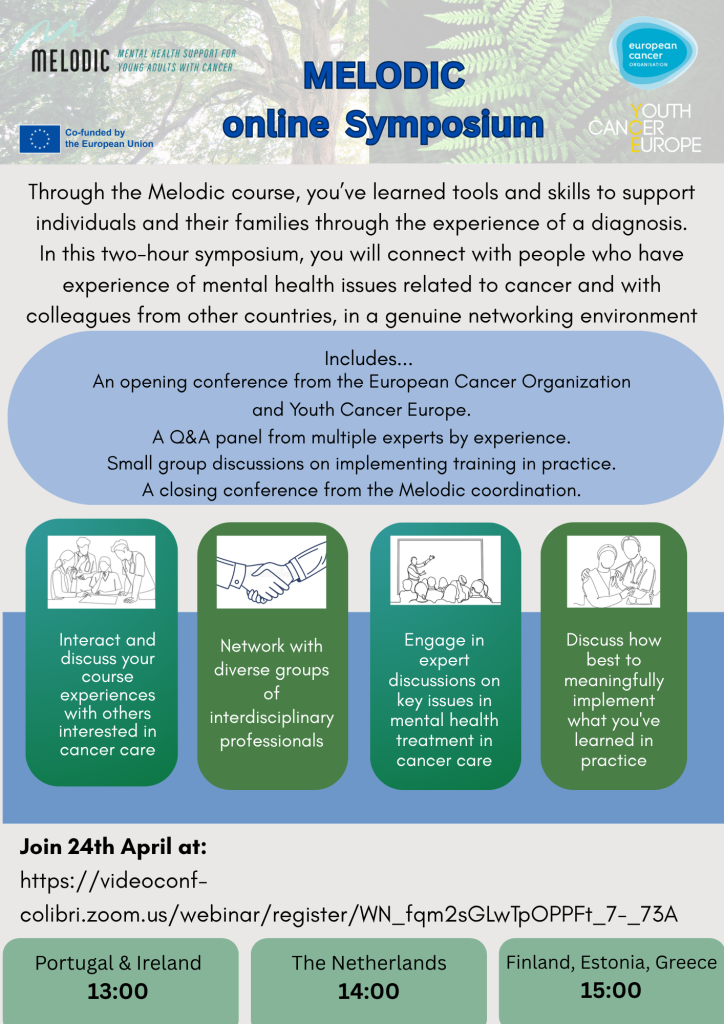
MELODIC Online Symposium: completion of the pilot training phase and strengthening psychosocial cancer care

The European project MELODIC (Mental Health Support for Young Adults with Cancer), in which the Cancer Guidance Center – Kapa3 participates, is being implemented through distinct development phases. The pilot training programme for healthcare professionals is one of its core components, and within this framework, the MELODIC Online Symposium 2026, taking place on 24 April 2026, marks the completion of this educational phase.

The MELODIC project framework

MELODIC is a European project co-funded by the European Union, aiming to strengthen the mental health of young adults living with cancer, as well as to support their families. Through the collaboration of universities, research institutions and healthcare organizations across Europe, the project develops training and support tools for healthcare professionals.

More information about the project and its progress is available on the official Kapa3 website, in the dedicated project section.

The pilot training programme

The pilot training programme focused on enhancing the knowledge and skills of healthcare professionals in providing psychosocial support to young adults with cancer and their families.

As part of the programme, online sessions and contact lessons were delivered, aiming to strengthen interdisciplinary collaboration and support the practical application of tools in everyday clinical practice.

MELODIC Online Symposium 2026

The MELODIC Online Symposium 2026, a two-hour event, brings together participants from all partner countries and includes:

  • opening presentations from the European Cancer Organisation and Youth Cancer Europe
  • an “experts by experience” panel, where individuals share their lived experience
  • a networking panel with healthcare professionals from participating countries
  • discussion on how training can be applied in clinical practice
  • a closing session by the project coordination team

From training to clinical practice

A key objective of the MELODIC training programme is to strengthen the psychosocial dimension of cancer care, with particular focus on young adults.

The exchange of experiences among healthcare professionals contributes to more holistic approaches to care and supports the integration of psychosocial support into daily clinical practice.

The role of Kapa3

Kapa3 actively participates in the European MELODIC consortium, contributing to the implementation of the training activities and the dissemination of results in Greece. Through this involvement, the connection between scientific knowledge and the support of cancer patients is further strengthened, promoting the development of practical approaches to psychosocial care.

The MELODIC Online Symposium 2026 marks the transition from the pilot training phase to the next stage of utilizing its outcomes, reinforcing the link between education and real-world application in cancer care.

The Press Release here: PRESS-RELEASE-MELODIC SYMPOSIUM

Text/adaptation: Ifiyenia Anastasiou for Kapa3

Kapa3 and Karkinaki join forces to support children, adolescents, and families living with cancer

The Cancer Guidance Center – Kapa3 announces its new collaboration with the non-profit organization “Karkinaki”, aiming to strengthen information, psychosocial support, and awareness around childhood and adolescent cancer, as well as to support families experiencing the disease.

Karkinaki is a specialized organization working in the field of childhood and adolescent cancer, focusing on reliable information, empowering parents and caregivers, and fostering a supportive environment around children and teenagers affected by cancer. Through community-based actions and awareness initiatives, it seeks to reduce the sense of isolation that often accompanies diagnosis, while also enhancing understanding, social awareness, and access to available support resources for families.

Within the framework of this collaboration, the two organizations will develop joint initiatives focused on information and awareness-raising, with an emphasis on actions addressing both families and healthcare and support professionals. The partnership will also include the co-organization of informational events, the exchange of good practices, and the exploration of participation in national and European programs that promote a holistic approach to patient care, with an emphasis on continuity of support across all stages of the disease experience.

The Cancer Guidance Center – Kapa3 is dedicated to informing, guiding, and empowering people affected by cancer, providing practical support and access to reliable information and services. At the same time, it develops initiatives that strengthen patients’ active participation in managing their health and promotes a more accessible and human-centered model of care.

In this context, Kapa3 is also involved in European collaborations focusing on the psychosocial dimension of cancer across different stages of life, such as the MELODIC project, which addresses the mental health of young adults with lived experience of cancer. This work further enhances the organization’s ability to recognize needs that emerge throughout the cancer journey, from childhood to adulthood.

This collaboration with Karkinaki reflects the shared vision of both organizations to strengthen a support network that goes beyond medical treatment, extending into families’ daily lives, information access, and psychosocial empowerment, with the aim of providing a more stable and meaningful presence for those who need it most.

Our Press Release here: KARKINAKI PRESS RELEASE

Text: Ifiyenia Anastasiou for Kapa3

Kapa3 announces collaboration with SimasiaAI for the development of the Health Navigator “Myrto” (Myrto AI Assistant)

The Kapa3 – Cancer Guidance Center announces its collaboration with SimasiaAI, for the co-development of the Health Navigator Myrto” (Myrto AI Assistant), an artificial intelligence (AI chatbot) designed to enhance digital cancer support for patients with cancer and their families through immediate, reliable, and personalized information.

This initiative is part of Kapa3’s strategic focus on leveraging innovative digital tools to improve access to information, strengthen guidance, and reduce the digital gap often faced by vulnerable groups in the healthcare sector.

The Health Navigator “Myrto” is not just an information tool, but a new form of social artificial intelligence in cancer care support in Greece. It is designed to transform digital information into a more human, accessible, and meaningful experience, allowing users to interact, receive guidance, and access support tailored to their needs.

Through its dual role as a “Patient Empowerment e-Navigator”, the system will function both as a Patient Advocate—providing guidance on patient rights, benefits, and access to healthcare and social services—and as a Health Navigator, offering reliable information to support better understanding and self-management of health-related issues.

At the same time, the Health Navigator “Myrto” aims to enhance health literacy, support the psychosocial dimension of the disease, and highlight available community resources, contributing to the reduction of inequalities in access to information.

Kapa3, with its long-standing experience in guiding and supporting cancer patients, continues to invest in initiatives that promote equal access to information and digital empowerment, utilizing technology with a strong social and human-centered approach.

The collaboration between Kapa3 and SimasiaAI leads to the development and integration of the Health Navigator “Myrto” into Kapa3’s platform, highlighting the importance of cooperation between social organizations and technology providers in creating innovative digital support tools for cancer patients. Through this initiative, the goal is to meaningfully empower patients, support healthcare professionals, and advance more human-centered digital services.

The development of the Health Navigator “Myrto” marks an important step toward a new model of digital care, where artificial intelligence complements human support, enhancing the quality of life of patients and their families.

The Founding Sponsor of the “Myrto”Health Navigator is the TIMA Foundation.

Our Press Release text here: PRESS RELEASE SIMASIA AI

Text: Ifiyenia Anastasiou for Kapa3

Expansion of High-Cost Medicines Available Through EOPYY Private Pharmacies – What Changes for Patients

The Hellenic National Organization for the Provision of Health Services (EOPYY) is expanding the list of new high-cost medicines available through private EOPYY pharmacies, facilitating patient access to high-cost treatments. The recent decision was published in the Government Gazette.

This development represents another step toward simplifying patient access to high-cost therapies, reducing the need for physical visits to EOPYY pharmacies.

The new regulation includes the addition of further medicines, broadening the scope of the measure. Among these are treatments for multiple sclerosis, such as the active substance ocrelizumab, as well as anticancer agents like imatinib and capecitabine, widely used in oncology. This expansion is expected to significantly benefit more patients, who until now had to be served through specific distribution points, often facing longer waiting times. Patients will gain convenience and improved continuity of care, as access to treatments becomes faster and more reliable.

The option to collect medicines from private EOPYY pharmacies is expected to substantially improve patients’ daily lives, reducing hassle and enhancing accessibility, especially for those with chronic or serious conditions. This change is also part of the broader digital transformation of health services, aiming for a more flexible and patient-centered system. Healthcare providers will be able to monitor medicine distribution more efficiently, ensuring timely support and guidance for patients throughout their treatment.

According to the Government Gazette:

The start date of the medicine distribution process, with supply by EOPYY and final delivery at the private pharmacy specified in ministerial decision EΑLE/GΠ/oικ.51724/19-11-2025, as listed in the table below, is set as the date when EOPYY’s upgraded electronic platform (fyk.eopyy.gov.gr) becomes fully operational for the submission of patient requests under the new procedure defined in the above ministerial decision.

You can read the Government Gazette here (greek text)

Read our previous articles on the HCM procedure here and here

Text/Adaptation: Ifiyenia Anastasiou for Kapa3
Kapa3 at the Scientific Meeting “Cancer in 2026: Challenges and Disruptions” – Focusing on Supportive Care and Its Limits

At the scientific meeting “Cancer in 2026: Challenges and Disruptions”, held on March 13–14, 2026 at the Divani Caravel, Kapa3 actively contributed to discussions on supportive care for oncology patients, a critical area for improving quality of life and holistic patient support.

The meeting was organized by the Hellenic Oncology Patient Support Institute, under the chairmanship of Christos Panopoulos, and was held under the auspices of the Hellenic Cancer Society and the Hellenic Society of Medical Oncologists. It has become a recognized annual event for the oncology community, highlighting each year the latest challenges and rapid developments in the field.

Progress in oncology is continuous and impressive, with scientific advances steadily enhancing the possibilities for personalized treatment, while simultaneously improving patients’ quality of life and turning some forms of cancer into manageable chronic conditions.

During the two-day meeting, key developments were presented in critical areas such as precision medicine, immunotherapy, and novel therapeutic strategies, with particular emphasis on the role of artificial intelligence and molecular analysis in modern clinical practice.

Kapa3 participated in the roundtable on supportive care for oncology patients, held on Friday, March 13, represented by Ms. Evangeli Bista. She noted that attending the conference gave her the opportunity to engage with people leading initiatives in patient support and advocacy. The roundtable addressed critical topics such as the role of healthcare professionals, pain management in Greece, and the adequacy of existing care structures.

In the discussion on psychosocial support, Ms. Bista, representing Kapa3 and drawing from her daily experience with oncology patients, emphasized that addressing the challenges arising from the patient journey is particularly demanding, as the high volume of cases and the fragmentation of the healthcare and social support system create exponentially more issues to manage.

When asked whether voluntary work alone is sufficient to meet the growing needs of patients, her response was clear:

…voluntary action is a valuable and essential pillar of social support. The improvement of patients’ quality of life relies heavily on voluntary efforts that take place across the country under challenging conditions. However, it is not sufficient on its own to meet the complex and increasing needs of patients.

As highlighted during the discussion, voluntary contributions are crucial for filling gaps in the system and strengthening social protection. At the same time, a more comprehensive and institutionally supported approach is necessary. This includes:

• adequate and stable funding
• continuous training and empowerment of all stakeholders
• clear and functional legal frameworks
• a shift in mindset among healthcare professionals, patients, and administrators
• and the development of integrated policies in the field of supportive care

Kapa3’s intervention underscored the importance of psychosocial support as an integral part of oncology supportive care, promoting a more holistic, humane, and sustainable approach to patient management. As Ms. Bista noted, participating in the two-day meeting serves as a reminder that the fight to support patients requires all of us on the same side.

March – Multiple Myeloma Awareness Month

March – Multiple Myeloma Awareness Month

March is internationally recognized as Multiple Myeloma Awareness Month, a type of blood cancer that affects plasma cells – immune system cells responsible for producing antibodies and defending the body against infections.

This period provides an important opportunity to raise public awareness, highlight the challenges faced by patients, and enhance understanding of the disease, early diagnosis, and the importance of access to modern treatments.

What is Multiple Myeloma

Multiple myeloma develops in the bone marrow, when plasma cells grow uncontrollably and produce abnormal proteins. The presence of these cells can affect the production of healthy blood cells, cause bone damage, and impair the function of vital organs such as the kidneys. Although relatively rare, it is the second most common blood cancer worldwide.

The disease’s symptoms may be initially nonspecific and develop gradually. Fatigue, bone pain – especially in the spine or ribs – frequent infections, anemia, or kidney problems are some of the signs that may prompt further investigation. Early awareness and timely medical evaluation are therefore crucial for diagnosis and disease management.

Multiple Myeloma by the Numbers

Globally, the disease affects a significant number of people. According to international epidemiological data:

  • 188,000 new cases were reported worldwide in 2022

  • Approximately 121,000 people died from the disease the same year

  • It is estimated that more than 540,000 people are currently living with multiple myeloma worldwide

The disease occurs more often in older adults. Most diagnoses occur in people over 60–65 years old, and around 80% of cases are reported in individuals over 65. Experts predict that the disease’s incidence may rise in the coming decades, largely due to the aging population in many countries.

The Situation in Greece

In Greece, the exact epidemiological picture of multiple myeloma is not fully clear, as there is no comprehensive national cancer registry recording all cases systematically.

However, according to available international estimates for 2022:

  • About 763 new multiple myeloma cases were reported in the country

  • Approximately 579 deaths were attributed to the disease

  • It is estimated that around 2,154 people in Greece are living with the disease over a five-year period

These figures highlight the importance of improving health data collection and continuously supporting patients living with the disease.

Advances in Treatments

In recent years, scientific progress has significantly changed the course of the disease.

Modern therapies include:

  • Immunotherapies

  • Monoclonal antibodies

  • Proteasome inhibitors

  • Immunomodulatory drugs

  • CAR‑T cell therapies (for advanced stages of the disease)

New therapeutic combinations and ongoing clinical studies are providing more treatment options, reinforcing hope for even more effective therapies in the future.

The Importance of Awareness and Support

Despite these advancements, public awareness and support for people living with the disease remain crucial. Early diagnosis, access to specialized medical care, and equitable access to modern therapies are key factors in improving disease outcomes and patients’ quality of life.

Multiple Myeloma Awareness Month serves as a reminder that knowledge, research, and collective effort can make a difference. Through education, support for scientific research, and assistance to patients and their families, we can help create an environment where no one faces cancer alone.

Sources:

https://gco.iarc.fr
(Global Cancer Observatory – International Agency for Research on Cancer)

https://pubmed.ncbi.nlm.nih.gov/39658225/
(Global burden and projections of multiple myeloma)

https://www.oecd.org/health/cancer-profiles/greece.html
(EU Country Cancer Profile – Greece)

https://ehoonline.biomedcentral.com/articles/10.1186/s40164-025-00684-x
(Global epidemiology of multiple myeloma)

https://pmc.ncbi.nlm.nih.gov/articles/PMC3627436/
(Multiple myeloma epidemiology study)

Text/adaptation: Ifiyenia Anastasiou for Kapa3
Kapa3 at Athens Digital Health Week 2026 – The Role of Patient Digital Navigators in Healthcare Digital Transformation

As part of Athens Digital Health Week 2026, Kapa3, as a new member of the Hellenic Digital Health Cluster (HDHC), participated in the closed members and partners meeting as well as the panel discussion titled “Synergies to Bridge the Needs of Healthcare Services in Digital Transformation,” presenting the role of patient digital navigators and exploring how digital technologies can strengthen a patient-centered healthcare system.

The discussion focused on a key question: how can available digital solutions effectively address the real needs of the healthcare and social care system?

Special emphasis was placed on the importance of interoperability, evidence-based decision-making, transparency, and comparability, as well as connecting research and governance, promoting equality, and considering the impact of artificial intelligence in the modern healthcare ecosystem.

Kapa3 was represented by Evangeli Bista, who highlighted the critical role of patient organizations in successfully integrating digital technologies into the care journey.

As she noted:

“Digital health is not only about developing technological solutions, but about their meaningful integration into the patient’s care journey. Civil society organizations (patients, caregivers, friends, professionals) can play a crucial role as adoption partners, contributing to design, implementation, and evaluation. Through collaboration within the Cluster, an ecosystem is strengthened where innovation translates into real accessibility and continuity of care with maximum social impact. For the Cancer Patients Guidance Center – Kapa3, developing its role as patient digital navigators can only happen through such synergies.”

The panel also included representatives from Affidea Greece, Gnomon Informatics SA, and REA Maternity & Gynecology Clinic, who contributed their expertise to a productive dialogue on aligning technology, clinical practice, and data governance.

During the closed meeting, the need to strengthen joint research initiatives, interoperability, and systematic collaboration among ecosystem members was emphasized, ensuring that innovation translates into measurable value for both patients and the healthcare system.

For Kapa3, developing its role in the digital health ecosystem as patient digital navigators is a strategic priority. Through such collaborations, patient organizations are empowered to actively contribute to a more transparent, equitable, and truly patient-centered healthcare system, where technology serves as a tool for empowerment rather than an end in itself.

Download our Press Release in pdf or word