The Value of Pause: Why We Need to “Disconnect” Even During Treatment

Summer is often associated with the idea of holidays. Images of the sea, travel, and carefree moments fill our daily lives, creating the impression that rest requires a suitcase, a destination, and distance from obligations.

However, for cancer patients who are undergoing treatment, recovering from surgery, or waiting for test results, holidays are often not possible. Medical appointments, treatments, side effects, physical fatigue, and uncertainty about one’s health can make travelling difficult or even impossible.

And yet, the need for rest does not diminish. On the contrary, it often becomes even more important.

Perhaps, then, it is worth redefining what a “holiday” means. Not as travelling somewhere else, but as the ability to pause, even briefly, the relentless cycle of stress, worry, and constant vigilance that often accompanies serious illness. It can be a reminder that life is not only about the disease.

Rest is not a luxury — it is a need

Recent scientific literature shows that people need periods of recovery in order to maintain psychological and physical balance. Recovery is not simply “resting”; it is a process through which the body reduces the physiological and psychological burden caused by chronic stress.

In psychology, the term psychological detachment is used to describe the mental ability to step away from sources of pressure. This means allowing oneself, even for a short while, not to think constantly about what feels overwhelming.

Research by Sonnentag, Binnewies, and Mojza (2010) showed that psychological detachment is associated with lower emotional exhaustion, better mood, and greater resilience in everyday life. Similarly, Fritz and colleagues (2010) found that people who are able to mentally disengage from stress experience higher levels of well-being, energy, and functioning.

Although these studies were mainly conducted among workers, the underlying mechanism applies to every person: when the brain remains in a constant state of alert, it struggles to recover its strength.

In this sense, these small pauses matter not because they make us “forget” the illness, but because they give the brain an opportunity to step out, even temporarily, of a continuous state of alarm.

When illness takes over every thought

The experience of cancer is not limited to treatment days. It often affects everyday life as a whole. Thoughts about tests, medical decisions, bodily changes, work, family, and the future may accompany a person from morning to night.

This constant mental vigilance is exhausting in itself.

International guidelines from the National Comprehensive Cancer Network (NCCN) recognise that psychological distress is a common part of the cancer experience and recommend integrating psychosocial support into overall patient care. Likewise, guidelines from the American Society of Clinical Oncology (ASCO) and the European Society for Medical Oncology (ESMO) emphasise that mental health care and quality of life are essential parts of cancer management.

Holidays are not always about travelling

It is easy to believe that rest requires a trip. Yet scientific research suggests that the greatest benefit of holidays does not necessarily come from the destination itself, but from a change of pace and temporary distance from stressors.

Nawijn and colleagues (2010) found that people tend to feel greater well-being shortly before and during holidays, but that this feeling often fades relatively soon after they return.

This finding reminds us of something important: psychological renewal does not depend only on a few days of holiday each year, but also on the small moments of relief that we can create in everyday life.

For someone undergoing treatment, these moments may be even more valuable.

What does it mean to “pause” as a cancer patient?

To pause does not mean ignoring reality or neglecting one’s health. It means allowing oneself to remember, even for a little while, that life is not only about illness.

This may include:

  • a few quiet minutes on the balcony or in the garden,
  • a short walk in nature, when possible,
  • listening to favourite music,
  • reading a book,
  • engaging in a creative activity,
  • spending time with people who make us feel safe,
  • a few minutes of relaxation or mindful breathing, when appropriate for one’s health condition.

These moments do not change the diagnosis. But they can change the experience of the day.

The importance of quality of life

In modern oncology, quality of life is now considered a key therapeutic goal. Treating the disease is not enough; it is equally important for the person to maintain as much functionality, autonomy, emotional balance, and sense of meaning as possible.

This importance is also reflected in the value framework for cancer treatments developed by the American Society of Clinical Oncology (ASCO). According to this framework, the value of a treatment is not determined solely by its effectiveness, but also by its toxicity, its impact on quality of life, and the personal priorities and preferences of the patient.

This highlights the importance of personalised, patient-centred care, in which the person’s everyday experience is an essential part of the therapeutic process.

Within this perspective, small moments of pause, the continuation of pleasant activities, and connection with what brings joy are not secondary aspects of life. They are meaningful elements that contribute to preserving quality of life. They are not luxuries, signs of weakness, or attempts to avoid reality. They are forms of self-care.

The same applies to family caregivers, who often experience high levels of emotional and physical burden. Taking some time for their own rest is not selfishness; it is a necessary condition for continuing to support their loved one in a meaningful way.

The value of a small pause

The experience of cancer often extends beyond the limits of the disease itself, affecting a person’s self-image, social roles, and daily life. Intense psychological distress and uncertainty can gradually allow the illness to occupy more and more space in life.

In this context, psycho-oncological education appears particularly important. Its aim is to help patients and family caregivers understand the emotional reactions that naturally accompany diagnosis and treatment, develop more effective coping strategies, and actively participate in treatment decisions.

In this way, the sense of control and self-efficacy is strengthened, while also preserving the sense that a person remains something more than their illness.

When health does not allow for travel, it is easy to feel deprived of something important. Yet perhaps the essence of a holiday lies not in the distance we travel, but in the distance we allow ourselves to take from stress.

To “pause” does not mean to stop being a patient. It means allowing oneself, even for a little while, to be something more than the illness.

Perhaps, in the end, the most meaningful holidays are not those that take us far from home, but those that allow us to rest the body, calm the mind, and turn toward ourselves with greater care.

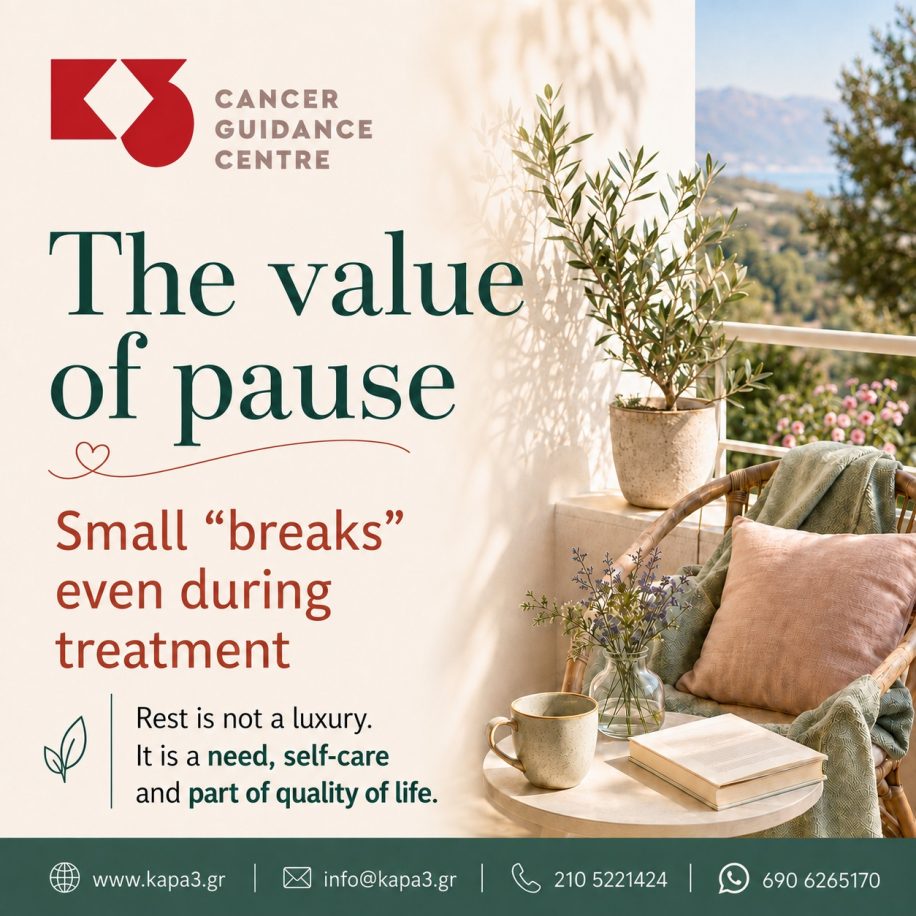
A peaceful sunlit balcony with a chair, a book, a cup, flowers, and an olive tree, illustrating the importance of small moments of rest and self-care during cancer treatment.

By Marilia Barka
Psychology Student
Kapa3 Volunteer
Kapa3 Report for the First Half of 2026

As the first half of 2026 draws to a close, the Cancer Patient Guidance Center (Kapa3) continues to systematically expand its reach, thereby strengthening the system of care and information for both cancer patients and their caregivers.

During the first half of the year, the organization implemented a series of high-level initiatives and forged partnerships at both the national and European levels, thereby solidifying its position.

The organization’s activities got off to a strong start in January with the welcome of its European partners in the MELODIC Consortium project at a productive two-day workshop (January 19–20), hosted by the School of Public Health at the University of West Attica.

In early February, on the occasion of World Cancer Day, Kapa3 played an active role as a partner of René Descartes College in the webinar “Cancer, Patient Navigation & Health Management: From Prevention to Life Coordination.”

At the same time, significant initiatives were carried out in the local community, such as the “Knowledge Workshop in Megara—From Prevention to Life Coordination,” held on February 8 in collaboration with the Municipality of Megara.

In the area of scientific programs, the Cancer Patient Guidance Center, in collaboration with the Laboratory of Basic Health Sciences (EBEY) of the Department of Nursing at the University of the Peloponnese (PA.PEL), launched a series of online meetings running from February through June, focusing on mental health and nutrition.

The month concluded with the organization’s participation in the international conference “Mapping the Unknown in Oncology – From Hospitals to Homes, Mapping the Future of Oncology Care,” held on February 27 and 28.

March marked a strengthening of Kapa3’s “digital presence” with its official membership in the Hellenic Digital Health Cluster (HDHC), a strategic move aimed at linking healthcare with technological advancements. As an extension of this collaboration, the organization participated in a closed-door members’ meeting as part of Athens Digital Health Week 2026.

On March 11, representatives of the organization attended the diaNEOsis event “Facing the Challenge of Artificial Intelligence” at the Lighthouse of the Stavros Niarchos Foundation Cultural Center, while in the middle of the month, Kapa 3 played a prominent role in the scientific conference “Cancer in 2026: Challenges and Disruptions.” Furthermore, on March 19–20, the organization was represented at the 6th Western Macedonia Nursing Conference on the theme “Innovation and Empathy: Balancing Technology with Human Contact in Nursing.”

In parallel, the organization’s co-founder, Ms. Evangelia Bista, gave an interview on the show “All About Health” on Dion TV—which covered a variety of topics related to health, nutrition, autoimmune diseases, and more—the implementation of the free, 8-week Melodic pilot educational program began.

Kapa3’s scientific credibility was reaffirmed by the publication of the research paper “Person-First or Disease-First? Language Choices in Cancer Communication” in the journal *Nursing Reports*, as well as by Kapa3’s participation in the European project associated with Melodic, titled: “Educational Needs Regarding Mental Health of Professionals Working with Young Adults with Cancer: A European Survey,” which was also published; the organization also participated in the MELODIC Online Symposium 2026 on April 24, contributing to the dissemination of results in Greece.

May was marked by a strong outward focus and new collaborations, as the organization joined the European program Service Learning 2: 0:CoLab, was selected as one of six nonprofit organizations to receive financial support from the Alpha Bank-Match For Good initiative, and began its collaboration with the USTEP INSTITUTE.

At the same time, an awareness campaign was held in Soufli to highlight Kapa3’s activities; Ms. Bista gave an interview to iatronet.gr, and representatives of the organization participated in an international conference at the Medical School of the University of Coimbra in Portugal

Within the organization, the new Psychological Support team was established with great enthusiasm, while on the social media front, the Kapa3 team won six medals at the 4th Vouliagmeni Summer Swim.

As the semester came to a close, June began with the signing of an official cooperation agreement with the Department of Occupational Therapy at the University of West Attica, while partnerships were solidified with the non-profit organization “Karkinaki” and the PRAXI Network of the Foundation for Research and Technology – Hellas (FORTH) to strengthen international networking and access to modern funding tools.

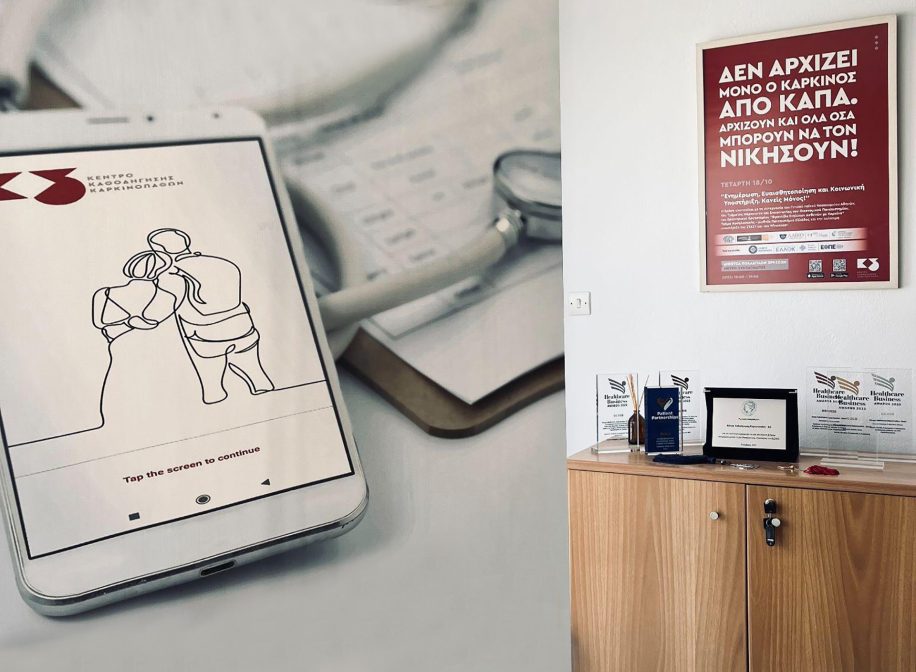
Having completed five years of uninterrupted service in supporting cancer patients through digital guidance, Kapa 3 is entering a new era with the development of the innovative “Myrto” project. This is a pioneering Social Artificial Intelligence (Social AI) initiative in the field of care for cancer patients in Greece. “Myrto” will function as an advanced digital health and rights navigator (Patient Empowerment e-Navigator) for patients, caregivers, and healthcare professionals—a project for which the strategic partnership with SimasiaAi for its co-development was crucial. Finally, the first closed workshop of the MYRTO Al Health Innovation Lab was held for the “Myrto” application, with the support of René Descartes College.

The results of this first half-year clearly demonstrate that Kapa 3 serves as a link connecting innovation, scientific research, and the digital age in the field of oncology care. By combining academic knowledge, European partnerships, and technological development, Kappa 3 transforms every challenge into sustainable, people-centered solutions. Partnerships with leading organizations, investors, and partners who share the same values of social responsibility are also essential to realizing this vision, ensuring that every patient has immediate, reliable, and equitable access to healthcare and their rights.

The KAPA3 team stands steadfastly by patients and caregivers to provide guidance and safeguard their rights. For any information or support, please feel free to contact us.

You can contact the KAPA3 team

13 Kostis Palamas Street, 3rd floor (Hours: 9:00 a.m. – 5:00 p.m.).

Phone Numbers: 210 5221424 & 6906265170.

Email: info@kapa3.gr


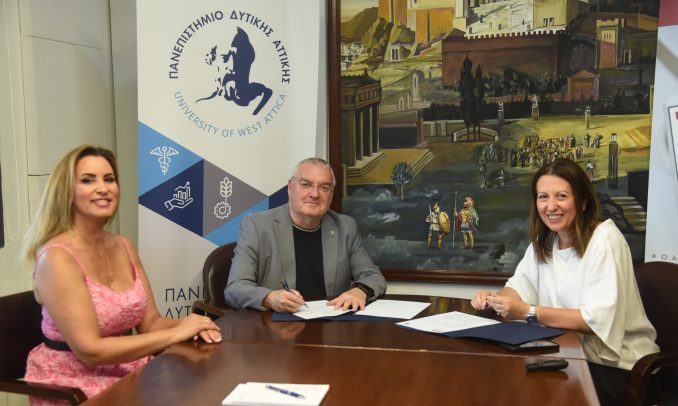
Memorandum of Understanding between the University of West Attica—specifically the Department of Occupational Therapy—and the NGO KAPA3.

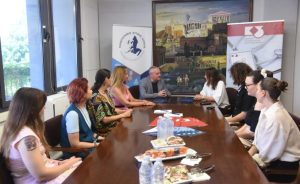
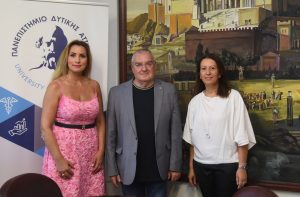
On Tuesday, June 9, a meeting was held to sign a Memorandum of Understanding between the University of West Attica—specifically the Department of Occupational Therapy—and the NGO KAPA3.

The meeting was attended by the Rector of the University of West Attica, Panagiotis Kaldis Penelope Vlotinou, Assistant Professor in the Department of Occupational Therapy Evangelia Bista, co-founder of the organization, as well as representatives from both organizations, including the interdisciplinary team of KAPA3: Despoina Chrysostomou, Psychologist Katerina Georgiopoulou, Social Worker Yiannis Kontogiorgis, Psychologist, and Eleftheria-Irini Polyzoti, an intern from the Department of Social and Educational Policy, as well as students from the Occupational Therapy Department.

During the meeting, a constructive discussion took place regarding the prospects for cooperation between the two organizations, with the aim of developing joint actions and initiatives that will contribute to strengthening education, research, social contribution, and the connection between the academic community and society.

In this context,  it was decided in April to jointly organize a major scientific conference, which will focus on an interdisciplinary and holistic approach to health, on combating social inequalities in healthcare, as well as on the management of chronic disease. The aim of this initiative is to raise community awareness, facilitate the exchange of expertise among professionals and scientific bodies, and disseminate scientific knowledge and information to the general public.

Special mention was made of the innovative work of KAPA3, the digital Health Navigator “Myrto,” a modern artificial intelligence tool currently under development and designed to support cancer patients, their families, and their caregivers. “Myrto” will function as a digital assistant (Chatbot) and Health and Rights Navigator, providing immediate, reliable, and personalized information on health, social welfare, rights, benefits, and available support services. The project aims to empower patients, improve their access to information, and reduce inequalities in health and social care through the use of digital technologies and artificial intelligence applications. The development of “Myrtos” represents a pioneering application of social artificial intelligence in the field of oncology care in Greece and is part of KAPA3’s strategy to promote innovation, accessibility, and the active participation of patients in managing their own health.

The meeting concluded in a particularly positive atmosphere of mutual appreciation and recognition. In this context, the Department of Occupational Therapy at the University of West Attica made a symbolic gesture toward the representative of KAPA3, Evangelia Bista, presenting her with a commemorative gift as a token of appreciation for her many years of valuable social contribution in the field of support for cancer patients. At the same time, as a gesture of hospitality and appreciation, the team was offered a specially produced wine, which is an original creation of the University of West Attica.


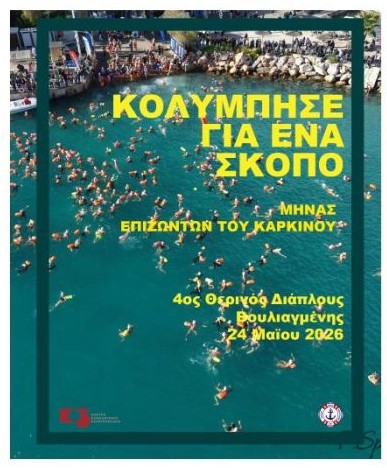
Kapa3 swims for life, hope and strength

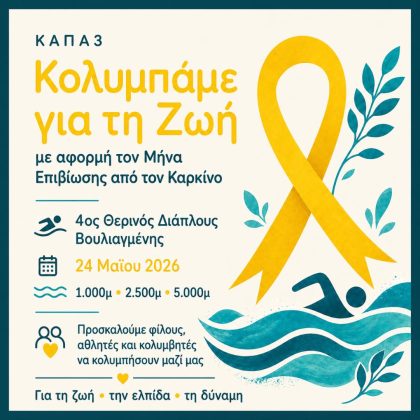
On May 24, 2026, Kapa3 will participate in the 4th Vouliagmeni Summer Open Water Swim, organized by the Nautical Club of Vouliagmeni, inviting friends, athletes, and swimmers to join the team and swim together for an important cause.

In light of June being recognized worldwide as Cancer Survivors Month, and Cancer Survivors Day being observed every year on the first Sunday of June, we come together in an initiative dedicated to life, hope, remembrance, and support.

We swim for those who survived.
We swim for those currently facing cancer.
We swim in memory of those we have lost.
We swim to remind everyone that no one is alone in the cancer journey.

Cancer survivorship is not only a medical outcome. It is an ongoing journey closely connected to prevention, early diagnosis, equal access to oncology care, rehabilitation, psychosocial support, and quality of life.

Recognizing the positive impact of physical activity on wellbeing, empowerment, and the smooth reintegration of people with cancer experience into social, family, and professional life, Kapa3 proudly takes part in a celebration of sports, the sea, and community participation.

Participants may choose one of the following swimming routes:

  • 1,000 m
  • 2,500 m
  • 5,000 m

We invite you to become part of our team.
To swim together.
To turn every meter in the sea into a message of strength, care, and hope.

On May 24, we swim with Kapa3 for life.

INFORMATION – REGISTRATIONS

Katerina Georgiopoulou
Social Worker

CANCER GUIDANCE CENTER, KAPA 3,
13 Kosti Palama Street, Athens 11141, Greece – 3rd Floor
Tel: +30 210 52 21 424 & +30 6906265170 (09:00–17:00)
Email: info@kapa3.gr