Expansion of High-Cost Medicines Available Through EOPYY Private Pharmacies – What Changes for Patients

The Hellenic National Organization for the Provision of Health Services (EOPYY) is expanding the list of new high-cost medicines available through private EOPYY pharmacies, facilitating patient access to high-cost treatments. The recent decision was published in the Government Gazette.

This development represents another step toward simplifying patient access to high-cost therapies, reducing the need for physical visits to EOPYY pharmacies.

The new regulation includes the addition of further medicines, broadening the scope of the measure. Among these are treatments for multiple sclerosis, such as the active substance ocrelizumab, as well as anticancer agents like imatinib and capecitabine, widely used in oncology. This expansion is expected to significantly benefit more patients, who until now had to be served through specific distribution points, often facing longer waiting times. Patients will gain convenience and improved continuity of care, as access to treatments becomes faster and more reliable.

The option to collect medicines from private EOPYY pharmacies is expected to substantially improve patients’ daily lives, reducing hassle and enhancing accessibility, especially for those with chronic or serious conditions. This change is also part of the broader digital transformation of health services, aiming for a more flexible and patient-centered system. Healthcare providers will be able to monitor medicine distribution more efficiently, ensuring timely support and guidance for patients throughout their treatment.

According to the Government Gazette:

The start date of the medicine distribution process, with supply by EOPYY and final delivery at the private pharmacy specified in ministerial decision EΑLE/GΠ/oικ.51724/19-11-2025, as listed in the table below, is set as the date when EOPYY’s upgraded electronic platform (fyk.eopyy.gov.gr) becomes fully operational for the submission of patient requests under the new procedure defined in the above ministerial decision.

You can read the Government Gazette here (greek text)

Read our previous articles on the HCM procedure here and here

Text/Adaptation: Ifiyenia Anastasiou for Kapa3

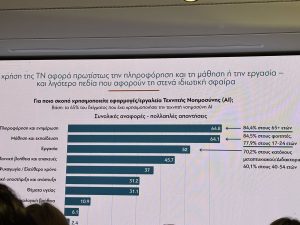
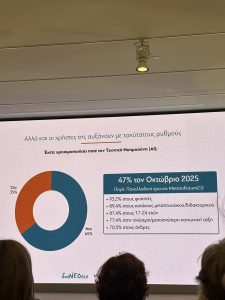
Kapa3 at the “Facing the Challenge of Artificial Intelligence” Event

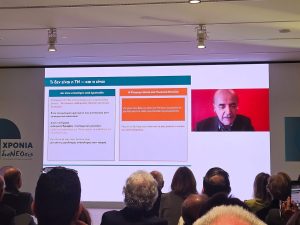
On March 11, 2026, Kapa3 co-founder Evangeli Bista and the organization’s collaborator, Christos Frantzidis, senior lecturer at the School of Computer Science, University of Lincoln, attended with keen interest the event “Facing the Challenge of Artificial Intelligence”, organized by diaNEOsis at the Stavros Niarchos Foundation Cultural Center Lighthouse, marking 10 years of the organization’s work.

The event highlighted, through presentations and discussions, key topics regarding Artificial Intelligence (AI), including: what AI is and the concerns it raises, social impacts and inequalities it may create, ethical and responsible use, effects on work and productivity, and the challenges in legislation and technology regulation.

As Evangeli Bista noted on her social media, AI remains a field full of questions:

  • What exactly is Artificial Intelligence?
  • What concerns are emerging around it?

Technology without thought can reinforce the greatest inequalities,” she emphasized, adding that the conversation on ethical and scientifically informed access to technology remains open. The event offered the chance to see “the next day… through the eyes of those who pioneered it,” such as Joseph Sifakis (Turing Award 2007) and Christos Papadimitriou.

Kapa3’s participation focused on observing, absorbing knowledge, and supporting dialogue around the challenges and opportunities of AI, with particular attention to the social dimension and the inequalities it may create.

By attending this event, Kapa3 continues to demonstrate its commitment to technological developments, the importance of informed and responsible discussion, and understanding the social and ethical implications of Artificial Intelligence.

Kapa3 in the First Half of March: Actions, Collaborations, and Updates for Oncology Patients

During the first half of March, Kapa3 continued to highlight important topics concerning the oncology patient support, rights, and daily lives  through initiatives, collaborations, and informational activities.

Efforts focused both on strengthening access to information and services, and on promoting practical and digital tools that make patients’ daily lives easier.

In an environment where patients’ needs remain complex and constantly evolving, reliable information, enhanced collaboration among stakeholders, and the promotion of holistic care are especially important.

Below is a summary of the main developments from the month.

Collaborations

Key partnerships were strengthened with the Sarcoma Fighters Patients Association, the Hellenic Federation of Persons with Multiple Sclerosis (HFoPwMS), and Doctor Homie, aiming to enhance information, support, and quality care for patients.

Actions & Presentations

Kapa3 participated in the scientific meeting “Cancer in 2026: Challenges and Breakthroughs,” emphasizing the pivotal role of supportive care for oncology patients, while also presenting recent developments addressing their evolving needs. Kapa3 also attented the event Facing the Challenge of Artificial Intelligenceas we remain focused on supporting dialogue around the opportunities and challenges of A.I.

Patient Rights

Supporting oncology patients remains a central goal of our initiatives. Focus was given to updates on the 2026 constant attendance allowance and improved digital access for patients to their test results.

Digital Health & Research

A new European Commission report highlights the critical role of digital health technologies in transforming healthcare systems, outlining both opportunities and challenges for the future of care.

Awareness

March is Colorectal Cancer Awareness Month, reminding everyone of the importance of prevention and early detection.

Oncology patient support remains our top priority, and we continue to monitor developments — more news will follow.

Evangeli Bista on DION TV: Social Support and Kapa3’s Role in Guiding Oncology Patients

On March 19, 2026, Evangeli Bista, Co-founder of Kapa3, gave an interview to Christos Thanasainas, journalist and Scientific Director of Forlife Clinic, on Central Macedonia’s DION TV, during the daily program All About Health, which covers topics on health, nutrition, autoimmune diseases, and recent scientific developments.

The discussion highlighted the importance of social support for cancer patients and their families, both inside and outside the hospital, as well as the critical role of Kapa3 in guiding and providing holistic support to patients.

WHAT IS SOCIAL SUPPORT – TWO WORLDS:

Social support in cancer care is not a single, uniform concept. Inside the hospital, it mainly concerns assistance with the public healthcare system and bureaucratic procedures. Outside the hospital, real life begins: family, caregivers, and decisions the patient must make.

MAJOR SYSTEM CHALLENGES:

As Ms. Bista noted, hospitals face a significant shortage of social workers and related professionals. International literature suggests that there should be 10 social workers for every 2,500 residents—but this is not the case in Greece. In 92 municipalities, there is not a single social worker, while in areas where social workers exist, most are on fixed-term contracts or funded through programs (such as ESIF). The result is a maze of bureaucracy and uncertainty for the patient, who must understand medical and legal terms, make critical decisions, and manage financial consequences—often without support.

THE ROLE OF KAPA3 – SOLUTION, NOT JUST A SERVICE:

In this environment, Kapa3 provides holistic guidance and support, helping patients navigate procedural and practical issues—either independently, if they feel capable, or with active assistance from the organization at every step. Coverage is nationwide, although the complexity and fragmented structure of the system require ongoing study and time for effective support.

THE “HEAVY” MESSAGE – UNDERSTANDING VS. INFORMATION:

As Ms. Bista emphasized:

“The patient doesn’t need more information – they need understanding.”

The process is essentially behavioral: understanding reduces uncertainty, uncertainty reduces anxiety, anxiety affects behavior, and behavior determines health outcomes.

Kapa3 operates within this “maze,” offering holistic guidance and support. Intervention can be supportive, giving patients the ability to act on their own, or active, guiding them step by step. Kapa3 covers the entire country, addressing the growing needs of patients.

THE BIG CHALLENGE: “MYRTO”

“Myrto” represents Kapa3’s major initiative for 2026. After five years in oncology social support, Kapa3 addresses secondary digital exclusion with “Myrto”—a Digital Health Navigator designed to transform knowledge into practical understanding and provide real-time guidance for patients, avoiding the “chaotic wandering” through the healthcare system. The platform is currently in the study and design phase, aiming to meet the real needs of patients and their caregivers.

The interview highlighted the importance of social support, understanding over mere information, and the role of digital technology in modern oncology care. Kapa3 and Myrto strive to bring care from the hospital into patients’ daily lives through a holistic, personalized, and practical approach.

For more information and to watch the full interview, see the video on YouTube here.

(Note: Video in Greek with no English subtitles).

You can dowload our Press Release here

Text/adaptation: Ifiyenia Anastasiou for Kapa3

Digital Health Technologies in Europe: New European Commission Report Highlights Opportunities and Challenges

Digital health technologies in Europe are a key pillar in transforming care systems, as highlighted in the new European Commission report (published in 2026), titled “Observatory for Digital Health Technologies in Europe”. The report, prepared for the Directorate-General CONNECT (DG CNECT) by Capgemini Invent and IDC, provides a comprehensive overview of the EU27 digital health market, analyzing both the technology ecosystem and its economic impact.

The report is structured in three main sections. The first focuses on the creation of the Digital Health Technologies Observatory, a strategic tool for monitoring adoption, innovation, and investment in the sector. The second part presents the economic analysis of five selected technologies, while the third contains conclusions and policy recommendations.

The analysis draws on extensive data, including pan-European surveys of healthcare providers and technology companies, expert interviews, mapping of hundreds of providers, and analysis of tens of thousands of investment records. The findings depict a rapidly growing yet fragmented digital health market in Europe.

Artificial intelligence plays a central role in this transformation, with 94% of healthcare providers already adopting or planning to integrate it. Technologies such as Clinical Decision Support Systems (CDSS), automated medical imaging analysis, and digital mental health platforms are highlighted as particularly important for improving care quality and enhancing health system efficiency.

The economic benefits are substantial. CDSS are estimated to enable savings of up to €252 billion over a decade, while automated medical imaging analysis could save up to €192 billion. Similarly, digital mental health platforms support early intervention and reduce the burden on healthcare services, providing significant social and economic benefits.

The report also identifies critical challenges, such as market fragmentation, interoperability issues, and dependence on non-EU providers in strategic areas. Additionally, issues related to digital skills, regulatory frameworks, and equitable access continue to affect the widespread adoption of these technologies.

To address these challenges, the report recommends measures such as strengthening interoperability, supporting small and medium-sized enterprises, promoting innovation in cutting-edge fields (such as AI and genomics), and integrating principles of sustainability, accessibility, and equity.

The positioning of digital health technologies in Europe as a key pillar for the future of care systems is closely linked with initiatives developed at the national level. In this context, Kapa3 invests in digital tools that enhance information, accessibility, and empowerment of oncology patients, such as the “Myrto” Health Navigator. You can read more about it here.

As Europe seeks to build a more resilient and inclusive health system, leveraging digital technologies emerges as a decisive factor in improving patient quality of life and the effectiveness of healthcare services.

Sources:

Text/Adaptation: Ifiyenia Anastasiou for Kapa3

High Cost Medicines: One More Addition to Help Patients – Up to Three People Can Now Collect on Their Behalf

As of Monday, February 16, 2026, High-Cost Medicines for cancer patients can now be collected by up to three designated representatives, offering greater flexibility and easier access to treatment through community pharmacies.

This new possibility is particularly important for patients who require regular access to High Cost Medicines but may have difficulty getting to the pharmacy or live far from a pharmacy. By allowing representatives, care becomes more flexible and adapted to everyday needs, while ensuring the safety and correct use of the treatment. In this way, access to therapy is faster, more human-centered, and free from unnecessary hassle.

In this first phase, the option applies to patients with cancer and multiple sclerosis, and it will gradually extend to other High Cost Medicines categories. The steps for collection remain the same: the insured person logs into the platform using Taxisnet + AMKA, selects the pharmacy of their choice, and monitors the progress of their order.

For more details, see our previous article.

Text/adaptation: Ifiyenia Anastasiou for Kapa3

Artificial Intelligence in Medicine: Why Horizontal Skills Are More Critical Than Ever

Artificial intelligence is rapidly transforming clinical decision-making, healthcare professional education, and overall care delivery. Yet a recent international review highlights a crucial point: as AI tools become more integral, horizontal skills (soft skills) such as empathy, communication, critical thinking, and ethical judgment are more important than ever.

These competencies enable healthcare professionals to interpret algorithmic outputs, maintain patient trust, ensure safe care, and integrate technology responsibly into clinical practice. Understanding and fostering these skills is essential for building a healthcare workforce that remains human-centered in an AI-driven era.

The review is authored solely by Effie Simou, Associate Professor of Communication and Media in Public Health at the University of West Attica, and examines the role of horizontal skills in the modern, technology-enhanced healthcare environment. By synthesizing international literature, it analyzes how professional responsibility, teamwork, cultural sensitivity, and ethical judgment impact care quality and safety in an era where artificial intelligence plays an ever more active role.

A “Skills Ecosystem” Rather Than a List of Competencies

The review does not treat these skills as isolated capabilities but as an interdependent ecosystem. Communication strengthens trust, empathy improves patient adherence, critical thinking acts as a counterbalance to uncritical acceptance of algorithmic recommendations, while professionalism and ethical vigilance ensure accountability.

The key argument is clear: technological progress does not make horizontal skills less important—it makes them essential. In an environment where algorithms support diagnosis, predict risks, or suggest treatment strategies, healthcare professionals are called upon to interpret, evaluate, and ultimately take responsibility for the decisions made.

Human Judgment Is Not Replaced. It Is Strengthened—and Tested.

Artificial Intelligence in Medicine and the Risks of Uncritical Trust in Technology

Particular emphasis is placed on the risks arising from excessive trust in AI systems. The so-called “automation bias” can lead to reduced critical vigilance, while the complexity of algorithms may hinder understanding of how their recommendations are generated.

Large language models and AI tools can also produce inaccurate or incomplete information persuasively. In a clinical setting, such misleading certainty can have serious consequences.

In this context, artificial intelligence in medicine cannot function autonomously; it requires active and critical human oversight. Critical thinking, transparency, and clear responsibility allocation become absolutely necessary. The final decision regarding patient care cannot be delegated to an algorithm. Responsibility remains human—a fundamental principle for the ethics of medical practice.

The Patient Relationship Dimension

Technology can enhance accuracy, accelerate processes, and support the management of large data volumes. However, it cannot replace the therapeutic relationship. Trust, clear communication, active listening, and recognition of patients’ emotional needs are elements that cannot be coded.

Especially in fields like oncology, where decisions are complex and the emotional burden high, the quality of communication can significantly influence treatment adherence, understanding of options, and overall care experience.

The review emphasizes that human presence is not supplementary to technology—it is the axis around which it must be organized.

Toward a Balanced Human–Algorithm Coexistence

The study’s conclusion is clear: health professional education must integrate both technological literacy and systematic development of horizontal skills. Knowing how an AI tool works is not enough; one must be able to critically evaluate it, explain its limitations, and integrate it responsibly into clinical practice.

In an era where algorithms are becoming increasingly “intelligent,” empathy, responsibility, and critical thinking are not secondary skills—they are the core of a medical practice that seeks to remain human, reliable, and safe.

Ultimately, the question is not whether artificial intelligence will be integrated into medicine—it already has been. The real challenge is under what terms it will coexist with the human factor. As technology advances at geometric speed, education must equally invest in skills that cannot be automated: the ability to listen, to question, and to take responsibility.

The challenge for artificial intelligence in medicine is not only technological but deeply pedagogical and ethical. Perhaps the greatest stake is not to create “smarter” systems but more conscious professionals. As algorithms evolve, so does the need for medicine to remain fundamentally human.

Source
The Growing Importance of Soft Skills in Medical Education in the AI Era, MDPI, 2024.
Available at: https://www.mdpi.com/2813-141X/4/4/50

Text/adaptation: Ifiyenia Anastasiou for Kapa3

February 15 – International Childhood and Adolescent Cancer Day

February 15 is dedicated to International Childhood and Adolescent Cancer Day, a day to raise awareness for children and adolescents facing cancer and for the families who stand by them through this particularly challenging journey.

Globally, over 400,000 children and adolescents aged 0–19 are diagnosed with cancer each year. In high-income countries, more than 80% of children survive thanks to medical advancements and improved treatment protocols. However, inequalities in access to timely diagnosis and appropriate care remain significant. The World Health Organization has set a goal to improve survival rates worldwide by 2030 by strengthening healthcare systems and access to treatment.

In Greece, approximately 300–350 children are diagnosed with cancer each year, with leukemia and central nervous system tumors being the most common types. Survival rates have improved significantly in recent decades, highlighting the importance of specialized medical and psychosocial care.

The experience of cancer at such a young age does not end with the completion of treatment. It often leaves an imprint that accompanies children into adulthood — a stage where challenges change form but the need for support remains.

FROM ADOLESCENCE TO YOUNG ADULTHOOD: THE NEED FOR CONTINUOUS CARE

Young adults aged 18–35 who have experienced cancer form a particularly vulnerable and often “invisible” group, situated between pediatric and adult oncology care. A diagnosis or long-term effects of the disease during this life stage can deeply impact independence, education, work, relationships, and future plans.

References
World Health Organization (WHO). Childhood cancer – Key facts. https://www.who.int/news-room/fact-sheets/detail/cancer-in-children
World Health Organization (WHO). Global Initiative for Childhood Cancer. https://www.who.int/initiatives/global-initiative-for-childhood-cancer
International Agency for Research on Cancer (IARC). Global Cancer Observatory – Childhood Cancer Data. https://gco.iarc.fr
Hellenic Society of Pediatric Hematology and Oncology (EEPAO). https://www.eepao.gr

Text/adaptation: Ifiyenia Anastasiou for Kapa3

Results from the First Phase of the Knowledge Mapping of Members of the Civil Society Alliance, Greece

The first phase of the survey on the current state of knowledge and use of technological tools by members of the Civil Society Alliance, Greece, was successfully completed. Its aim was to identify the strengths, challenges, and needs of the organizations, in order to support their further development and process improvement.

The contribution of the Cancer Guidance Centre – KAPA3, particularly through the collection and analysis of data by Mr. Konstantinos Tzanas, Statistical Analyst, MSc, was significant. This involvement ensured the quality, completeness, and reliability of the results, providing a comprehensive picture of the current situation.

Key Findings
  • Organizations that invest in digital maturity demonstrate better financial management and overall organizational performance.

  • 2024 inputs/budgets are the most decisive factor for organizational maturity. Medium-sized organizations (€250,000 – €600,000) show the best balance of resources and effectiveness.

  • Significant gaps exist in financial sustainability, particularly in revenue generation and grant acquisition, regardless of size.

  • Respondents’ gender does not affect evaluations, while organizational position mainly influences assessments on financial matters.

Organization Clusters
  • Underperforming in management – Emerging (3 organizations, 9%)
    Low maturity, need to develop basic governance and financial management.

  • Digitally Mature Organizations (13 organizations, 39%)
    High digital skills, good KPI handling, need to strengthen fundraising and strategic financing.

  • Organizations with Limited Resources (8 organizations, 24%)
    Focus on grants, weaknesses in financial management, need for basic digital tools and KPIs.

  • High-Maturity Organizations (9 organizations, 27%)
    Excellent governance and financial management, strong points in legal compliance and budgeting, best practices accessible for mentoring.

Strategic Recommendations
  • Strengthen basic governance and financial management for emerging organizations.

  • Leverage digital skills to enhance fundraising in digitally mature organizations.

  • Invest in essential financial management tools and KPIs for organizations with limited resources.

  • Maintain excellence and exchange best practices for high-maturity organizations.

Text/adaptation: Ifiyenia Anastasiou for Kapa3
Vehicle Tax Exemption for People with Disabilities – Step-by-Step Guide

From February 4, 2026, citizens with disabilities can apply for a vehicle tax exemption for people with disabilities (PWD) through the new digital platform of AADE, without the need to submit physical documents. The process is simplified as the required data is automatically retrieved from KEPA of e-EFKA, making it easier for beneficiaries and their families. This digital solution allows fast and secure submission of requests while reducing bureaucracy.

How to apply for a vehicle tax exemption for PWD

1. Access the platform

  • Go to myAADE > Applications > Popular Applications > myCAR.

2. Who can submit the request

  • The beneficiary themselves, or

  • The parent/guardian for a minor, provided that the relationship is registered in the AADE Registry and the minor’s AMKA is included.

3. Vehicle selection

  • The system shows the eligible passenger cars. The beneficiary selects the vehicle for which they want the exemption.

4. Key points

  • Digitized Certificates of Disability (KEPA) issued from September 16, 2022, onwards can be used directly.

  • The exemption is valid from the start to the end of the certificate, including the years of issuance and expiration.

  • For certificates not digitized by e-EFKA, the request is submitted via the “My Requests” application on myAADE, attaching the required documents and selecting the competent tax office (DOY/KEFODE) for the beneficiary.

5. Information & support

  • By phone: 1521 (free of charge), weekdays 7:00–20:00

  • Online: my1521, 24/7, selecting Vehicle Topics > Exemptions > Requirements > Vehicle tax exemption due to disability

Kapa3 ensures that cancer patients and people with disabilities are informed about digital services that make their life easier, providing accurate and timely information about their rights.

You can find the AADE Press Release here.