
Language in cancer care: why words are never neutral

Language used in cancer care is never neutral. The words chosen to describe a diagnosis can significantly shape how a person experiences illness, especially during a highly vulnerable period of life. Depending on how they are used, words may either reinforce fear and stigma or support dignity, psychological safety, and empowerment.

This perspective is highlighted in a recent interview with Evangeli Bista, co-founder of the Cancer Guidance Center (Kapa3), published on iatronet.gr, where she discusses the findings of a study exploring how patients themselves perceive the language used around cancer.
The study, conducted by Kapa3, examined how people living with cancer experience terms such as “cancer patient,” “oncology patient,” or simply “patient,” and how these labels influence their emotional response and sense of identity.

Findings suggest that many patients feel that labels directly linking them to their disease can increase emotional burden and reinforce the idea that cancer defines their entire identity. In contrast, more neutral or person-first expressions (“person with cancer”) appear to offer greater psychological comfort, allowing individuals to maintain a sense of self beyond the diagnosis.

The qualitative analysis also highlights the crucial role of healthcare professionals. Clear, honest, and compassionate communication—without exaggeration or dramatic framing—is consistently described by patients as a key element of trust and emotional support. Communication, in this sense, is not simply a soft skill but an essential part of clinical care.

The study further reinforces the importance of a person-first approach, where the individual comes before the illness. At the same time, participants expressed resistance both to stigma and to excessive heroisation, calling instead for balanced, respectful, and realistic communication.

Ultimately, language in oncology is not just descriptive—it actively shapes the patient experience and becomes part of the care process itself.

Read the full interview with Evangeli Bista on iatronet.gr:
https://www.iatronet.gr/article/139695/karkinopathhs-ogkologikos-asthenhs-h-apla-asthenhs-o-antiktypos-ton-lexeon-ston-karkino

Read the related scientific publication by the Cancer Guidance Center (Kapa3):
https://www.kapa3.gr/nea-epistimoniki-dimosieysi-gia-to-kapa3/

Text/Adaptation: Ifiyenia Anastasiou for Kapa3
Bladder Cancer Awareness Month: Awareness, prevention and early diagnosis

May is internationally recognized as Bladder Cancer Awareness Month, an important initiative led by health organizations and patient advocacy groups worldwide to promote public awareness, prevention, and early diagnosis.

Bladder cancer is among the most common types of cancer globally, with hundreds of thousands of new cases diagnosed each year. In Europe, it is considered one of the most common urological cancers, affecting men significantly more often than women.

In Greece, the data remains particularly concerning. The country records the highest incidence rate in Southern Europe, with approximately 39.7 new cases per 100,000 men annually. In terms of mortality, an estimated 7–8 men per 100,000 lose their lives to the disease every year, placing Greece among the countries with the highest mortality rates in the region. These figures highlight the importance of prevention, awareness, and timely medical intervention.

Behind every statistic are people — patients and families facing the emotional, physical, and practical challenges that accompany a cancer diagnosis. Raising awareness is therefore not only about numbers, but also about supporting individuals throughout their journey.

Smoking remains the most significant risk factor for bladder cancer and is linked to a large percentage of cases. Long-term exposure to certain chemicals, especially in specific occupational environments, as well as chronic inflammation of the urinary tract, may also increase the risk of developing the disease.

Recognizing the symptoms early can make a critical difference. The most common warning sign is blood in the urine (hematuria), even when no pain is present. Other symptoms may include frequent urination, burning during urination, or a sudden urge to urinate. Although these symptoms may also be associated with less serious conditions, they should never be ignored.

When bladder cancer is diagnosed at an early stage, survival rates are significantly higher, underlining the importance of early detection. However, the disease is also known for its high recurrence rates, making long-term follow-up and monitoring essential even after treatment.

Prevention remains a key pillar in reducing the burden of the disease. Quitting smoking, limiting exposure to harmful chemicals, and increasing awareness of the symptoms can all contribute to lowering the risk.

In Greece, awareness initiatives are also supported by scientific organizations such as the Hellenic Genito-Urinary Cancer Group (HGUCG), contributing to public education and the promotion of early symptom recognition.

Bladder Cancer Awareness Month is an important opportunity to encourage open discussion around the disease. Awareness is more than information — it is a tool that can lead to earlier diagnosis, improved treatment outcomes, and ultimately, more lives saved.

Sources:

Text/adaptation: Ifiyenia Anastasiou for Kapa3
Kapa3 swims for life, hope and strength

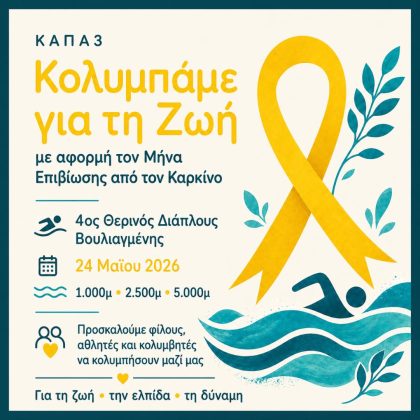
On May 24, 2026, Kapa3 will participate in the 4th Vouliagmeni Summer Open Water Swim, organized by the Nautical Club of Vouliagmeni, inviting friends, athletes, and swimmers to join the team and swim together for an important cause.

In light of June being recognized worldwide as Cancer Survivors Month, and Cancer Survivors Day being observed every year on the first Sunday of June, we come together in an initiative dedicated to life, hope, remembrance, and support.

We swim for those who survived.
We swim for those currently facing cancer.
We swim in memory of those we have lost.
We swim to remind everyone that no one is alone in the cancer journey.

Cancer survivorship is not only a medical outcome. It is an ongoing journey closely connected to prevention, early diagnosis, equal access to oncology care, rehabilitation, psychosocial support, and quality of life.

Recognizing the positive impact of physical activity on wellbeing, empowerment, and the smooth reintegration of people with cancer experience into social, family, and professional life, Kapa3 proudly takes part in a celebration of sports, the sea, and community participation.

Participants may choose one of the following swimming routes:

  • 1,000 m
  • 2,500 m
  • 5,000 m

We invite you to become part of our team.
To swim together.
To turn every meter in the sea into a message of strength, care, and hope.

On May 24, we swim with Kapa3 for life.

INFORMATION – REGISTRATIONS

Katerina Georgiopoulou
Social Worker

CANCER GUIDANCE CENTER, KAPA 3,
13 Kosti Palama Street, Athens 11141, Greece – 3rd Floor
Tel: +30 210 52 21 424 & +30 6906265170 (09:00–17:00)
Email: info@kapa3.gr

April 18: European Patients’ Rights Day

European Patients’ Rights Day is celebrated every year on April 18 and serves as an important occasion to raise awareness about the fundamental rights of all patients in Europe. The day was established by the Active Citizenship Network, aiming to promote equal access to quality healthcare services and safeguard patients’ dignity.

At the European level, patients’ rights do not stem from a single binding legal framework, but from a combination of principles, European directives, and national legislation. A milestone was the European Charter of Patients’ Rights (2002), which established 14 core rights and has become a reference point for many countries.

Key rights include:

  • The right to access healthcare services
  • The right to prevention
  • The right to timely and accurate diagnosis
  • The right to information and informed consent
  • The right to choose treatment
  • The right to privacy and confidentiality
  • The right to safe and high-quality care
  • The right to respect for the patient’s dignity

Despite legislative progress, the full implementation of these rights remains a challenge. According to international reports, in certain vulnerable groups, unmet healthcare needs can reach particularly high levels due to cost, long waiting times, or geographic barriers. Data from the European Commission also highlight delays in diagnoses and treatments, as well as limited patient awareness of available options.

In Greece, patients’ rights are legally protected through, among others, Law 2071/1992 and subsequent regulations. Furthermore, Patient Rights Protection Offices (Γ.Π.Δ.Λ.Υ.Υ.) implement specific regulations for managing complaints, grievances, and positive feedback, as outlined in a Ministry of Health circular (2024). In recent years, significant steps have been taken to strengthen patients’ position in the healthcare system, including:

  • Strengthening the role of Patient Rights Protection Offices in public hospitals
  • Updating the Charter of Rights, with emphasis on modern needs such as digital health and rare diseases
  • Enhancing cooperation between the State, local authorities, academic community, and patient associations
  • Advancing digital transformation, including electronic prescriptions and applications such as MyHealth app

Despite this progress, major challenges remain, such as ensuring equal access to innovative treatments, reducing inequalities, protecting personal data, and guaranteeing high-quality care for all patients.

If a patient feels that their rights have been violated, they can turn to:

  • The hospital administration or the relevant patient rights office
  • The Greek Ombudsman
  • Patient associations or support organizations
  • Relevant health supervisory authorities

In this context, patient organizations and broader civil society organizations, such as Kapa3, play a crucial role—not only in supporting and guiding patients but also in highlighting issues, promoting policy changes, and shaping a fairer and more accessible healthcare system.

Awareness of one’s rights is the first and most essential step toward protecting them. An informed patient can actively participate in decisions concerning their health, advocate for better care, and contribute to improving the healthcare system itself.

This day reminds us that healthcare is not a privilege but a fundamental human right—and that a fair and patient-centered healthcare system is built every day, with respect, information, and active participation from all.

Sources:

  1. European Charter of Patients’ Rights (2002): https://www.activecitizenship.net/charter-of-rights.html
  2. European Commission data: https://health.ec.europa.eu/publications/patients-rights_en
  3. Ministry of Health – Regulations for managing complaints and grievances through Patient Rights Protection Offices (Γ.Π.Δ.Λ.Υ.Υ.) -greek text

Text/adaptation: Ifiyenia Anastasiou for Kapa3

Kapa3 and Karkinaki join forces to support children, adolescents, and families living with cancer

The Cancer Guidance Center – Kapa3 announces its new collaboration with the non-profit organization “Karkinaki”, aiming to strengthen information, psychosocial support, and awareness around childhood and adolescent cancer, as well as to support families experiencing the disease.

Karkinaki is a specialized organization working in the field of childhood and adolescent cancer, focusing on reliable information, empowering parents and caregivers, and fostering a supportive environment around children and teenagers affected by cancer. Through community-based actions and awareness initiatives, it seeks to reduce the sense of isolation that often accompanies diagnosis, while also enhancing understanding, social awareness, and access to available support resources for families.

Within the framework of this collaboration, the two organizations will develop joint initiatives focused on information and awareness-raising, with an emphasis on actions addressing both families and healthcare and support professionals. The partnership will also include the co-organization of informational events, the exchange of good practices, and the exploration of participation in national and European programs that promote a holistic approach to patient care, with an emphasis on continuity of support across all stages of the disease experience.

The Cancer Guidance Center – Kapa3 is dedicated to informing, guiding, and empowering people affected by cancer, providing practical support and access to reliable information and services. At the same time, it develops initiatives that strengthen patients’ active participation in managing their health and promotes a more accessible and human-centered model of care.

In this context, Kapa3 is also involved in European collaborations focusing on the psychosocial dimension of cancer across different stages of life, such as the MELODIC project, which addresses the mental health of young adults with lived experience of cancer. This work further enhances the organization’s ability to recognize needs that emerge throughout the cancer journey, from childhood to adulthood.

This collaboration with Karkinaki reflects the shared vision of both organizations to strengthen a support network that goes beyond medical treatment, extending into families’ daily lives, information access, and psychosocial empowerment, with the aim of providing a more stable and meaningful presence for those who need it most.

Our Press Release here: KARKINAKI PRESS RELEASE

Text: Ifiyenia Anastasiou for Kapa3

Patients’ Rights in Public Administration: Less Bureaucracy and More Transparency

With Law 5293/2026 (Government Gazette A’57), a new framework is introduced for the operation of Public Administration in Greece, directly linked to patients’ rights in public administration, aiming to create a more citizen-friendly, efficient and transparent system.

These changes affect everyday interactions with public services, improving the way citizens are served, informed and supported.

The main provisions of the law can be grouped into three key pillars:

1. Simplification of procedures and reduction of bureaucracy

A central element of the reform is the simplification of administrative processes.

Article 3 – Replacement of supporting documents

According to Article 3, citizens may, in several cases, replace official supporting documents with a solemn declaration, when these documents cannot be directly retrieved by public services.

In practice, this means:

  • fewer documents need to be submitted
  • public authorities are responsible for retrieving the required information
  • procedures can start immediately without delays

At the same time, verification mechanisms are in place, including checks and sanctions in cases of false declarations.

Article 5 – Faster processing of requests

Article 5 strengthens the obligation of public services to process requests within specific deadlines, reducing delays in administrative procedures.

2. Transparency and digital access to information

The second pillar focuses on improving transparency and access to information.

Article 5 – Case tracking

Citizens are given the ability to digitally monitor the progress of their requests.

They can access information such as:

  • the current stage of the process
  • the estimated completion time
  • the responsible department
  • contact details for further communication

Article 6 – Mandatory publication of circulars

All administrative circulars:

  • must be published online
  • are valid only after publication

This ensures that citizens have access to up-to-date and valid information.

Article 7 – Online publication of public service hours

Public authorities are required to publish and regularly update:

  • their operating hours
  • public service hours

This helps reduce unnecessary visits and waiting times.

3. A new way of operating public administration

The law also introduces a new approach to administrative procedures, aiming to increase efficiency.

Article 4 – Certified professionals

Public administration may collaborate with certified professionals who:

  • are registered in official registries
  • meet specific qualification and certification criteria
  • can prepare reports, certificates or draft decisions used in administrative processes

These professionals are subject to:

  • random checks
  • penalties and fines in case of errors
  • removal from the registry if necessary

At the same time, accountability mechanisms (particularly under Article 3) ensure the reliability of the system.

What this means for patients

While these measures apply to all citizens, they are particularly important in relation to patients’ rights in public administration.

Reducing bureaucracy, enabling digital access to information and speeding up procedures can significantly ease the burden for patients, especially in processes related to:

  • healthcare services
  • benefits and allowances
  • administrative approvals

Towards a more accessible public administration

Law 5293/2026 represents an important step towards a more efficient, transparent and accessible public administration.

For patients and their families, every improvement that reduces complexity and uncertainty is not just an administrative change, but a meaningful support in their daily lives.

You can find the Government Gazette A’57 here (Greek Text): ΦΕΚ Α 57 Ν 5293_2026

Text/adaptation: Ifiyenia Anastasiou for Kapa3
April: Awareness Month for Head & Neck Cancer and Testicular Cancer

April has been internationally recognized as an awareness month for two important types of cancer: head and neck cancer and testicular cancer. Education and prevention are critical, as early diagnosis can save lives and significantly improve patients’ quality of life. Although these cancers are often overlooked in public discussions, raising awareness helps reduce delayed diagnoses and strengthens preventive measures. Society is encouraged to participate actively in awareness campaigns, speak openly about risks, and promote prevention across all age groups.

Head and Neck Cancer

Head and neck cancer includes tumors that occur in the oral cavity, pharynx, larynx, nasal cavities, and paranasal sinuses. According to the European Society for Medical Oncology (ESMO), approximately 150,000 new cases are diagnosed annually in Europe, with 70% affecting men. In Greece, it is estimated that over 3,500 new cases occur each year, primarily in people aged 50+, while incidence among younger patients is increasing due to HPV infection.

Risk factors include smoking, excessive alcohol consumption, sun exposure for certain skin cancers of the face, and HPV. Symptoms that should not be ignored include persistent sore throat, voice changes, non-healing sores, neck lumps, and difficulty swallowing. Early recognition of these symptoms and regular check-ups with a specialist significantly improve survival chances, exceeding 80% when diagnosed early. Additionally, regular dental exams and HPV vaccination are recommended preventive measures.

Testicular Cancer

Testicular cancer is rare but primarily affects young men aged 20 to 40. Awareness is critical, as early detection is associated with survival rates of up to 95% in early stages. In Greece, approximately 300–400 new cases are reported annually. Risk factors include history of undescended testicles (cryptorchidism), family history of testicular cancer, and certain genetic conditions.

Self-examination is the most effective method for early detection: men are encouraged to regularly check their testicles for lumps, changes in size, or texture. Education about self-examination reduces fear and promotes early consultation with a physician. Early medical intervention and imaging tests contribute to complete treatment, often without requiring radical surgery, allowing patients to return quickly to normal activities.

The prevention and education are our strongest weapons against cancer. Through awareness initiatives, like those organized by Kapa3, people learn to recognize early symptoms, seek timely medical advice, and rely on professionals and organizations offering counseling and support. Knowledge saves lives, and active participation can make a difference, strengthening a culture of prevention and personal responsibility for health.

Sources / Learn More:

• April is Testicular Cancer Awareness Month — Testicular Cancer Foundation
https://www.testicularcancer.org/april-testicular-cancer-awareness-month/

• Testicular Cancer Statistics — Johns Hopkins Medicine
https://www.hopkinsmedicine.org/health/conditions-and-diseases/testicular-cancer/testicular-cancer-statistics

• Head and Neck Cancer Awareness Month — AwarenessDays.com
https://www.awarenessdays.com/awareness-days-calendar/head-and-neck-cancer-awareness-month/

• Head and Neck Cancers Epidemiology — World Cancer Report (NCBI)
https://www.ncbi.nlm.nih.gov/books/NBK606499/

Text/Adaptation: Ifiyenia Anastasiou for Kapa3
New National Patient Registry for Hospital-at-Home Care (NOSPI)

Patient care at home in Greece is becoming more organized and secure with the establishment of the National Registry of Patients Receiving Hospital-at-Home Care (NOSPI), as published in Government Gazette 1995/07.04.2026. The NOSPI program is already in pilot implementation at selected hospitals nationwide, with the goal of full development and operation by the end of 2026, including a digital platform and patient registry.

The new registry aims to systematically record patients receiving NOSPI services, ensuring that care is tailored to individual therapeutic needs. Patient groups eligible for inclusion include, among others, those with tracheostomies, on non-invasive mechanical ventilation, receiving long-term oxygen therapy, on parenteral or gastrostomy feeding, as well as those requiring intensive physiotherapy or mobility rehabilitation. Currently, enrollment primarily focuses on children with severe health conditions and chronically ill patients needing pulmonary care, in collaboration with pilot Reference Centers.

While the NOSPI program is already operating in a pilot phase, universal access for all patients in the country has not yet been achieved. Its development is gradual, with full operation—including digital infrastructure and registry-based documentation—planned by the end of 2026. Strengthening Hospital-at-Home care enables better monitoring and improvement of home care services for patients with long-term needs.

Through the registry, authorities can collect accurate and essential health data, enhancing the quality of services and supporting the design of targeted health policies. Implementation respects personal data protection in line with the General Data Protection Regulation (GDPR), ensuring transparency and public trust.

For families and caregivers, patient enrollment in the NOSPI National Registry means access to more coordinated care, with support delivered directly to their homes. Furthermore, documentation helps evaluate and improve home nursing services, enhancing patient safety and quality of life.

This initiative, combined with the development of the digital platform and registry, aims not only to upgrade home care services but also to reduce hospital congestion and ensure high-quality services for all patients in the future.

Sources (text in Greek) : Government Gazette NOSPI, ODIPY

Text/adaptation: Ifiyenia Anastasiou for Kapa3

Wrap Yourself in Spring. A small act of care, a one-of-a-kind piece.

Spring is a season of renewal — a time of light, color, and a desire for change.
This year, Kapa3 invites you to wear it — quite literally. A collection of handmade scarves, wraps, and shawls brings spring closer than ever. Created using techniques such as low immersion dyeing and botanical (eco) printing, each piece is truly one of a kind.

Leaves, flowers, and natural dyes derived from plants, fruits, and even tree bark leave their imprint on the fabrics, creating patterns that can never be replicated. No two scarves are the same — each one carries the care and attention with which it was made.

From silk scarves made of Greek silk to lightweight wraps in viscose, gauze, or blended fabrics, this collection combines elegance with authenticity. Every purchase directly supports the work of Kapa3 and its initiatives for people facing cancer and their families.

Each scarf is more than just an accessory: it is a small act of care that you can wear or offer as a gift to the women you love — partners, mothers, daughters, grandmothers, friends, colleagues.

With every purchase, we become part of a community that supports, cares, and shares moments of solidarity. The power of small acts is greater than we imagine.

The collection is limited — a total of 19 unique pieces are available.

Availability & Purchase Information

For more information and orders, please contact Kapa3:
– via email at info@kapa3.gr
– by phone at +30 690 6265170

(Please include the product code when placing your order)

Available Pieces

Each piece is unique and corresponds to the photo that accompanies it.

Low immersion dyeing technique

LID-01 – Viscose wrap
Dimensions: 210 × 70 cm 


Price: 30€

LID-02 – Silk narrow scarf (Greek silk) / SOLD
Dimensions: 27 × 114 cm

Price: 24€

LID-03 – Silk narrow scarf (Greek silk)
Dimensions: 27 × 114 cm

 
Price: 24€

LID-04 – Silk narrow scarf (Greek silk)
Dimensions: 27 × 114 cm


Price: 24€

LID-05 – Silk narrow scarf (Greek silk)
Dimensions: 27 × 114 cm


Price: 24€

LID-06 – Silk narrow scarf (Greek silk), shibori technique
Dimensions: 27 × 114 cm


Price: 24€

LID-07 – Silk narrow scarf (Greek silk) / SOLD
Dimensions: 27 × 114 cm

 
Price: 24€

LID-08 – Silk narrow scarf (Greek silk)
Dimensions: 27 × 114 cm


Price: 24€

LID-09 – Silk narrow scarf (Greek silk)
Dimensions: 27 × 114 cm 

 
Price: 24€

Botanical (eco) printing technique

BOT-01 – Viscose wrap
Dimensions: 184 × 68 cm


Price: 36€

BOT-02 – Viscose wrap
Dimensions: 197 × 65 cm 


Price: 36€

BOT-03 – Viscose wrap
Dimensions: 196 × 68 cm 

 
Price: 36€

BOT-04 – Viscose wrap / SOLD
Dimensions: 187 × 65 cm

 
Price: 36€

BOT-05 – Gauze wrap
Dimensions: 217 × 80 cm

 
Price: 40€

BOT-06 – Silk narrow scarf (Greek silk)
Dimensions: 114 × 27 cm

 
Price: 30€

BOT-07 – Silk narrow scarf (Greek silk) / SOLD
Dimensions: 114 × 27 cm


Price: 30€

BOT-08 – Silk square scarf (Greek silk)
Dimensions: 50 × 50 cm

   
Price: 30€

BOT-09 – Silk square scarf (Greek silk)
Dimensions: 50 × 50 cm

   
Price: 30€

BOT-10 – Blended fabric wrap (cotton, linen & polyester)
Dimensions: 162 × 48 cm

 
Price: 24€

The scarves are created by the brand Zoe and the Dog (@Zoeandthedog).

This spring, let’s wear something beautiful — and meaningful.

Text: Ifiyenia Anastasiou for Kapa3

The digital transformation of documents

Greece is advancing in digital governance with Law 4727/2020, making it mandatory for public authorities to accept electronic documents bearing an approved electronic signature or electronic stamp. This means citizens and businesses no longer need to submit paper forms or collect physical signatures for documents to be legally recognized.

What are approved electronic signatures and stamps?
Approved signatures and stamps confirm the authenticity and legal validity of documents. Certificates, applications, or contracts with these digital markers are recognized by all public and judicial authorities, as well as by private entities, without additional procedures.

Easy verification and security
Documents issued through the Unified Digital Government Portal (gov.gr) carry a unique verification code and can be checked online using either the verification code or QR code. This provides added security and transparency while reducing the risk of fraudulent documents.

Practical benefits for citizens and businesses
Digital documents simplify administrative processes and save time, enabling citizens and businesses to focus on essential tasks instead of bureaucratic procedures. At the same time, the reliability and legal validity of documents are preserved across public and private sectors.

The new reality
Mandatory acceptance of electronic documents marks another step toward a modern, user-friendly, and transparent administration, where citizens can trust that their documents are recognized, whether digital or printed. The digitalization of documents also promotes efficiency, security, and accessibility, enhancing daily interactions with public authorities.

The adoption of electronic documents is a major step toward a paperless, fast, and secure workflow. It ensures compliance with national laws while making government services more approachable and easier to navigate for everyone.

Text/Adaptation: Ifiyenia Anastasiou for Kapa3