World Day for Organ Donation and Transplantation – October 28

October 28 is not only a day of national remembrance in Greece; it’s also the World Day for Organ Donation and Transplantation — a day dedicated to the second chance life can offer. A reminder that generosity does not end with us but continues through those who choose to give hope.

Organ donation is one of the most powerful expressions of solidarity and humanity. Each donation can save or transform up to seven lives — people who are waiting for a heart, liver, kidney, lungs, or other vital organs to survive. Yet, the numbers show that this gift of life is still far too rare. According to the Hellenic Transplant Organization (EOM), only about 8 organ donors per million population were recorded in Greece in 2023, compared to an EU average of 18 (EOM, 2023).

The gap between the need and availability of organs remains a pressing issue. Thousands of patients across Europe spend years on waiting lists, while many never get the chance for a transplant. Raising awareness, dispelling myths, and encouraging conversation within families are crucial steps toward change.

Becoming an organ donor means choosing to leave a legacy of life. It’s a selfless act that connects us beyond time, offering a heartbeat, a breath, or a new beginning to someone else.

Because when one life ends, another can begin — and that may be the most profound act of love there is.

Sources:

Hellenic Transplant Organization (EOM) here

European Directorate for the Quality of Medicines & HealthCare (EDQM) – Organ donation and transplantation statistics  here    

Text/Adaptation: Ifiyenia Anastasiou for Kapa3


EGFR: An “Old Target” Gaining New Life in Cancer Research

When science moves forward step by step

Progress in oncology does not always come with dramatic announcements. Often, it is found in studies that show small but meaningful steps. One such case is a recent review in JAMA Oncology exploring new targeted therapies for head and neck cancer — a type of cancer often linked to smoking, alcohol consumption, or HPV infection. At Kapa3, we closely follow these developments to keep patients and their families responsibly informed,

Researchers focused on a protein called EGFR (Epidermal Growth Factor Receptor). Approximately 90% of patients with this type of cancer show overexpression of the protein, making it an attractive target for therapy. In the past, drugs such as cetuximab attempted to “block” EGFR activity, but results were limited. Patients experienced modest improvements without a significant increase in survival.

The new generation of research goes a step further. Combination therapies are being explored, such as targeting EGFR alongside immunotherapy (e.g., pembrolizumab), which strengthens the body’s defense against cancer cells. In early studies, this combination showed response rates around 45% and a median survival of approximately 18 months in patients for whom previous treatments had failed — results that, while not dramatic, are considered encouraging for this disease.

Scientists now understand that the success of targeted therapy depends on multiple factors. In many patients, cancer cells eventually develop resistance, “learning” to bypass the drug’s effect. In addition, cancers linked to HPV appear to behave differently from those that are not, opening new avenues for more personalized approaches.

Research is also focusing on identifying biomarkers — molecular indicators that can show which patients are most likely to benefit from a particular therapy. If these tools prove reliable, they could lead to more targeted, effective, and safer treatments in the future.

At the same time, newer forms of drugs are being tested, such as bispecific antibodies and antibody–drug conjugates, which aim to target cancer cells with greater precision. All of these efforts are still in early clinical trial stages, aiming to improve efficacy and reduce side effects.

The key message of this research is not that a “new drug that beats cancer” has been found, but that science continues to search, test, and learn. Every small step, every percentage of improvement, every new idea paves the way for future progress.

For people living with cancer — and their families — hope lies not only in major breakthroughs and new treatments but also in the certainty that thousands of researchers around the world are tirelessly working to make each next step a little closer to life. Because in science, as in life, progress is often measured not in leaps but in steady, human steps. At Kapa3, we are committed to sharing this news in a clear and useful way for everyone.

Read the review here

Sources:

Hwang W. et al. “Emerging EGFR-Targeted Therapy in Head and Neck Cancer: A Review.” JAMA Oncology (2025).
World Health Organization – Cancer Research Updates

Text/adaptation: Ifiyenia for Kapa3

New limits on diagnostic tests by EOPYY

What applies to oncology patients

With a new decision by the Ministry of Health (Government Gazette 5325/B/2025), stricter rules are in effect for the repetition of diagnostic tests for EOPYY-insured patients, aiming to reduce costs. However, oncology and hematology patients are exempt in many cases, ensuring continuous and uninterrupted medical monitoring.

What changes

  • For a series of laboratory and imaging tests (hematology, biochemistry, hormone tests, tumor markers, ultrasounds, CT, MRI, etc.), it is explicitly stated:
    “Oncology and hematology patients are exempt”, allowing more frequent repetition when justified by the attending physician.

  • For tests such as cancer markers, PET/CT scans, and scintigraphy, the exemption is automatic without time restrictions, as these are part of routine disease monitoring.

  • Oncology patients are also included in the new “Radio-pharmaceutical Reimbursement Procedure”, covering nuclear medicine tests and ensuring full reimbursement.

In summary, for oncology patients, the ability to repeat tests essentially does not change — on the contrary, they are legally protected, as the prescribed exemptions remain.

However, the new framework introduces stricter controls on prescription and reimbursement, which may lead to delays or differences among diagnostic centers and could indirectly affect access and the speed at which tests are carried out.

The full page of the Government Gazette (ΦΕΚ) can be viewed here


Text/adaptation: Ifiyenia Anastasiou for Kapa3


World Food Day: Nourishment as a Pillar of Recovery, Equity & Dignity

Every year on October 16, we pause to remember that food is not a luxury — it is a fundamental human right. As the global theme underscores, “Water is life, water is food. Leave no one behind,” we cannot separate what we eat from how we live, survive, and heal.

The Cancer–Nutrition Connection

For people living with cancer, nutrition can shift from routine to lifeline. The right balance of proteins, micronutrients, hydration, and calories helps sustain strength, improve tolerance of treatments, and support recovery. Yet many cancer patients face serious obstacles: loss of appetite, changes in taste, nausea, fatigue, and swallowing problems. These side effects often lead to undernutrition or weight loss, which in turn can weaken resilience against therapy.

The Shadow of Food Insecurity

The medical challenges compound when food access is uncertain. Studies show that between 17% and 55% of cancer patients worldwide experience food insecurity. Among survivors, those struggling with insecure nutrition have been shown to carry a 28% higher risk of mortality compared to those with stable access. In some research from the U.S., about 6% of older cancer survivors report food insecurity, especially when healthcare costs become “catastrophic” relative to income. These numbers are alarming — they confirm that disease and deprivation often travel together.

The Broader Picture

Food systems globally are strained by climate change, supply chain disruptions, inequalities, and the overuse of ultra-processed foods. In cancer contexts, a 10% increase in ultra-processed food intake has been linked with higher incidence of some cancers (breast, colorectal, head & neck). Ensuring equitable access to fresh, minimally processed foods is critical to prevention and treatment alike.

At Kapa3, we firmly believe that caring for people with cancer goes far beyond medical treatment. Proper nutrition, psychological support, and reliable information are equally important pillars for each person’s wellbeing and dignity.
Raising awareness about nutrition is an essential part of our mission to highlight issues related to quality of life, encourage healthy choices, and remind everyone that even the smallest changes in our daily habits can make a meaningful difference in supporting both patients and their caregivers.

On this World Food Day, let us commit to more than awareness. We must advocate for policies that ensure nutritious food access as part of healthcare, especially for patients facing serious illness. Governments, NGOs, health institutions — all must collaborate to reduce food deserts, subsidize healthy staples, and integrate food security screening into patient care protocols.

In shared meals, there’s more than sustenance: there’s hope, connection, and dignity. Those fighting cancer deserve every bite of comfort, strength, and life — and none should ever be left behind.

Read more about our Holistic Body and Mind Care online Meetings with Kapa3 and the University of the Peloponnese here

New Guide by the Greek Ombudsman on Serving Vulnerable Groups in Public Services

The Greek Ombudsman has released a new, comprehensive Guide addressing the service of vulnerable social groups by public authorities. This important tool for awareness and training aims to improve the quality of service, strengthen equality, and promote respect for the rights of all citizens.

The Guide includes:

  • The main legal framework and legislative provisions concerning different categories of citizens.
  • The difficulties and barriers faced by groups such as Roma communities, persons with disabilities, victims of domestic violence, people living with addictions, or citizens with a migrant background.
  • Practical behavioral guidelines for civil servants to ensure that services are accessible, non-discriminatory, and respectful of each group’s specific needs.
  • Tools and points of reference (such as helplines, support structures, and competent services) for the immediate guidance of citizens in need.

In this way, the Guide serves as a bridge between citizens and Public Administration, promoting transparency, equal treatment, and social cohesion.

Its significance lies not only in providing up-to-date information and an overview of the relevant legislation, but also in offering clear, practical directions for the daily work of public employees. This ensures that every citizen – regardless of origin, gender, age, or social status – enjoys equal access to quality services.

The Guide is available on the website of the Greek Ombudsman and is recommended for use by all public bodies, welfare organizations, hospitals, municipalities, and citizens’ associations.

KAPA3 supports and highlights such initiatives, which contribute to both citizens’ empowerment and the better preparation of the staff who serve them. Disseminating this Guide is another step toward a society free of exclusion.

Read more on the Guide here 


Kapa3 participation in the MELODIC consortium meeting in Lisbon

We are delighted to announce that Kapa3 had the opportunity to take part in the recent MELODIC consortium meeting, which was held in Lisbon. Although our participation was online, it was in real time, and our team contributed actively to the discussions, which focused on the development of the training program for healthcare professionals and the design of the intervention study, both aiming to support the mental health of young adults living with cancer.

The MELODIC project, funded by the EU4HEALTH program with a total budget of €1.8 million, addresses a critical yet often overlooked issue: the mental health of young adults aged 18–35 living with cancer.

During the meeting, partners exchanged experiences and findings from European research and interviews with healthcare professionals, families, and young adults with cancer. These insights strengthened collaboration and the formulation of strategies for timely psychosocial support.

Next spring, the project will launch the intervention phase, focusing on social prescribing and the use of green and blue spaces—harnessing the power of nature and community to promote well-being.

Kapa3 continues to work closely with its European partners to ensure a meaningful impact on the lives of young adults facing cancer.

Read more on the Melodic project here

Mount Athos: The Hidden Link Between Spirituality and Health


Mount Athos: The Hidden Link Between Spirituality and Health

In northern Greece, perched on steep cliffs overlooking the Aegean Sea, lies the Holy Monastery of Simonos Petra — one of the twenty monasteries that make up Mount Athos. For more than a thousand years, the monks of the Holy Mountain have lived a simple life of prayer, devoted to their goal of drawing closer to God.

Longevity and Health

Simonos Petra reflects the same spiritual and physical discipline found throughout Mount Athos, where life and health are closely intertwined with faith. Despite a population of around 2,000 monks, there is only one doctor on the Holy Mountain — and rarely needed. Studies have shown that the monks exhibit remarkably low rates of cancer, cardiovascular disease, and Alzheimer’s. In a thirteen-year study of 1,500 monks, not a single case of lung or colon cancer was recorded, while prostate cancer incidence was far below the international average.

Their good health is attributed to a Mediterranean, meat-free diet rich in olive oil and plant proteins, strict adherence to regular meal times, and a labor-intensive, self-sufficient lifestyle: cultivating the land, gathering fruits, maintaining the facilities, and working hard to sustain their daily needs.

The Spiritual Dimension

Beyond diet and lifestyle, the monks themselves believe their health is connected to something deeper: their mystical relationship with God. As Father Maximos says, “You cannot know. It is a mystery that the human mind will never unlock. The only certainty is that spiritual laws are at work. How they operate, only God knows.”

Modern scientific studies suggest that faith and spirituality can strengthen the immune system and reduce the impact of stress on physical health. When religious practice is accompanied by sincere intention and an authentic relationship with the Divine, it can bring deeper peace, resilience, and ultimately, better health.

A Lesson for the Modern World

The example of the monks of Mount Athos shows that health is not only a matter of diet and exercise but also of spiritual balance. In a world full of stress, cultivating inner peace and committing to values such as patience, compassion, and humility may be the most powerful “medicine” for both body and soul.

Source: Article by Elaine Claire Siegfried here

“Kapa3–University Research Lab Collaboration Honored at the Bravo Sustainability Dialogue & Awards 2024”

The University Research Laboratory “Care of Adult Cancer Patients” of the Department of Nursing at the International Hellenic University (IHU), in collaboration with Kapa3, was honored at the Bravo Sustainability Dialogue & Awards 2024 for its contribution to supporting oncology patients and their families.

The award ceremony took place on December 2, 2024, at the Basil & Elise Goulandris Foundation, under the auspices of the Quality Net Foundation. The award was received by Maria Lavdaniti, Director of the Laboratory, together with Evangelia Bista, Development Manager of Kapa3.

The initiative was recognized under the Society pillar, specifically within the thematic category “Quality of Life & Volunteering Actions”, highlighting the importance of academic outreach, as well as the training and hands-on engagement of final-year students and graduates in real-world settings.

Kapa3 played a key role in the development and promotion of the initiative, placing strong emphasis on strengthening social innovation in the health sector. Its core objective was to improve the quality of life of patients and their families through meaningful, community-focused interventions.

The Quality Net Foundation, a non-profit organization promoting sustainable development in Greece since 1997, through the Bravo Sustainability Dialogue & Awards institution, showcases initiatives that support a sustainable future, in collaboration with organizations, businesses, local authorities, and civil society.

The Kapa3 team would like to warmly thank the International Hellenic University for the collaboration and the Quality Net Foundation for recognizing this important initiative, which reaffirms our commitment to developing innovative solutions that promote sustainability and social cohesion.

View photo material from the event


With kind regards,
On behalf of the entire Kapa3 team

Translation: Ifiyenia Anastasiou for Kapa3


Kapa3 – Social Message for Public Awareness and Education on Cancer

The Kapa3’s social message for public awareness and education on cancer has gone viral! A powerful message that captures the attention of thousands of citizens daily on social media.

Continuing its successful effort to raise public awareness about the importance of social support and its impact on managing chronic illnesses, Kapa3 created a television and radio spot emphasizing the need for timely and appropriate social support from the right people—especially in an era where globalization and rapid lifestyle changes pose major challenges to healthcare professionals and the community in cancer management.

The spot, titled “Think of a Word That Starts with K”, engages and captivates thousands of citizens daily, with its reach steadily growing. This multifaceted social message was posted online as part of a campaign created by Kapa3 to inform and raise awareness. The message has already surpassed 100,000 views, reinforcing Kapa3’s mission: social support and guidance for cancer patients navigating the challenging path of their illness.

This initiative is a strong call to social responsibility, encouraging everyone to actively participate in the ongoing effort to support healthcare services, improve cancer patients’ quality of life, promote prevention principles, engage the public in health management, reduce human and financial costs, and highlight civil society as a positive driver for public-benefit actions.

A key prerequisite for all this is the establishment of a strong, supportive social, institutional, and legal framework that safeguards patients’ fundamental right to a life free from stereotypes and discrimination.

Notably, the spot, produced with a focus on promoting public health and social support, was approved by the Greek National Council for Radio and Television (ESR). Following the approval of its Special Three-Member Committee for Social Messages (Decision 207-09.11.2023), the spot was authorized for free broadcast on television and radio stations nationwide from December 1 to December 31, 2023.

The campaign was made possible thanks to the unwavering support of friends, partners, volunteers, and Kapa3 members under the guidance of A3, and has been promoted across Greece and online through the organization’s initiatives.

We are sharing it with you online so that it can be featured by local media, spreading the message that “Not only Cancer Starts with K, but also everything that can defeat it”, leading the way in public education and awareness.

According to Mattson (2011), building on definitions by Albrecht & Adelman (1987) and Gottlieb (2000), social support is defined as “a transactional, communicative process involving verbal and non-verbal interaction aimed at enhancing an individual’s perception of their ability to manage their problem, self-esteem, and sense of belonging.”

We sincerely thank you for your positive response and support.

Evangelí Bista
Head of Development and Operations, Kapa3
PhD(c), MBA, MSc, BSc
Mobile: +30 697 410 2934

Triple Award for the Kapa3 Team at the Healthcare Business Awards 2023

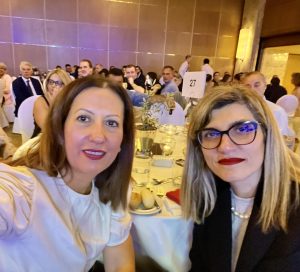
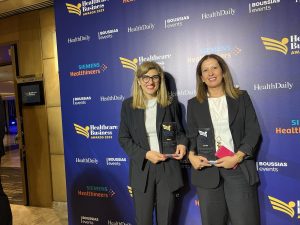
With the participation of leading representatives from the broader healthcare sector, the Healthcare Business Awards 2023 ceremony was successfully held on Monday, October 2023. The institution, which rewards best practices in entrepreneurship, innovation, and social contribution in the healthcare sector, was organized for the 8th consecutive year by Boussias Events and Health Daily.

At this year’s Healthcare Business Awards 2023, during yet another distinguished ceremony by Boussias Events celebrating Excellence in Innovation, Healthcare, Digital Technologies, and Investments, the Kapa3 team was honored for its efforts to establish social support for oncology patients as a core pillar of their holistic care. We firmly believe that such support must be appropriate, sufficient, and provided in a timely manner by the right people.

The fifteen-member judging committee, composed of distinguished scientists and CEOs of healthcare-related companies and organizations, awarded Kapa3 for its overall contribution during its 3.5 years of operation, its persistent and demanding efforts toward equal and universal access for the population, and the creation of frontline collaborative groups. The Evaluation Committee was chaired by Mr. Nektarios Tavernarakis, Vice President of the European Research Council (ERC), Chairman of the Board of the Foundation for Research and Technology – Hellas (FORTH), Professor at the Medical School of the University of Crete, and Board Member of the European Institute of Innovation and Technology. The committee also included executives from the pharmaceutical sector, company consultants, patient associations, leading physicians and academics, as well as representatives of institutional bodies, among others.

With a total of three awards—GOLD, SILVER, and BRONZEwhich we owe to all those who believed in and embraced our vision, to the unwavering support of our supporters and sponsors, our valued partners, and our beneficiaries, who with abundant kindness give us the strength to continue. The award categories are as follows:

K3 GOLD AWARD

GOLD Award for the Kapa3 Mobile Information and Management Units
in the category “Social Welfare, Structures”

K3 BRONZE AWARD

BRONZE Award for the Contribution to Health by the Cancer Guidance Center – Kapa3
in the category “Contribution to Health by NGOs”

K3 SILVER AWARD

SILVER Award for the Mobile Information and Management Unit for Oncology Patients at the University General Hospital of Alexandroupolis
in the category “Quality of Services & Patient Care”


A few words about the Mobile Units

The first Mobile Information and Management Unit began operating at Theageneio Anticancer Hospital of Thessaloniki, one of the largest oncology hospitals in Northern Greece, in collaboration with the Research Laboratory “Care of Adult Cancer Patients” of the Department of Nursing at the International Hellenic University. There, K3 staff and volunteers process patient requests guided by the ideal of “personalized care” for oncology patients, as well as by fostering “trust between patients and healthcare professionals.”

Its successful course, along with research and regional mapping, led to the creation of the second Mobile Information and Management Unit. The mapping data and the field experience of Kapa3’s staff guided us to the region of Thrace—an area characterized by geographical particularities, population heterogeneity, and distance from centers of authority.

The second unit operates in a specially designed space within the University General Hospital of Alexandroupolis. Its aim is to provide comprehensive information to patients and their families, ensuring equal access to healthcare structures, the assertion of their rights, and their social reintegration.

Long-term goals of the Mobile Units

  • Improvement of patients’ quality of life

  • Empowerment and active participation of cancer patients in self-care and active prevention

  • Reduction of required human resources and healthcare costs for the long-term management of cancer patients and survivors

  • Creation of a group of informed and empowered patients capable of addressing cancer-related issues, as well as a sensitized local community

Kapa3 was founded in March 2020, with priority given to citizens’ accessibility to beneficial provisions of existing legislation, as well as to the utilization of existing structures and services operating for this purpose throughout Greece.

In collaboration with related private-interest associations, public services, NGOs, and other solidarity bodies, Kapa3 succeeded in creating a website that functions as a continuously updated and renewed guide to Rights and Benefits for people living with cancer, while mobile information and management teams operate in parallel, ensuring equal access for patients and caregivers.

However, nothing would have been achieved without faith in the work of Kapa3 and in the vision of providing holistic care to oncology patients—a vision first embraced by the members of the Kapa3 team, who stand on the front line, acting with a human-centered approach focused on patients and their families.

The strength of this team, together with our valued partners, enables actions and initiatives with maximum social impact and outstanding new collaborations with entities such as academic institutions, major hospitals across the country, scientific societies, and, of course, civil society organizations.

On behalf of the entire Kapa3 team,

we thank you from the bottom of our hearts.

Press Release

Translation: Ifiyenia Anastasiou for Kapa3