Bladder Cancer Awareness Month: Awareness, prevention and early diagnosis

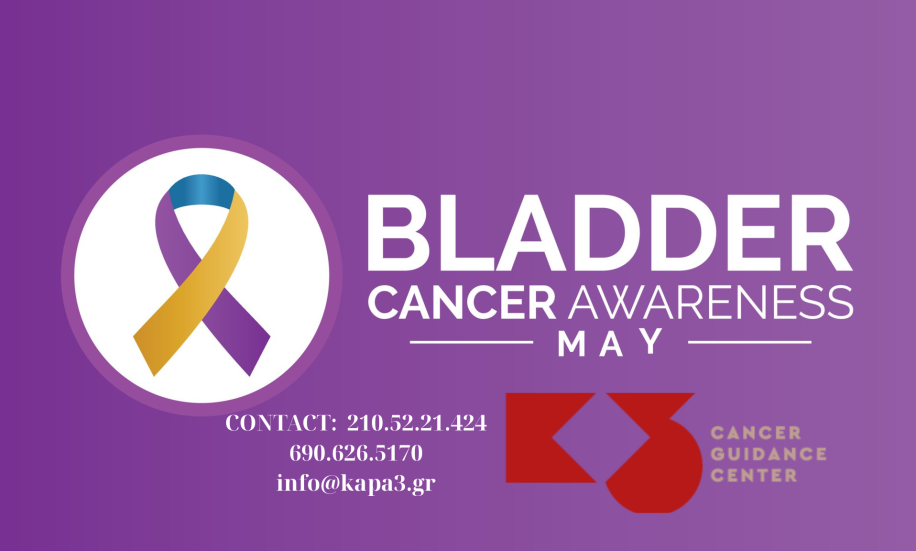
May is internationally recognized as Bladder Cancer Awareness Month, an important initiative led by health organizations and patient advocacy groups worldwide to promote public awareness, prevention, and early diagnosis.

Bladder cancer is among the most common types of cancer globally, with hundreds of thousands of new cases diagnosed each year. In Europe, it is considered one of the most common urological cancers, affecting men significantly more often than women.

In Greece, the data remains particularly concerning. The country records the highest incidence rate in Southern Europe, with approximately 39.7 new cases per 100,000 men annually. In terms of mortality, an estimated 7–8 men per 100,000 lose their lives to the disease every year, placing Greece among the countries with the highest mortality rates in the region. These figures highlight the importance of prevention, awareness, and timely medical intervention.

Behind every statistic are people — patients and families facing the emotional, physical, and practical challenges that accompany a cancer diagnosis. Raising awareness is therefore not only about numbers, but also about supporting individuals throughout their journey.

Smoking remains the most significant risk factor for bladder cancer and is linked to a large percentage of cases. Long-term exposure to certain chemicals, especially in specific occupational environments, as well as chronic inflammation of the urinary tract, may also increase the risk of developing the disease.

Recognizing the symptoms early can make a critical difference. The most common warning sign is blood in the urine (hematuria), even when no pain is present. Other symptoms may include frequent urination, burning during urination, or a sudden urge to urinate. Although these symptoms may also be associated with less serious conditions, they should never be ignored.

When bladder cancer is diagnosed at an early stage, survival rates are significantly higher, underlining the importance of early detection. However, the disease is also known for its high recurrence rates, making long-term follow-up and monitoring essential even after treatment.

Prevention remains a key pillar in reducing the burden of the disease. Quitting smoking, limiting exposure to harmful chemicals, and increasing awareness of the symptoms can all contribute to lowering the risk.

In Greece, awareness initiatives are also supported by scientific organizations such as the Hellenic Genito-Urinary Cancer Group (HGUCG), contributing to public education and the promotion of early symptom recognition.

Bladder Cancer Awareness Month is an important opportunity to encourage open discussion around the disease. Awareness is more than information — it is a tool that can lead to earlier diagnosis, improved treatment outcomes, and ultimately, more lives saved.

Sources:

Text/adaptation: Ifiyenia Anastasiou for Kapa3

Mapping the efficiency of cancer care in Greece: findings from the All.Can Greece report

Cancer care efficiency in Greece remains one of the most complex and pressing challenges for the Greek health system — not only in terms of its clinical burden, but also in how care is organized around the patient.

With approximately 63,000 new cancer cases diagnosed annually and more than 32,000 cancer-related deaths each year, Greece faces a steadily increasing oncological burden. Projections suggest that cancer incidence will rise by around 23% by 2040, further intensifying pressure on health services.

Against this backdrop, All.Can Greece has published a landmark report titled “Mapping the Efficiency of Cancer Care in Greece”, based on the pilot implementation of the All.Can Action Guide for Efficient Cancer Care.

Rather than simply describing the current situation, the report aims to measure it — identifying where efficiency is lost across the cancer care pathway and where targeted reforms could make the greatest impact.

Cancer care efficiency in Greece: delays in care delivery

One of the most critical findings of the report relates to delays in the patient journey.

Despite the existence of modern infrastructure and highly specialized oncology centres, significant delays persist between initial suspicion, diagnosis, and the start of treatment.

These delays are not the result of a single bottleneck, but of systemic fragmentation:

  • fragmented referral pathways,
  • limited coordination between levels of care,
  • and the absence of standardized clinical protocols.

A key structural weakness is the lack of systematic monitoring of waiting times and time-to-treatment indicators. As a result, inefficiencies remain partially invisible to the system itself, limiting the ability to implement targeted improvements.

Fragmentation across the care continuum

The report highlights a broader issue of fragmentation in cancer care delivery.

The patient journey from primary care to specialist oncology services is often not clearly structured or consistently coordinated. Referral pathways depend heavily on individual practice rather than standardized national protocols.

A major gap is the absence of structured patient navigation services. In practice, this means that patients and families are often left to navigate a complex system on their own, increasing delays and adding unnecessary psychological burden.

At the same time, multidisciplinary tumor boards represent a positive development, supporting collaborative clinical decision-making across specialties. However, systematic monitoring of their performance remains limited.

The development of Comprehensive Cancer Centers is identified as a promising step forward, although further regulatory strengthening and clearer governance structures are still needed to maximize their impact.

Patient-centered care: progress with remaining gaps

Greece has made notable progress in collecting Patient-Reported Outcome Measures (PROMs) and Patient-Reported Experience Measures (PREMs), reflecting a growing commitment to integrating patient perspectives into care delivery.

However, patients’ access to their own clinical data remains limited, restricting their ability to actively participate in decision-making processes.

In addition, patient education and shared decision-making are not yet systematically embedded across the health system.

Another important gap concerns survivorship care. As cancer survival rates improve, the lack of structured long-term follow-up pathways leaves many patients without continuous support after active treatment ends.

Key policy directions

The report outlines several strategic priorities for improving cancer care efficiency in Greece:

  • Development of a comprehensive national cancer strategy with clear targets and governance mechanisms
  • Strengthening coordination across all levels of care
  • Implementation of standardized clinical pathways with defined time-to-treatment and quality indicators
  • Investment in oncology workforce capacity, particularly in shortage specialties
  • Establishment of structured patient navigation programmes
  • Acceleration of Comprehensive Cancer Center development
  • Systematic use of health data for monitoring performance and accountability
  • Greater patient engagement through PROMs, PREMs, and shared decision-making

Conclusion: a system with strong foundations but limited integration

Greece has many of the essential building blocks for a high-performing cancer care system — including infrastructure, clinical expertise, and emerging digital health capabilities.

However, the key challenge lies not in the existence of these components, but in their integration.

The All.Can Greece report highlights a system that is still operating in silos: strong individual elements that do not yet function as a fully connected care pathway.

In oncology, this lack of integration is not merely an organizational issue. It directly affects timeliness, patient experience, and ultimately outcomes.

The opportunity now lies in moving from fragmented capacity to coordinated care — where patients no longer have to bridge the gaps between system components themselves.

Source: Mapping-the-Efficiency-of-Cancer-Care-in-Greece-FINAL

Text/adaptation: Ifiyenia Anastasiou for Kapa3

Kapa3 in the second half of April: Information, collaborations and strengthening patient care

Kapa3 in April

Throughout April, Kapa3 continued to develop actions and initiatives aimed at improving access to care for oncology patients and their families, with a strong focus on information, prevention, and the development of innovative collaborations.

This period’s activities focused on raising awareness about key cancer types, improving patients’ daily lives through policy and systemic developments, and expanding partnerships that enhance the quality of care and services provided.

In an ever-evolving healthcare environment, the connection between reliable information, human support, and technology remains a key pillar for a more accessible and effective care system.

Below are the main initiatives and developments that marked the second half of the month.

Awareness

April is an awareness month for head and neck cancer as well as testicular cancer, highlighting the importance of prevention and early diagnosis. Although these types of cancer are often underrepresented in public discourse, awareness plays a crucial role in reducing late diagnoses and improving patients’ quality of life.

Patients’ rights

Important developments took place in the field of patients’ rights, including the establishment of the National Registry for Hospital-at-Home Care (NOSPI), aiming to better organise and ensure the safety of home-based care.

At the same time, the new framework for Public Administration introduces changes that directly affect citizens’ daily lives, enhancing transparency, reducing bureaucracy, and improving access to public services.

Collaborations

During April, Kapa3 further strengthened its network of collaborations through significant partnerships.

The collaboration with the PRAXI Network/FORTH, within the European smartHEALTH hub, enhances participation in innovation and health policy initiatives, opening new opportunities at European level.

In addition, the partnership with Karkinaki focuses on supporting children, adolescents, and families living with cancer, promoting a holistic approach to care.

Furthermore, the collaboration with SimasiaAI for the development of “Myrto”, an AI-powered digital assistant, highlights the importance of technology in empowering patients and improving access to reliable information and services.

Research & knowledge

A new international report on person-centred cancer care highlights the need for a holistic model that places the patient at the centre. This approach recognises not only clinical needs but also psychosocial dimensions, reinforcing the importance of patient involvement in decision-making.

Patients & society

On the occasion of European Patients’ Rights Day (18 April), Kapa3 highlighted the importance of equal access to quality care. Despite progress, challenges such as inequalities and delays remain, making the continued strengthening of support structures essential.

Supporting our work

Kapa3’s collection of handmade scarves continues to serve as a creative way of supporting the organisation’s mission, combining aesthetics with meaningful contribution to people living with cancer.

We continue to monitor developments and work towards improving patients’ daily lives — more news coming soon.

Text/adaptation: Ifigenia Anastasiou for Kapa3

MELODIC Online Symposium: completion of the pilot training phase and strengthening psychosocial cancer care

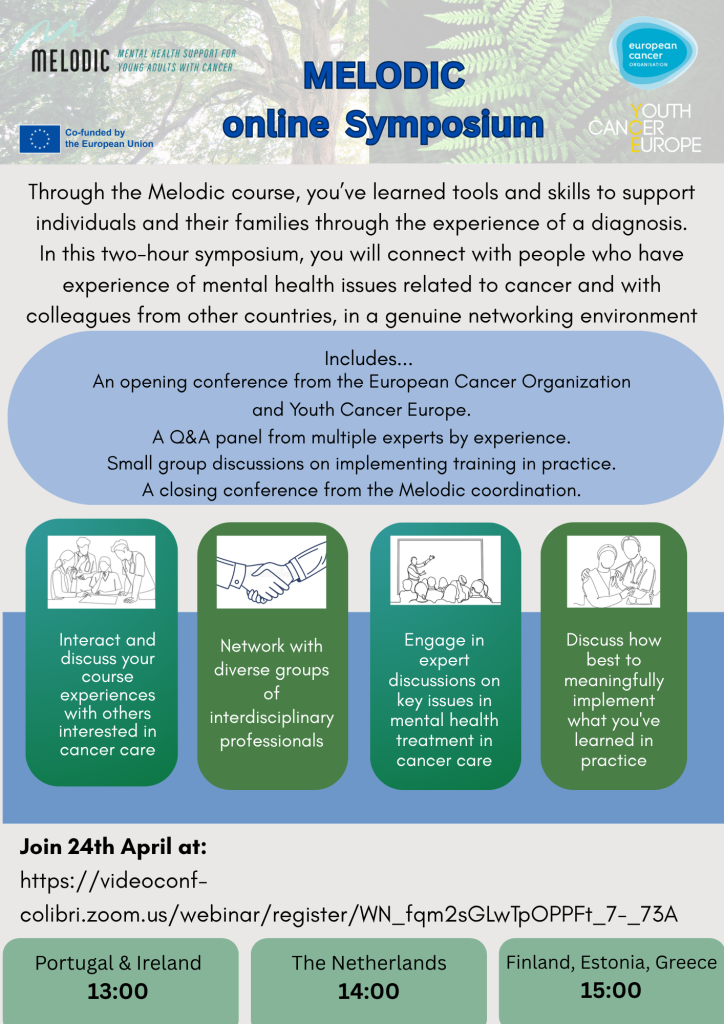
The European project MELODIC (Mental Health Support for Young Adults with Cancer), in which the Cancer Guidance Center – Kapa3 participates, is being implemented through distinct development phases. The pilot training programme for healthcare professionals is one of its core components, and within this framework, the MELODIC Online Symposium 2026, taking place on 24 April 2026, marks the completion of this educational phase.

The MELODIC project framework

MELODIC is a European project co-funded by the European Union, aiming to strengthen the mental health of young adults living with cancer, as well as to support their families. Through the collaboration of universities, research institutions and healthcare organizations across Europe, the project develops training and support tools for healthcare professionals.

More information about the project and its progress is available on the official Kapa3 website, in the dedicated project section.

The pilot training programme

The pilot training programme focused on enhancing the knowledge and skills of healthcare professionals in providing psychosocial support to young adults with cancer and their families.

As part of the programme, online sessions and contact lessons were delivered, aiming to strengthen interdisciplinary collaboration and support the practical application of tools in everyday clinical practice.

MELODIC Online Symposium 2026

The MELODIC Online Symposium 2026, a two-hour event, brings together participants from all partner countries and includes:

  • opening presentations from the European Cancer Organisation and Youth Cancer Europe
  • an “experts by experience” panel, where individuals share their lived experience
  • a networking panel with healthcare professionals from participating countries
  • discussion on how training can be applied in clinical practice
  • a closing session by the project coordination team

From training to clinical practice

A key objective of the MELODIC training programme is to strengthen the psychosocial dimension of cancer care, with particular focus on young adults.

The exchange of experiences among healthcare professionals contributes to more holistic approaches to care and supports the integration of psychosocial support into daily clinical practice.

The role of Kapa3

Kapa3 actively participates in the European MELODIC consortium, contributing to the implementation of the training activities and the dissemination of results in Greece. Through this involvement, the connection between scientific knowledge and the support of cancer patients is further strengthened, promoting the development of practical approaches to psychosocial care.

The MELODIC Online Symposium 2026 marks the transition from the pilot training phase to the next stage of utilizing its outcomes, reinforcing the link between education and real-world application in cancer care.

The Press Release here: PRESS-RELEASE-MELODIC SYMPOSIUM

Text/adaptation: Ifiyenia Anastasiou for Kapa3

New National Patient Registry for Hospital-at-Home Care (NOSPI)

Patient care at home in Greece is becoming more organized and secure with the establishment of the National Registry of Patients Receiving Hospital-at-Home Care (NOSPI), as published in Government Gazette 1995/07.04.2026. The NOSPI program is already in pilot implementation at selected hospitals nationwide, with the goal of full development and operation by the end of 2026, including a digital platform and patient registry.

The new registry aims to systematically record patients receiving NOSPI services, ensuring that care is tailored to individual therapeutic needs. Patient groups eligible for inclusion include, among others, those with tracheostomies, on non-invasive mechanical ventilation, receiving long-term oxygen therapy, on parenteral or gastrostomy feeding, as well as those requiring intensive physiotherapy or mobility rehabilitation. Currently, enrollment primarily focuses on children with severe health conditions and chronically ill patients needing pulmonary care, in collaboration with pilot Reference Centers.

While the NOSPI program is already operating in a pilot phase, universal access for all patients in the country has not yet been achieved. Its development is gradual, with full operation—including digital infrastructure and registry-based documentation—planned by the end of 2026. Strengthening Hospital-at-Home care enables better monitoring and improvement of home care services for patients with long-term needs.

Through the registry, authorities can collect accurate and essential health data, enhancing the quality of services and supporting the design of targeted health policies. Implementation respects personal data protection in line with the General Data Protection Regulation (GDPR), ensuring transparency and public trust.

For families and caregivers, patient enrollment in the NOSPI National Registry means access to more coordinated care, with support delivered directly to their homes. Furthermore, documentation helps evaluate and improve home nursing services, enhancing patient safety and quality of life.

This initiative, combined with the development of the digital platform and registry, aims not only to upgrade home care services but also to reduce hospital congestion and ensure high-quality services for all patients in the future.

Sources (text in Greek) : Government Gazette NOSPI, ODIPY

Text/adaptation: Ifiyenia Anastasiou for Kapa3

World Health Day 2026: Together for Health, Guided by Science

Every year, on April 7th, the World Health Organization (WHO) reminds us through World Health Day that health is a fundamental human right. World Health Day 2026 highlights, through its central message “Together for health. Stand with science”, the importance of scientific knowledge, research, and collaboration as key pillars for a fairer and more effective health system.

In an era where information is more accessible than ever—but not always reliable—science remains the solid foundation on which modern healthcare is built. This is not merely theoretical knowledge but a dynamic system grounded in data, clinical studies, and continuous evaluation. Thanks to science, recent years have seen significant advances in the prevention, diagnosis, and treatment of serious illnesses such as cancer, improving both survival rates and patients’ quality of life.

However, this progress is not equally accessible to everyone. In Greece, health inequalities remain pronounced and multifactorial. A significant proportion of citizens report not receiving the necessary medical care due to cost, geographical limitations, or long waiting times, while nearly 1 in 10 households faces severe financial burden from healthcare expenses. Residents of remote areas often need to travel to major urban centers to access specialized services.

At the same time, innovative treatments already available in other European countries may take considerable time to reach Greek patients, limiting timely access to the benefits of scientific progress. This unequal access clearly demonstrates that science, however vital, is not enough on its own—it requires the right mechanisms to ensure its benefits reach everyone.

In this context, technology can serve as a bridge. Artificial intelligence (AI), when based on scientifically validated data, can play a key role in providing accurate and reliable information, reducing misinformation, and improving access to support. Kapa3’s digital assistant, Myrto, is one such example, bringing scientific knowledge closer to patients and supporting their daily needs, always in complement to healthcare professionals.

Stand with science” therefore means not only trusting science but actively applying it in everyday life. It means seeking reliable information, using modern tools grounded in data, and advocating for equal access to innovations that can improve patients’ lives.

At Kapa3, this commitment is reflected through continuous updates on advances in oncology, new therapeutic approaches, innovative care practices, as well as through collaborations, participation in initiatives, and European programs such as MELODIC. (You can explore related articles here, here, and here.)

World Health Day 2026 offers a valuable opportunity to reflect not only on the achievements of science but also on the challenges that remain. By investing in knowledge, strengthening collaboration, and reducing inequalities, we can shape a health system that is more accessible, fair, and humane for all.

Health should not depend on where one lives, what one knows, or what one can afford. Science exists—the key is to make it reach everyone.
In this context, to “stand with science” ultimately means standing with every person in need of care.

Text/adaptation: Ifiyenia Anastasiou for Kapa3


Sources: