Continuing the Journey: Online Group Sessions for Mental Health and Nutrition – Third Cycle with Kapa3 and the LB.H.Sc

Following the warm response to the second cycle of meetings (see the related article here ), focusing on Nutritional Guidance and Experiential Psychological Support, Kapa3 and the Laboratory of Basic Health Sciences (LB.H.Sc), Department of Nursing University of Peloponnese are delighted to continue their collaboration with a third series of online group sessions for mental health and nutrition, dedicated to the holistic care of body and mind, designed for people living with cancer and their caregivers.

In this third cycle, mental health and nutrition are approached as two complementary sides of the same care.

The mental health sessions help participants recognize and manage challenging emotions such as anxiety, fear, sadness, or guilt, strengthen resilience, and cultivate a deeper connection with themselves and others.

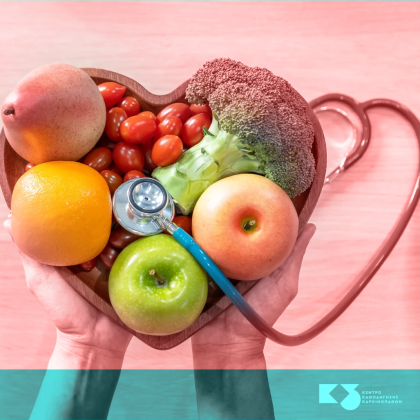
The nutrition sessions explore how mindful and balanced eating can support the body, improve energy and mood, and become a meaningful act of self-care. Food is not only a necessity but also a way to nurture the body, mind, and spirit.

Program of Online Sessions for Mental Health and Nutrition & Themes

  • Saturday, February 28, 2026, 17:30–19:00
    Myths and truths about “anti-cancer” diets. How to evaluate nutritional information and avoid risky practices.

  • Saturday, March 14, 2026, 17:30–19:00
    Stress and uncertainty: practical ways to manage them during treatments and exams.

  • Saturday, March 21, 2026, 17:30–19:00
    Giving space to emotions without being overwhelmed: recognizing and expressing fear, anger, sadness, and guilt.

  • Saturday, March 28, 2026, 17:30–19:00
    Nutritional support during treatment & the role of cachexia.

  • Saturday, April 25, 2026, 17:30–19:00
    Boundaries without guilt: protecting energy and mental resilience.

  • Saturday, May 9, 2026, 17:30–19:00
    Safe cooking practices & kitchen hygiene.

  • Saturday, May 23, 2026, 17:30–19:00
    Family and illness: changes in relationships and ways to support each other.

  • Saturday, June 6, 2026, 17:30–19:00
    The Tree of Life: who I am beyond the illness.

  • Saturday, June 13, 2026, 17:30–19:00
    What gives meaning to life now: discovering small but meaningful elements that sustain us.

Format & Participation

The meetings are held online, based on dialogue, experiential learning, and the sharing of personal experiences. Everyone participates at their own pace, in a warm environment of acceptance and trust. Consistent attendance helps build safety and confidence within the group.

To express your interest or join the first session of the third cycle (Saturday, February 28, 17:30–19:00): [Registration Link]

Text/adaptation: Ifiyenia Anastasiou for Kapa3

World Cancer Day: United by Our Uniqueness

Every year on 4 February, World Cancer Day invites us to reflect on one of the greatest challenges of modern public health.

The goal is not only to confront cancer as a disease, but to face it with knowledge, empathy and shared responsibility. Because cancer touches millions of lives in countless ways, yet it does not define who we are. We are more than a diagnosis, more than a number.

World Cancer Day was established in 2000, following the World Summit Against Cancer for the New Millennium in Paris. It is a core element of the Paris Charter Against Cancer — a global commitment to advancing research, prevention, patient care, awareness and international mobilisation. Since then, the day has served as a reminder that addressing cancer requires long-term vision, cooperation and consistency.

This year’s message, “United by Unique”, highlights a fundamental truth: cancer is not only a medical event.

It is a deeply personal experience. Behind every diagnosis lies a unique human story — stories of fear and loss, but also of resilience, care, love and healing. Every story counts.

Cancer Today: Facts and Challenges

Cancer remains one of the most significant public health challenges in Europe and in Greece. Data from international and European organisations underline not only the scale of the disease, but also the persistent inequalities in prevention, early detection and access to care.

In Europe, approximately 2.7 million new cancer diagnoses are recorded each year, with around 1.3 million deaths, while the economic burden exceeds €93 billion annually. In Greece, cancer is the second leading cause of death, affecting thousands of families and carrying profound social and psychological consequences.

Progress, Prevention and Hope

At the same time, scientific progress offers well-founded reasons for optimism.

Prevention and early detection remain decisive factors. Screening programmes, vaccination, healthy lifestyle choices and access to reliable information can significantly reduce the risk of certain cancers and improve treatment outcomes. In this context, knowledge is not merely information — it is power and a fundamental right.

Advances in cancer management are equally important. Personalised medicine, targeted therapies, immunotherapy and improved management of treatment side effects contribute not only to increased survival rates, but also to a better quality of life for people living with and beyond cancer. Information and education are key tools for both prevention and empowerment.

Mental health plays a crucial role as well. Diagnosis and treatment are often accompanied by anxiety, fear, sadness and emotional exhaustion — affecting not only patients, but also their caregivers. Psychosocial support, counselling services and empowerment groups are essential components of holistic cancer care, helping to preserve dignity and quality of life.

Information, research and mental health care are core pillars of modern cancer management. Indicatively, you may explore the following Kapa3 articles:

Empowerment and Action

World Cancer Day is not just a day of awareness. It is a call to action:

  • to speak openly about prevention and our health,

  • to support people living with cancer and their caregivers,

  • to seek reliable information and evidence-based sources,

  • to advocate for equal access to care and psychological support,

  • to remember that no one should face cancer alone.

Because our strength lies in solidarity — and in respecting the uniqueness of every individual.

United by our uniqueness.

References:

World Health Organization (WHO) – Cancer
https://www.who.int/health-topics/cancer

International Agency for Research on Cancer (IARC)
https://www.iarc.who.int

Union for International Cancer Control (UICC) – World Cancer Day
https://www.worldcancerday.org

European Commission – Europe’s Beating Cancer Plan
https://health.ec.europa.eu/eu-policy/health-strategies/europes-beating-cancer-plan_en

European Cancer Information System (ECIS)
https://ecis.jrc.ec.europa.eu

Hellenic Statistical Authority (ELSTAT) – Health Data
https://www.statistics.gr/en/statistics/-/publication/SHE15/

Hellenic National Public Health Organization (EODY) – Cancer & Public Health
https://eody.gov.gr/

Greek Ministry of Health – Prevention & Screening
https://www.moh.gov.gr/articles/prevention-screening

Text/adaptation: Ifiyenia Anastasiou for Kapa3

Cancer: From Prevention to Life Coordination” – Event Announcement, Municipality of Megara & Kapa3

On the occasion of World Cancer Day (4 February), the Municipality of Megara and the Cancer Patient Navigation Center – Kapa3 are organizing the knowledge-focused event “Cancer: From Prevention to Life Coordination” on Sunday, 8 February 2026, at 18:00, at the Municipal Council Hall of Megara City Hall.

The event aims to highlight that addressing cancer is not limited to medical treatment alone, but requires holistic care, proper guidance, and coordinated services, placing the individual, their family, and their social environment at the center.

The objective of the initiative is to emphasize the role of a Health Navigator in cancer management and to underline the importance of interdisciplinarity in oncology care, bringing together the expertise of physicians, nurses, psychologists, occupational therapists, as well as civil society organizations such as Kapa3, which support patients and caregivers.

The event features the following speakers:

  • Georgios Nintos, Medical Oncologist, MD MSc – Cancer prevention and early diagnosis

  • Katerina Papakonstantinou, Obstetrician–Gynecologist Surgeon, MD MSc PhD – Prevention and gynecological cancer

  • Rojas Andrea Paola, Associate Professor of Biology, Department of Nursing, University of the Peloponnese – Nutrition and prevention

  • Maria Lavdaniti, Professor and Head of the Department of Nursing, International University – The role of oncology nursing in holistic cancer care

  • Penelope Vlotinou, Professor of Occupational Therapy, University of West Attica – Occupational therapy and patients’ daily life

  • Ioanna Sideri, Psychologist MSc, PhD(c), Department of Nursing, University of the Peloponnese – Psychological support for patients and caregivers

  • Grigoria Zacharogianni, Radiation Oncologist, MD MSc PhD, University of West Attica – Therapeutic options from diagnosis to recovery

The event is part of Kapa3’s ongoing presence in Megara and its constructive cooperation with the Municipality, as reflected in the operation of the Cancer Patient Navigation Counseling Station.

It is another opportunity to highlight community-based efforts supporting cancer patients and their families, strengthening awareness, prevention, and meaningful guidance.

Participation is open to health professionals, patients, relatives, and all interested citizens.
It is our great honor to welcome everyone who wishes to learn more about cancer care and holistic management and to take part in a dialogue of knowledge and solidarity, because only together can we build a more inclusive and supportive society for all.

Rethinking Solidarity in Health – A European Perspective

Health Systems Under Pressure in Europe

Across Europe, health systems face mounting pressures. Workforce shortages, uneven access, and entrenched inequalities leave many citizens underserved, and public trust in institutions is eroding. The pandemic briefly rekindled a sense of shared responsibility, yet shifting geopolitical tensions and economic priorities have since drawn attention away from collective well-being. This context raises a vital question: what does solidarity in health mean in Europe today? This context was highlighted at the European Health Forum Gastein (EHFG) 2025, where policymakers, civil society representatives, and health experts discussed the challenges and opportunities for solidarity in health across Europe.

Health is not merely a commodity; it is the foundation for social cohesion and long-term resilience. Investing in preventive care, mental health, and social support is not a trade-off with economic competitiveness — it is a prerequisite. In the European Union alone, premature deaths in 2022 accounted for 2.4 million lost work-years, highlighting the societal and economic consequences of insufficient early action. Across member states, access to care remains uneven, chronic diseases are on the rise, and innovations are not uniformly available, leaving vulnerable populations facing overlapping disadvantages.

The Role of Preventive Care and Mental Health

Solidarity in health demands action at every level. Primary and community care serve as the first line of defense, with multidisciplinary teams — including doctors, nurses, psychologists, and social workers — partnering with civil society organisations to reach underserved groups. Examples from Andalusia, Portugal, and Estonia’s e-consultation payment model show how coordinated, person-centred approaches build trust, improve access, and empower citizens. Prevention, early detection, and health literacy must complement innovation, ensuring no one is left behind. In the EU, the average diagnostic delay for asthma is 4.5 years, underlining the need for timely, equitable care.

Digital Health Innovation and Equity

Digital transformation presents both promise and challenge. AI, big data, and digital health tools can enhance early detection and patient monitoring. They also improve system efficiency. However, they risk amplifying bias and mistrust if governance is weak.. Europe’s task is to combine innovation with ethical oversight, embedding transparency, accountability, and accessibility into every design decision. Initiatives like the European Health Data Space (EHDS) aim to unify interoperability, research, and patient empowerment under one framework, giving citizens control over their health data while supporting innovation and equity.

Health systems also intersect with broader social and environmental challenges. Climate change, rising social inequalities, and ageing populations disproportionately affect vulnerable groups, while end-of-life care and rare diseases expose gaps in equity, research, and policy. Across Europe, collaborative solutions — from shared patient pathways to cross-border networks — are essential. Health contributes approximately 10% of EU GDP and 9% of employment, demonstrating its central role in both social and economic stability. Public funding, strategic investment in long-term care, and multi-sector collaboration strengthen resilience and uphold solidarity. Notably, €170 million has been allocated to the EU’s Strategic Research and Innovation Agenda on Health and Climate Change, ensuring vulnerable populations are included in solutions.

Examples of Person-Centred Care in the EU

Ultimately, solidarity in health is not merely about funding or policies; it is a commitment to fairness, inclusivity, and collective responsibility. From innovative care models like Karolinska University Hospital’s “hospital at home” programme to Estonia’s digital solutions, Europe has examples of what works when equity and person-centred design guide decisions. Rebuilding trust and strengthening solidarity requires transparency, engagement with civil society, and measures that demonstrate care in action.

Europe’s social contract in health can be renewed, balancing competitiveness with care. When investments, innovation, and policies are guided by solidarity, the continent can ensure that health becomes the common ground on which trust is restored — measured not in slogans or speeches, but in the well-being of every citizen.

Read the EHFG report here

Text/adaptation: Ifiyenia Anastasiou for Kapa3