Information about the actions of Kapa3 in Soufli. An initiative of the Branch and the Social Service of the Municipality of Soufli

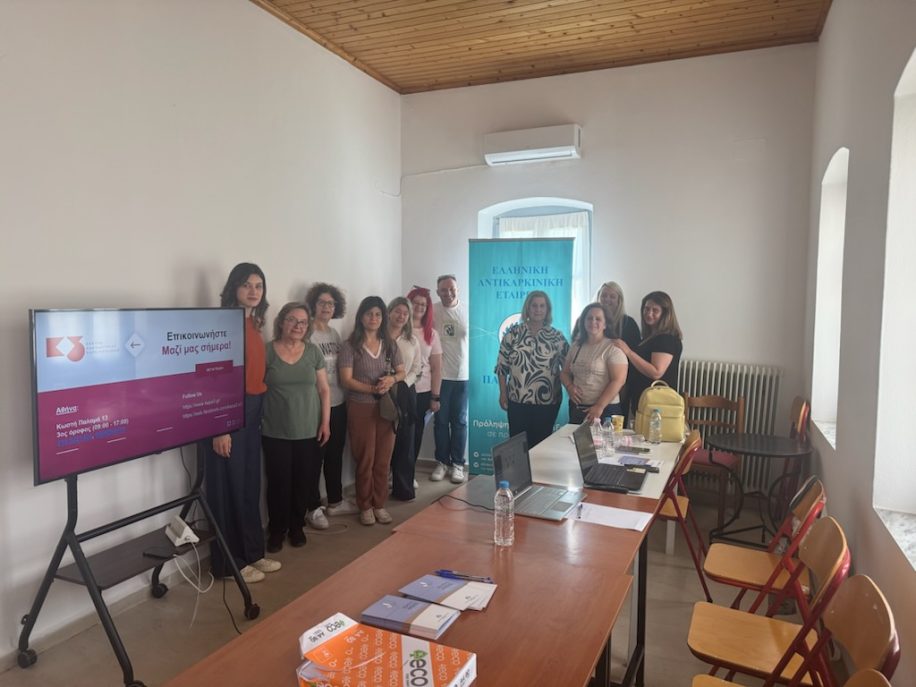
On Friday, May 29, 2026, a working meeting was held at the offices of the Evros Branch of the Hellenic Anti-Cancer Society in Soufli, at the initiative of the Branch and the Social Service of the Municipality of Soufli, with the aim of strengthening the support of oncology patients and the cooperation between local bodies.

The meeting was attended by the President of the Evros Branch of the Hellenic Anti-Cancer Society, Ms. Theodora Rokka, the Head of the Social Service of the Municipality of Soufli, Mr. Marinos Mantziaras, Ms. Aristea Archontidou from KAPA3, social workers of the Municipality of Soufli, as well as health professionals of the Soufli Health Center.

Particularly important was the presence of Ms. Kalliopi Kafetzaki, a social worker at the Day Center for Children, Adolescents and Young Adults with Neoplastic Diseases of the Hellenic Anti-Cancer Society, who presented the services of the Day Center and the hostel in Athens, as well as the challenges faced by oncology patients in the region.

The actions of KAPA3 were also presented, while information was provided on digital tools that can facilitate citizens’ access to health services, such as the Health Insurance Fund, the National Health Insurance Fund and the myHealth application. At the same time, the development of “Myrto”, a digital assistant that will support patients, caregivers and health professionals in searching for information and services, was discussed. During the discussion, issues related to inequalities in access to health services in the region, as well as the difficulties that patients encounter in administrative procedures and social benefits, were highlighted.

The meeting concluded with a joint commitment to continue cooperation and develop initiatives that will strengthen the support of oncology patients and their families in the Evros region. We are particularly happy about the presence of Kappa3 throughout Greece and for the trust of social services in our Organization. We remain faithful to the vision and mission of the Organization. For anything you need, please do not hesitate to contact us. The Kappa3 team is constantly by the patients and caregivers’ side to guide and ensure their rights. For any information or support, you can contact us.

You can contact the Kapa3 team at 13 Kostis Palamas, 3rd floor (Opening hours: 09:00 – 17:00). Contact numbers: 210 5221424 & 6906265170. Email: info@kapa3.gr

Kapa3 and Doctorhomie: Joining Forces to Support Cancer Patients

Kapa3 is pleased to announce the signing of a memorandum of cooperation with the digital home-care platform Doctorhomie. The Kapa3–Doctorhomie collaboration aims to strengthen support for cancer patients and their families across Greece.

Since its establishment, the Cancer Guidance Center – Kapa3 has been actively working to provide meaningful guidance to people living with cancer and their caregivers, with a strong focus on access to benefits and services, information about patients’ rights, and psychosocial support. Through Mobile Units, digital tools and educational initiatives, the organization promotes patient-centred care, creates channels of communication with beneficiaries and strengthens their participation in decisions concerning their health. Kapa3’s philosophy is grounded in building partnerships, leveraging technology and fostering collaborations with organizations that share the same vision.

Doctorhomie, on the other hand, is redefining home-based care in Greece by offering an integrated digital platform that connects patients with physicians, nurses, psychologists, physiotherapists and caregivers. Through tools that enhance monitoring and management of care at home, Doctorhomie contributes to strengthening Primary Health Care, promoting prevention, supporting families and improving both the safety and quality of care.

The new collaboration between Kapa3 and Doctorhomie opens opportunities for joint initiatives at multiple levels, including:

  • the organization of workshops, conferences and webinars aimed at informing patients, promoting quality of care and strengthening trust between patients and their treating physicians, particularly within the context of home-based care and Primary Health Care,

  • awareness and information campaigns focusing on prevention, the fight against myths and stigma, and a better understanding of patients’ symptoms and needs,

  • participation and collaboration in national and European programmes that promote innovation in oncology care and strengthen digital tools for patients and caregivers,

  • joint research initiatives on topics of shared interest, with the aim of supporting scientific evidence, disseminating knowledge and contributing to health policy development at both national and European level.

This partnership is founded on the shared belief that patient care begins with information and support, is strengthened through education and collaboration, and evolves through the combined use of technology and patient-centred practices.

Kapa3 and Doctorhomie are committed to making the most of this collaboration in order to strengthen patients’ participation in decisions regarding their health, reduce inequalities and provide timely and effective support to those who need it.

With a shared vision of quality and accessible care, Kapa3 and Doctorhomie are opening a new chapter of cooperation in support of cancer patients in Greece.

Download our Press Release in pdf or word

Cancer is increasingly becoming a highly manageable disease

In the Sunday edition of To Vima newspaper and Vita magazine (25 January 2026), the views of Ms Evangeli Bista, co-founder of Kapa3, were featured, shedding light on the landscape of modern oncology and the challenges emerging within the current Greek healthcare reality.

Ms Bista addressed the Greek context and highlighted the importance of digital technology as a cornerstone of modern health policy, particularly in the field of cancer care, where treatment pathways are complex, long-term, and deeply person-centred. As she noted, Greece has already made measurable progress: electronic and paperless prescribing, oncology registries, the National Electronic Health Record, and applications such as MyHealthApp are creating the conditions for more coordinated and transparent care. When healthcare professionals, as well as patients themselves, are equipped with appropriate digital skills, patient autonomy is strengthened, treatment outcomes improve, and inequalities—especially those affecting vulnerable population groups—are reduced.

The article is co-authored by distinguished scientists and collaborators: Maria Gazouli, Professor of Biology, Genetics and Nanomedicine at the Medical School of the National and Kapodistrian University of Athens and national representative on the Committee for Advanced Therapies of the European Medicines Agency; Manolis Saloustros, Associate Professor of Oncology at the University of Thessaly and President of the Hellenic Society of Medical Oncology (HESMO); and Christos Frantzidis, Assistant Professor of Informatics and Machine Learning at the University of Lincoln in the United Kingdom.

The contributing experts underline that modern oncology increasingly approaches cancer as a largely manageable chronic disease, through targeted and personalised therapies. The use of innovative technologies—such as next-generation sequencing, mRNA vaccines, PARP inhibitors and cellular therapies—has significantly expanded therapeutic options. At the same time, prognosis is becoming more dynamic and individualised through the use of multi-omics profiling, machine learning algorithms and liquid biopsy techniques. Particular emphasis is placed on the early integration of palliative care and psychosocial support, which play a crucial role in improving patients’ quality of life. Finally, the importance of structured and coordinated healthcare services is highlighted, with the medical oncologist acting as a key coordinator of person-centred care.

Beyond documenting technological advances, the article opens a broader discussion on the digital transition in oncology care, addressing issues of access, meaningful use of data and the need for coordination across different scientific disciplines. Digital health is presented not as an end in itself, but as a tool that requires collaboration, institutional maturity and a shared vision in order to deliver real value to patients.

The overarching message is clear: every step, whether small or large, matters. Progress in oncology is not the result of isolated actions, but of collective effort. Through collaboration among scientists, healthcare professionals, organisations and patients, the conditions for meaningful and sustainable change can be created—always with the human being and their real needs at the centre.

Download our Press release here:  KAPA3_VIMA

Text / Adaptation: Ifiyenia Anastasiou for Kapa3