
Another Initiative, Another Award for Kapa3!

Great joy and honor, Kapa3’s campaign “Think of a word that starts with K” received two awards at the Indie Awards 2024, marking an important distinction for Kapa3 at the Kapa3 Indie Awards 2024.

Specifically, it received the GOLD award for the radio spot in the “Best in Radio” category, while the online spot also received the SILVER award in the “Best in Film/Video” category.
The campaign Think of a word that starts with K delivers a powerful social message aimed at informing and raising public awareness about cancer. It was created and produced with the invaluable support of A3 Resizing Ideas.

 
It is a strong call for social responsibility and active participation by all of us in a continuous effort to support healthcare services, so that we can finally achieve improvement in the quality of life of cancer patients, promote the principles of prevention and active public involvement in health management, reduce the human and financial cost in healthcare, and highlight civil society as a positive force for the implementation of actions of common benefit.

A key prerequisite for all of the above is the development of a strong, supportive social, institutional, and legal framework for prevention and management, safeguarding the fundamental right of patients to a life of quality, free from stereotypes and discrimination.

With the unwavering support of friends, partners, volunteers, and members of Kapa3, under the guidance of A3, we succeeded—through this spot and the event organized for the same purpose on 18/10/23 at Syntagma Metro Station—in delivering our message that “It is not only Cancer that starts with K, but also everything that can defeat it.”

In the end, it is teams that win—and all of us at Kapa3 are happy because, together with you, we feel like a TEAM.

After all, the team that draws inspiration from the collective rather than from a single player is the one that succeeds.

From the bottom of our hearts, a big thank you to everyone who “brought to life” all those K’s that truly matter in our lives.

Think of a word that starts with K

Translation: Ifiyenia Anastasiou for Kapa3

CANCER MAY CONTROL YOUR BODY FOR A WHILE, BUT ΝΟΤ YOUR SOUL…

We dreamed it, we organized it and we finally accomplished it!

Kapa3, always thinking and implementing actions whose main priority and beneficiaries are the patients with cancer, overcoming barriers, social, economic, and social and cultural characteristics! Cancer has no gender, no country, no color, no religion!!!

The team of Kapa3 could not ignore the challenges and needs of people who are forced to leave their countries of origin and, having the problems of their disease out of their priorities, put themselves in danger, crossing the borders of our country, hoping for a better and safer future.

Thus, studying the needs of these people, the group of professionals of KAPA3, being active and present in the wider region of Macedonia and Thrace, submitted a proposal for the implementation of actions in these areas, targeting the refugees and migrants of the region.

With great pleasure, we received the response of the King Baudouin Foundation, which recognized in this proposal our vision and approved funding to support and develop the Cancer Patient Guidance Centre-Kapa3, to provide immediate assistance to refugees and migrants crossing the borders of our country.

Together we can achieve the impossible! Looking cancer in the eye and fighting every day together, is a small but important battle for life, against cancer!

More specifically: The development of the existing network, the addition of mental health professionals, and the development of actions and activities in new places, with new partners, will allow us to help much more in the process of better and more complete treatment of the incidents and difficulties we face.

With funding from the King Baudouin Foundation, over the next 6 months, we will strengthen our network of psychologists, sociologists, and social workers, with a focus on the 15-24 age group, to continue providing primary care and support throughout their treatment. Part of the funding will be used to translate the Kapa3 online portal into at least two languages, in addition to English, with Ukrainian being the first, so that our citizen’s accessibility to any portal of the Public Health System is immediate and seamless.

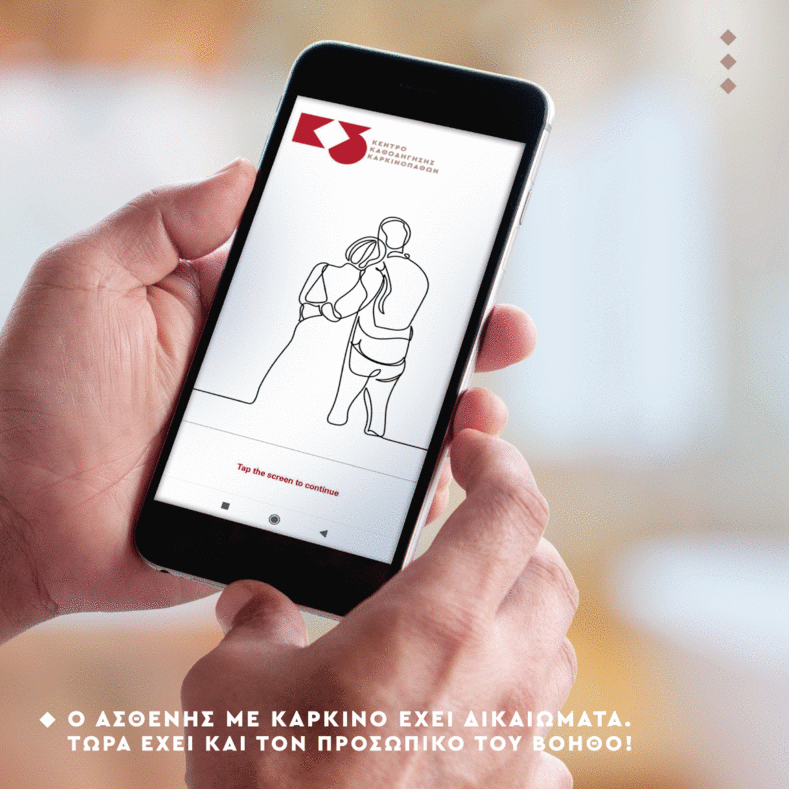
The Organization has a website and an app where it provides general support and information as well as personalized support to each beneficiary. The staffing of the network with permanent personnel will become the basis for the successful targeting, which is, No One Feels Alone! The activation of psychological support for patients, the categorization of patients by age and the activation of actions to solve additional problems related to each of these age groups are some of the actions that we are ready to take to support these vulnerable groups!

We are well aware that the Greek health system and the support of medical care for cancer patients provided mainly in the country’s public hospitals, given high care costs and economic conditions, are not chosen by a significant number of patients, mainly immigrants, and refugees. The fact that Kapa3 operates in the structures and departments of hospitals that exclusively support cancer patients allows us to be able to record cases and extract qualitative and quantitative data and results to improve and create new actions in this direction.

Our vision has inspired and found support beyond borders! Cancer can control the body of patients for a while, but the soul, which strengthens the power in the battle with cancer, cannot be controlled!!!

Δελτίο Τύπου EN Δελτίο Τύπου EN

Kapa3 – Social Message for Public Awareness and Education on Cancer

The Kapa3’s social message for public awareness and education on cancer has gone viral! A powerful message that captures the attention of thousands of citizens daily on social media.

Continuing its successful effort to raise public awareness about the importance of social support and its impact on managing chronic illnesses, Kapa3 created a television and radio spot emphasizing the need for timely and appropriate social support from the right people—especially in an era where globalization and rapid lifestyle changes pose major challenges to healthcare professionals and the community in cancer management.

The spot, titled “Think of a Word That Starts with K”, engages and captivates thousands of citizens daily, with its reach steadily growing. This multifaceted social message was posted online as part of a campaign created by Kapa3 to inform and raise awareness. The message has already surpassed 100,000 views, reinforcing Kapa3’s mission: social support and guidance for cancer patients navigating the challenging path of their illness.

This initiative is a strong call to social responsibility, encouraging everyone to actively participate in the ongoing effort to support healthcare services, improve cancer patients’ quality of life, promote prevention principles, engage the public in health management, reduce human and financial costs, and highlight civil society as a positive driver for public-benefit actions.

A key prerequisite for all this is the establishment of a strong, supportive social, institutional, and legal framework that safeguards patients’ fundamental right to a life free from stereotypes and discrimination.

Notably, the spot, produced with a focus on promoting public health and social support, was approved by the Greek National Council for Radio and Television (ESR). Following the approval of its Special Three-Member Committee for Social Messages (Decision 207-09.11.2023), the spot was authorized for free broadcast on television and radio stations nationwide from December 1 to December 31, 2023.

The campaign was made possible thanks to the unwavering support of friends, partners, volunteers, and Kapa3 members under the guidance of A3, and has been promoted across Greece and online through the organization’s initiatives.

We are sharing it with you online so that it can be featured by local media, spreading the message that “Not only Cancer Starts with K, but also everything that can defeat it”, leading the way in public education and awareness.

According to Mattson (2011), building on definitions by Albrecht & Adelman (1987) and Gottlieb (2000), social support is defined as “a transactional, communicative process involving verbal and non-verbal interaction aimed at enhancing an individual’s perception of their ability to manage their problem, self-esteem, and sense of belonging.”

We sincerely thank you for your positive response and support.

Evangelí Bista
Head of Development and Operations, Kapa3
PhD(c), MBA, MSc, BSc
Mobile: +30 697 410 2934

Triple Award for the Kapa3 Team at the Healthcare Business Awards 2023

With the participation of leading representatives from the broader healthcare sector, the Healthcare Business Awards 2023 ceremony was successfully held on Monday, October 2023. The institution, which rewards best practices in entrepreneurship, innovation, and social contribution in the healthcare sector, was organized for the 8th consecutive year by Boussias Events and Health Daily.

At this year’s Healthcare Business Awards 2023, during yet another distinguished ceremony by Boussias Events celebrating Excellence in Innovation, Healthcare, Digital Technologies, and Investments, the Kapa3 team was honored for its efforts to establish social support for oncology patients as a core pillar of their holistic care. We firmly believe that such support must be appropriate, sufficient, and provided in a timely manner by the right people.

The fifteen-member judging committee, composed of distinguished scientists and CEOs of healthcare-related companies and organizations, awarded Kapa3 for its overall contribution during its 3.5 years of operation, its persistent and demanding efforts toward equal and universal access for the population, and the creation of frontline collaborative groups. The Evaluation Committee was chaired by Mr. Nektarios Tavernarakis, Vice President of the European Research Council (ERC), Chairman of the Board of the Foundation for Research and Technology – Hellas (FORTH), Professor at the Medical School of the University of Crete, and Board Member of the European Institute of Innovation and Technology. The committee also included executives from the pharmaceutical sector, company consultants, patient associations, leading physicians and academics, as well as representatives of institutional bodies, among others.

With a total of three awards—GOLD, SILVER, and BRONZEwhich we owe to all those who believed in and embraced our vision, to the unwavering support of our supporters and sponsors, our valued partners, and our beneficiaries, who with abundant kindness give us the strength to continue. The award categories are as follows:

K3 GOLD AWARD

GOLD Award for the Kapa3 Mobile Information and Management Units
in the category “Social Welfare, Structures”

K3 BRONZE AWARD

BRONZE Award for the Contribution to Health by the Cancer Guidance Center – Kapa3
in the category “Contribution to Health by NGOs”

K3 SILVER AWARD

SILVER Award for the Mobile Information and Management Unit for Oncology Patients at the University General Hospital of Alexandroupolis
in the category “Quality of Services & Patient Care”


A few words about the Mobile Units

The first Mobile Information and Management Unit began operating at Theageneio Anticancer Hospital of Thessaloniki, one of the largest oncology hospitals in Northern Greece, in collaboration with the Research Laboratory “Care of Adult Cancer Patients” of the Department of Nursing at the International Hellenic University. There, K3 staff and volunteers process patient requests guided by the ideal of “personalized care” for oncology patients, as well as by fostering “trust between patients and healthcare professionals.”

Its successful course, along with research and regional mapping, led to the creation of the second Mobile Information and Management Unit. The mapping data and the field experience of Kapa3’s staff guided us to the region of Thrace—an area characterized by geographical particularities, population heterogeneity, and distance from centers of authority.

The second unit operates in a specially designed space within the University General Hospital of Alexandroupolis. Its aim is to provide comprehensive information to patients and their families, ensuring equal access to healthcare structures, the assertion of their rights, and their social reintegration.

Long-term goals of the Mobile Units

  • Improvement of patients’ quality of life

  • Empowerment and active participation of cancer patients in self-care and active prevention

  • Reduction of required human resources and healthcare costs for the long-term management of cancer patients and survivors

  • Creation of a group of informed and empowered patients capable of addressing cancer-related issues, as well as a sensitized local community

Kapa3 was founded in March 2020, with priority given to citizens’ accessibility to beneficial provisions of existing legislation, as well as to the utilization of existing structures and services operating for this purpose throughout Greece.

In collaboration with related private-interest associations, public services, NGOs, and other solidarity bodies, Kapa3 succeeded in creating a website that functions as a continuously updated and renewed guide to Rights and Benefits for people living with cancer, while mobile information and management teams operate in parallel, ensuring equal access for patients and caregivers.

However, nothing would have been achieved without faith in the work of Kapa3 and in the vision of providing holistic care to oncology patients—a vision first embraced by the members of the Kapa3 team, who stand on the front line, acting with a human-centered approach focused on patients and their families.

The strength of this team, together with our valued partners, enables actions and initiatives with maximum social impact and outstanding new collaborations with entities such as academic institutions, major hospitals across the country, scientific societies, and, of course, civil society organizations.

On behalf of the entire Kapa3 team,

we thank you from the bottom of our hearts.

Press Release

Translation: Ifiyenia Anastasiou for Kapa3

Press Release for the Awareness Event titled “Information, Awareness, and Social Support. No One Alone!”

On Wednesday, October 18, from 10:00 to 19:00, Activities and Workshops were held at the Multi-Purpose Hall of Syntagma Metro Station, aiming to provide information and social support to oncology patients, caregivers, and their families.

The Cancer Center Kapa3, the Department of Marketing and Communication of the Athens University of Economics and Business, the General Laiko Hospital of Athens, STASY, WinCancer, and the Research Laboratory “Care of Adult Patients with Cancer” of the Nursing Department of the International Hellenic University, under the auspices of the Municipality of Athens, ELLOK, the Greek Patients’ Union, and HESMO, joined forces under the campaign “Think of a word that starts with K,”(*) with the goal of raising awareness about best practices in cancer prevention and patient management across healthcare units throughout the country.

The daily and strong presence of all the above organizations on the front line of addressing the disease, in hospitals across Greece, was transferred to the very heart of Athens, in an event with a clear and singular purpose: the advocacy of privileged social rights for oncology patients, as well as raising awareness around best practices for prevention and patient care.

During the opening of the event, WinCancer Manager Ms. Krystallidou referred to the ongoing struggle of organizations and non-profit entities for the prevention and fight against cancer. She emphasized that collaborations such as the one organized by Kapa3 are exactly the kind of synergies WinCancer seeks to support—an effort both demanding and relieving—guided by Kapa3’s core message: “No One Alone.”

Subsequently, Ms. Michalopoulou, Vice President of ELLOK, which placed the event under its auspices, spoke about the central goal of ELLOK and all cancer-focused organizations: prevention. Early detection, she stressed, is what empowers patients and positively influences the course of the disease, while she also highlighted the importance and value of digital health literacy in today’s world.

On behalf of the Department of Marketing and Communication of the Athens University of Economics and Business, Professor and Head of the Department Mr. Intounas welcomed the event, expressing his sincere thanks and congratulations to all students who voluntarily supported the action, as well as to Kapa3 for taking the initiative. He also referred to a new short educational program developed by the department in collaboration with Kapa3, titled “Marketing and Civil Society.”

The inspiration behind the letter “K,” as shared by Mr. Gravaris, Head of Public Relations and Communication of the Greek Patients’ Union, was the word “wine.” In his address, he compared wine—associated with health and quality of life—to initiatives such as the present one, which aim to restore health, safeguard well-being, and support the continuation of life for cancer patients. The Greek Patients’ Union embraced the initiative from its inception and placed it under its auspices.

The presence of Mr. Michail Nikolaou, Vice President of the Board of HESMO, was also significant, as was his statement during the greeting that cancer is not invincible. He emphasized, however, that prevention must be addressed far more seriously if we are to suppress the disease. “Prevention is not only about quitting smoking; it is also about loving and taking care of oneself,” Mr. Nikolaou concluded, noting that Kapa3 will be a key ally in this effort.

Ms. Bouki, Director of Corporate Communication & Passenger Experience of STASY, representing its President Mr. Damaskos, spoke about the importance of organizing events like this one, which bring people “closer,” strengthen support for patients, and empower their journey toward regaining health. STASY emphasized its ongoing commitment to standing by people and supporting their needs, making “CLOSE” its chosen word for the day.

Finally, Ms. Theoni Zougkou, Head of the Nursing Services Directorate of General Laiko Hospital, praised Kapa3’s efforts in the fight against cancer and spoke about the hospital’s collaboration with the organization. She thanked the nurses and the psychologist who were present to inform the public about cancer prevention and management, and highlighted their significant work in providing healthcare services to oncology patients at General Laiko Hospital.

Closing the greetings, Ms. Evangelia Bista, Head of Development and Operations of Kapa3, deeply moved by the presence and support of so many key health organizations, warmly thanked all attendees for supporting Kapa3’s mission. She also expressed heartfelt thanks to all volunteers who embraced the idea and helped make the event a reality. “Kapa3 was created to cover the crucial area of social support and guidance for oncology patients along the difficult path of illness,” Ms. Bista emphasized, committing to even more actions so that no one feels—or is—alone in the fight against cancer and in favor of life.

Throughout the day, many attendees received information on registering for digital prescriptions and scheduling preventive health appointments. At the same time, visitors were informed about the adoption of Kapa3’s digital applications—innovative and unique tools in Greece. This initiative was supported by volunteers from the Department of Marketing and Communication of the Athens University of Economics and Business, who enthusiastically provided guidance and assistance.

Participants who attended the two workshops were also given the opportunity to schedule a free digital mammogram or breast ultrasound through the Biomedicine Group, an event supporter, under the message #TakeControl #TakeCareOfYourself. Every woman should have her first mammogram at the age of 40 and then annually thereafter. For women with confirmed BRCA1 or BRCA2 gene mutations, annual digital mammography is recommended from the age of 30.

At the same time, staff from General Laiko Hospital provided guidance on self-care for oncology patients and distributed informative leaflets on the subject.

The all-day activities also included the distribution of informational material on breast cancer prevention by the Research Laboratory “Care of Adult Patients with Cancer” of the International Hellenic University, as well as additional educational materials from reputable scientific organizations, available on Kapa3’s website under the ODYGIA K3 section.

Workshops titled “Giving Meaning to Cancer – A Psychological Perspective” by psychologist-psychotherapist Vasileia Mari of General Laiko Hospital, and “Breast Cancer Prevention” by nurse (MSc) Eirini Throuvala from the Gynecological Cancer Unit of Elena Venizelou Maternity Hospital, offered valuable information and guidance to patients, caregivers, and family members through interactive and accessible discussions.

All activities were supported in Greek Sign Language by “HANDS UP,” emphasizing the importance of accessibility for all patients and caregivers to information that concerns them and supports effective care.

“Good Morning,” “Kindness,” “Close,” “Duty,” “New,” “Guide,” “Condemn,” “Reassure,” and “Summer” prevailed over “Cancer” and “Malignancy” in an event full of meaning, positive emotions, and hope.

No one is alone in the fight for life—and Kapa3, together with all the organizations and groups that supported this event, powerfully demonstrated the true meaning of that message.

|(*) Note: In Greek, the campaign and event creatively play on words starting with the letter “Κ” (Kappa), which is also the first letter of “καρκίνος” (cancer). Many of the positive words highlighted during the event—such as “Καλημέρα” (Good Morning), “Καλοσύνη” (Kindness), “Κοντά” (Close), “Καθήκον” (Duty), “Καινούργιος” (New), “Καθοδηγώ” (Guide), “Καταδικάζω” (Condemn), “Καθησυχάζω” (Reassure), and “Καλοκαίρι” (Summer)—intentionally start with the same letter to symbolically “overcome” cancer.

Text/Translation: Ifiyenia Anastasiou for Kapa3

Cancer is on the rise in under-50s – a key task is to work out why

Nine in 10 of all cancers affect people over 50 but research shows a worrying rise in early onset cases

There are many upsides to growing old, but one of the downsides, unfortunately, is a higher risk of developing cancer. Increasing age is a key risk factor. And with more of us living longer worldwide, millions of older people will have to contend with the disease

Now a new study adds weight to previous work warning of a grim trend in global health: cancer in people under the age of 50 is becoming more common.

In the study, researchers led by the University of Edinburgh in Scotland and Zhejiang University School of Medicine in Hangzhou, China, found that the number of under-50s being diagnosed with cancer worldwide rose by 79% between 1990 and 2019, from 1.82 million to 3.26 million. Cancer deaths in the same age group grew by 27%, and more than 1 million under-50s a year are now dying of cancer, the research published in BMJ Oncology reveals

The study is not the first to show the trend. A review in 2022 of cancer registry records from 44 countries found that the incidence of early onset cancer was rising rapidly for 14 types of cancers, and this increase was happening across many middle- and high-income nations.

The new research adds meat to the bone. Examining data from 204 countries, it found a striking increase in the global incidence of early onset cancers. It also showed the highest incidence rates of cancer in the under-50s was in North America, Oceania and western Europe.

Researchers worldwide are only just starting their next task: working out why.

The authors of the 2022 review, led by Harvard University, said any uptick in testing or checks could not account for the rise in diagnoses. They suggested the rise was most likely due to an unhealthy mix of risk factors that could be working together, some which are known and others of which need to be investigated.

Many of these risks had established links to cancer such as obesity, inactivity, diabetes, alcohol, smoking, environmental pollution and western diets high in red meat and added sugars, not to mention shift work and lack of sleep. Experts have speculated that ultra-processed food may also be partly to blame

The researchers behind the new study echoed those observations. Genetic factors are likely to have a role, they say. But diets high in red meat and salt and low in fruit and milk, as well as alcohol consumption and tobacco use, are the main risk factors underlying the most common cancers among under-50s, with physical inactivity, excess weight and high blood sugar other contributory factors.

As worrying as the increase in early onset cancers is, caution is required. Cancer in people under 50 is still uncommon. With breast cancer, the most common type in under-50s, there were 13.7 cases per 100,000 people in 2019. Nine in 10 of all cancers affect people over 50.

Until experts unlock definitive answers, there remains plenty that people young and old can do to reduce their risk of cancer. Not smoking, maintaining a balanced diet and a healthy weight, getting plenty of exercise and staying safe in the sun are among them.


Andrew GregoryHealth editor

https://www.theguardian.com/science/2023/sep/05/cancer-is-on-the-rise-in-under-50s-a-key-task-is-to-work-out-why?utm_source=salesforce-marketing-cloud&utm_medium=email&utm_campaign=September+12+2023+Cancer+Today+E-newsletter&utm_term=Read+More+in+the+Guardian

September has been established as Childhood Cancer Awareness Month.

Childhood Cancer Awareness Month.

It is a rare disease, according to the Hellenic Society of Pediatric Hematology – Oncology (EEPAO), but with serious consequences for both patients and their families. A disease that can be defeated but often with painful and long-term efforts and serious immediate and delayed complications.

The numbers are indicative: 300-350 new diagnoses every year in Greece, 35000 throughout Europe with 6000 children dying due to cancer. The Pediatric Oncologists-Hematologists, Elena Solomou and Antonis Kattamis (Professor NKUA) report that in early 2020, the COVID-19 pandemic resulted in the research community turning to a new path of research approach.

In Lancet Oncology, the work of Sheena Mukkada and partners has shown that the scientific community is united for the common good at this difficult time.  This prospective study analyzed data from children and adolescents (<19 years) with cancer and COVID-19 around the world.  Typically, data from approximately 1500 patients from 131 hospitals in 45 countries, including patients from Greece, were used. 259 (19.9%) of the patients had a severe or critical infection, while 50 (3.8%) patients died.  Comparing the data with adults, mortality in adults with cancer is 28%, much higher than in children.

Childhood cancer must be a priority for any strategic planning of each country’s health system. These diseases in childhood are treatable, with overall survival at 80% in high-income countries. But when the right resources are lacking, such as in low-income and middle-income countries (where about three-quarters of the global number of childhood cancer is recorded),  only 20-30% of individuals have long-term survival. Delays in early detection, poor access to diagnostic services in the absence of full access to required cancer medicines, higher rates of comorbidity (e.g. malnutrition, infections and poverty) as well as refusal or abandonment of treatment are common, resulting in increased morbidity and mortality. All these factors result in lower survival rates and higher morbidity rates than in high-income countries.

The COVID-19 pandemic has exacerbated inequalities in access to each country’s health system despite efforts to tackle childhood cancer. With the mandate given by governments in the 2018 cancer resolution, the WHO, together with major international childhood cancer hospitals, set a goal of treating at least 60% of all children with cancer worldwide and reducing pain for all children.

The data from this study enable us to understand that during the pandemic there is a unique opportunity to develop and implement strategies tailored to specific health systems and to reduce inequalities in diagnosis and access to medication in children with cancer globally.

The scientific community makes concerted efforts to achieve high cure rates, with the best possible quality of life and the minimum possible long-term complications. Genetic and molecular biology are now the necessary element of diagnosis and treatment in a large part of neoplasms of children and adolescents. Personalized treatment, which will further increase the chances of cure for young patients, reducing immediate and ultimate toxicity, is a goal that may become a reality in the near future.

In this context, HSPHO has taken initiatives to strengthen cooperation between the oncology departments of the Territory and the recognition of our country as an equal member of European scientific organizations. It participates in international collaborative treatment protocols, thus ensuring access to innovative medicines and therapies under proper and organized supervision. Of course, the process of Greece’s full, equal access to each of these protocols comes at a high cost. Fortunately, however, in the long, arduous struggle of the children and their families, over the years, valuable helpers and supporters, associations and volunteers have stood by.

The understaffing of the Pediatric Hematology / Oncology Departments in medical, nursing and paramedical staff, the lack of public structures for targeted molecular tests, the lack of financial coverage of specialized tests and the difficulty of access to innovative medicines are problems for which we have repeatedly informed the competent bodies.

Each of us can help to the best of our ability! You can become a volunteer blood donor, or volunteer bone marrow donor, or help associations and organizations supporting children and their families, either through sponsorships or by donating some of his time.

Any effort to improve the care of children with cancer is welcome and important!

Learn more:

https://www.iatronet.gr/article/104037/paidiatrikos-karkinos-kai-pandhmia-covid19

https://www.iatronet.gr/eidiseis-nea/epistimi-zwi/news/52168/septemvrios-minas-efaisthitopoiisis-gia-ton-karkino-tis-paidikis-ilikias.html

Digital-in-Health: Unlocking the Value for Everyone

Digital technology can strengthen health systems, improve health financing and public health, and increase reach to underserved populations, according to a new World Bank report launched today. The report also finds that digital technology and data are especially helpful to prevent and manage chronic diseases, care for both young and aging populations, and prepare for future health emergencies and health risks triggered by climate change.

The report, Digital-in-Health: Unlocking the Value for Everyone, was launched today during the G20 Health Ministers Meeting in Gandhinagar, India. It presents a new way of thinking from simple digitization of health data to fully integrating digital technology in health systems: Digital-in-health. This means, for example, infusing digital technologies in health financing, service delivery, diagnostics, medical education, pandemic preparedness, climate and health efforts, nutrition, and aging.

The report also underscores that the successful use of digital technologies must be inclusive of all population groups, and ensure access to digital infrastructure, modern technologies, and skills, especially for vulnerable people.

Designed with people at the center, digital technology can make health services more personal, prevent healthcare costs from increasing, reduce differences in care, and make the job easier for those who provide health services,” said Mamta Murthi, Vice President for Human Development, World Bank. “We hope that this report will give governments confidence and practical guidance, regardless of the country’s stage of digital maturity or fiscal challenges.

Improving health is getting harder, not easier. Health systems face serious and growing challenges and policy decisions are too often not based on reliable data.  It is estimated that some countries use less than 5% of health data to improve health which means that decisions are not based on data or data is not used effectively to make improvements. Within challenging fiscal environments, people-centered and evidence-based digital investments can help governments save up to 15% of health costs. The report presents pragmatic, low-cost actions to improve digital-in-health, no matter the maturity of a country’s systems or digital infrastructure. For example, better health data governance and standards to ensure systems can readily connect and exchange information are not costly but will be game changing in reducing siloed digital solutions and fragmentation.

In India, we have shown that digital innovations such as tele-consultations have reached more than 140 million people and provided accessible, affordable and efficient healthcare for everyone,” said Mansukh L Mandaviya, Minister for Health and Family Welfare, India. “We believe a digital-in-health approach can unlock the value of digital technologies and data and has the potential to prevent disease and lower healthcare costs while helping patients monitor and manage chronic conditions.” 


To help countries embrace a digital-in-health approach, the report proposes three essential areas to guide investments:

  1. Prioritizeevidence-based digital investments that tackle the biggest problems and focus on the needs of patients and providers.
  2. Connect the regulatory, governance, information, and infrastructure dots so that patients know that data is safe and health workers can use digital solutions transparently.
  3. Scale digital health for the long run based on trust with sustainable financing, and improved capacity and skills for digital solutions.

It will take global, regional, and country leadership to make digital-in-health a reality. The report recommends strong country leadership involving all relevant sectors and stakeholders, including civil society. Digital technology and data improvements will involve investments beyond the health sector and new partnerships with the private sector. A digital-in-health mindset needs to be a routine aspect of annual health system planning, budgeting, and implementation.

The World Bank is committed to helping low-and middle-income countries to make digital-in-health a reality to improve health for everyone. Over the past decade, the World Bank has invested almost $4 billion in digital health including in health information systems, digital governance, identification systems, and infrastructure.

For more information, including a copy of the new report, Digital-in-Health: Unlocking the Value for Everyone, please visit:

Website: www.worldbank.org/en/topic/health

Twitter: http://www.twitter.com/WBG_Health

Facebook: http://www.facebook.com/worldbank

YouTube: http://www.youtube.com/worldbank


Conceptualizing the Mechanisms of Social Determinants of Health: A Heuristic Framework to Inform Future Directions for Mitigation

A large body of scientific work examines the mechanisms through which social determinants of health (SDOH) shape health inequities. However, the nuances described in the literature are infrequently reflected in the applied frameworks that inform health policy and programming.

We synthesize extant SDOH research into a heuristic framework that provides policymakers, practitioners, and researchers with a customizable template for conceptualizing and operationalizing key mechanisms that represent intervention opportunities for mitigating the impact of harmful SDOH.

In light of scarce existing SDOH mitigation strategies, the framework addresses an important research-to-practice translation gap and missed opportunity for advancing health equity.

Conceptualizing the Mechanisms of Social Determinants of Health!

I. SDOH
Health inequities are most often understood as associated with the social determinants of health (SDOH)

II. Opportunity
A practical, heuristic framework for policymakers, practitioners, and researchers is needed to serves as a roadmap for conceptualizing and targeting the key mechanisms of SDOH influence

  • Unifying principles

1. SDOH are underlying causes of health inequities
-> Meaningful community engagement in data generation and interpretation for understanding and mitigating underlying health inequity drivers and multilevel resilience factors

2. SDOH shape health inequities through contextual influences
-> Development, evaluation, and scale up of multilevel interventions that address the mechanisms of SDOH at the structural, psychosocial, and clinical/biomedical levels

3. SDOH contextual disadvantage is not deterministic
-> Adoption of individualized/differentiated, decentralized, and community-based service delivery models

4. SDOH shape health over the life course
-> Proactive intervention focused on prevention and health promotion as well as restorative care to maintain and improve physical, mental, and psychosocial functioning and quality of life

5. SDOH operate through biological embedding
-> Greater prioritization of harmful SDOH mechanisms and mitigation of their biological impact in clinical education and practice, including investment in biomarkers for early detection of and intervention on emerging disease trajectories

6.SDOH operate intergenerationally
-> Prioritization of family-based approaches to restorative health care, prevention, and health promotion

7. SDOH shape clustering and synergies of health inequities
-> Greater integration of comprehensive, interdisciplinary, team-based health services delivered within a value-based framework and at the top of providers’ licenses

8. SDOH mechanisms to produce health inequities
-> Departure from vulnerability- and deficiency-focused paradigms for understanding health inequities toward multilevel resilience-focused paradigms for reducing health inequitiess

An Organizing Framework of SDOH Mechanisms

1. Underlying causal factors
-> Two distinct classes of social influence: SDOH capital and SDOH processes

2. Mediating factors
-> Two mechanisms: environmental and behavioral exposure and biological susceptibility

3. Moderating factors
-> Resilience – as collective action that supports the ability of communities to thrive when confronted with structural challenge

4. Health inequity outcomes
-> The impact of SDOH mechanisms on health inequities is dependent on the broader patterns of morbidity within the community of interest

Check out the article by Marco Thimm-KaiserAdam Benzekri and Vincent Guilamo-Ramos here:

https://lnkd.in/e57GXthQ

Cancer Effects on Caregivers and Work

A CANCER DIAGNOSIS RESULTS IN A LOT OF CHANGES for both the patient and the caregiver.

For the caregiver, those changes can include adjusting work schedules, which, in turn, can affect their finances.

The unexpected expense of cancer treatments coupled with the lack of paid leave can be a one-two punch to caregivers’ financial resources. “For many caregivers, keeping debt low or nonexistent may not be possible,” says Cathy J. Bradley, a health economics researcher and co-author of a study titled “Working, Low Income, and Cancer Caregiving: Financial and Mental Health Impacts,” published online April 12 in the Journal of Clinical Oncology. “The Federal Reserve reports that many households would have difficulty absorbing $400 in unexpected costs. Cancer treatments are among the most expensive treatments in the United States.”

In many instances, caregivers can take paid leave to care for their loved one, which can mitigate financial hardship, but that’s not always the case. Often, caregivers are faced with taking unpaid leave or having to stop working altogether—both of which negatively impact their finances.

According to Bradley’s study, 35% of cancer caregivers stopped working and 30% saw their household debt increase. Those in households earning less than the median household income were more likely to experience decreased income and stop work than peers in similar financial situations who were caring for people with conditions other than cancer.

“Data on reasons for stopping work was not part of this study, but we speculate that caregiving demands are greater for cancer patients,” says Bradley, an associate dean of the Colorado School of Public Health and deputy director of the University of Colorado Cancer Center. “We also speculate that lower-income households cannot pay for additional help so that the caregiver can continue working.”

A key element forcing caregivers to stop work is no paid leave at their workplace. According to the American Cancer Society Cancer Action Network (ACS CAN), studies show that cancer patients with paid leave have higher rates of job retention and lower rates of financial burden. However, 48% of caregivers report experiencing problems related to financial pressure caused by not being able to work or having to reduce work hours to care for their loved one.

“Cancer treatment is so all-consuming for the patient but also for the family and anyone who is caregiving for the patient,” says Jennifer Hoque, associate policy principal on access to care for ACS CAN. “And that includes all-consuming with finances and time. Time is money. The more time you have to spend caregiving for the cancer patient, the more potential for lost wages and other money you’re spending. And it’s not just time caring for the patient. It’s also transportation, taking the patient to and from their treatments. Sometimes it’s lodging because sometimes you have to stay overnight.”

To help cancer caregivers, ACS CAN supports legislation providing for paid leave in the workplace so everyone has access to it and can help their family members. The Family and Medical Insurance Leave (FAMILY) Act was introduced in Congress on May 17. If passed, it would provide workers with a maximum of 12 weeks of financial support during a family or medical leave from work. In addition, 11 states and Washington, D.C., have enacted paid leave laws.

Finding assistance is crucial for cancer caregivers. “Caregivers provide a tremendous service to their families and society at large with very few supports,” Bradley says. “As a result, they suffer not only physical and mental consequences, but they also suffer financial consequences that last for years. Lower-income households take on the greatest financial burden and may never recover.”

If you’re caring for a cancer patient, it’s important to find out what type of leave is available. For instance, the Family and Medical Leave Act currently in effect provides 12 weeks of unpaid leave during a one-year period. Although leave is unpaid, the law protects your job while you’re away from work. Also, find out how flexible your employer is in allowing remote work or changing your work hours for doctor appointments and treatments.

Other assistance may be available through local, state and national programs such as the CancerCare Co-Payment Assistance Foundation, HealthWell Foundation, and the Leukemia & Lymphoma Society. Patient navigators at your loved one’s hospital or cancer treatment center can also be a valuable resource in advising you about financial assistance.

Cancer Effects on Caregivers and Work